


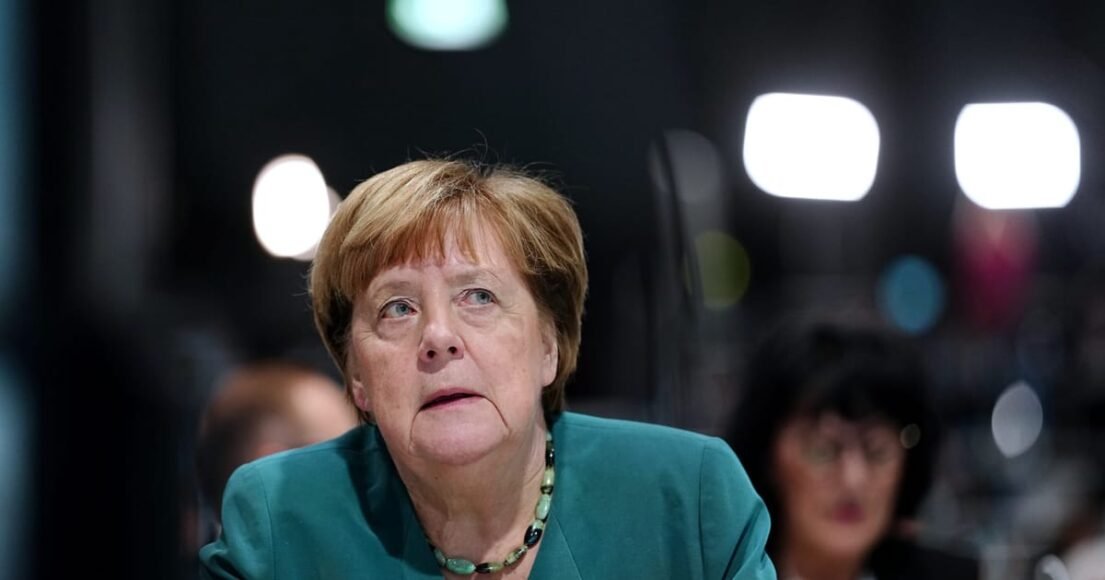
Jens Spahn, now leader of the CDU/CSU parliamentary group and formerly Merkel’s health minister, expressed a similar sentiment. “A party congress is a moment of positioning, but it’s also a family celebration,” he stated. “And Angela Merkel is part of the family.”
Volker Kauder, Merkel’s longtime parliamentary floor leader, was straightforward: “The party wants unity, not dispute.” Michael Kretschmer, Saxony’s state premier, visibly rejected the idea of a break with Merkel: “Not at all!”
‘Merzel’
A former federal minister, speaking anonymously, provided a strategic view: For Merkel, the visit was a “win-win;” it showed her continued interest in the party.
For Merz, despite personal differences, there was little choice but to adopt a conciliatory approach.
There may also have been an electoral consideration, the former minister suggested. In Baden-Württemberg, where CDU state leader Manuel Hagel aims to defeat the Greens’ Cem Özdemir in a March 8 regional election, photos with Merkel could attract center-left voters more effectively than those with Merz.
Ultimately, the CDU prioritizes governing. The origin of its voters and the imagery, messaging, or promises used to attract them are secondary.
Online critics have coined “Merzel,” mocking the perceived alignment of Merz and Merkel. Within the party, however, there is minimal opposition. Around 91 percent of delegates reelected Merz as CDU leader in Stuttgart — a stronger endorsement than that achieved by Markus Söder, his Bavarian counterpart, or by Vice Chancellor Lars Klingbeil of the Social Democrats.
Merz exits Stuttgart as a winner. But Merkel, too, can claim a quiet, delayed victory.




Leave a Reply