


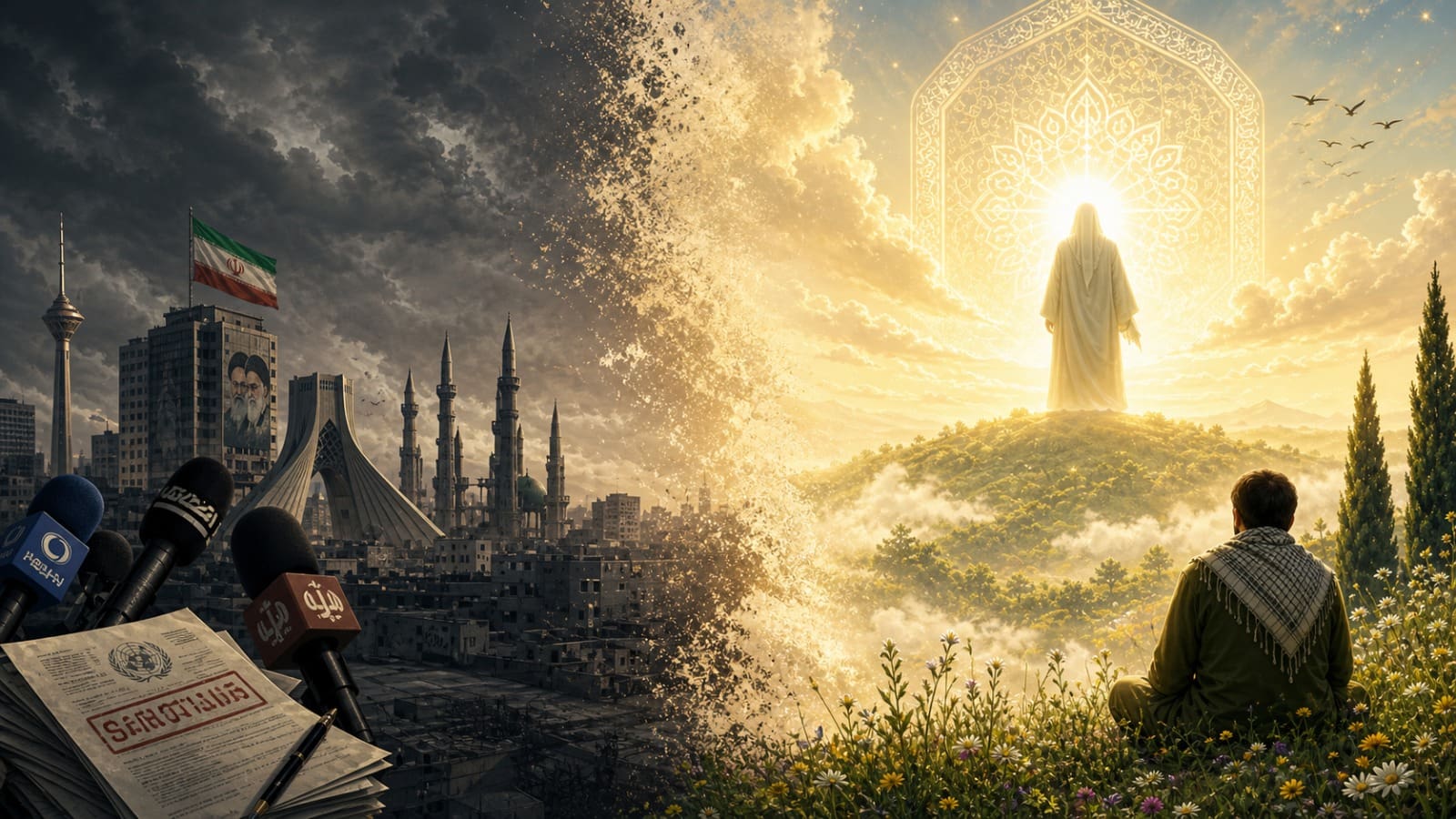
HRWF (05.06.2026) – Iran often makes headlines for its missiles, sanctions, nuclear talks, and conflicts with the U.S. or Israel. These matters are significant, but they don’t fully capture how Iran’s leaders view power, survival, and the future.
A crucial aspect is religious. The Islamic Republic is a state with political interests and a system that uses the language of faith, sacrifice, justice, and anticipation of a divinely guided future. In this context, endurance goes beyond strategy; it is seen as a moral duty.
In Shia Islam, many await the return of the Mahdi, the “twelfth Imam,” expected to bring justice at the end of time. For many Christian and Jewish readers, this may resonate with their own traditions of a final age of peace and justice under a divinely chosen leader. Belief in the Mahdi’s return is widespread, not unique to Iran, and not inherently political.
For many Shia believers, it inspires hope and patience. However, in Iran, leaders have woven religion with governance and national resistance. Ayatollah Ali Khamenei emphasizes that “the message of Islam is the establishment of justice,” linking awaiting the Mahdi to taking proactive steps towards justice. Mahmoud Ahmadinejad also spoke about preparing for the Hidden Imam’s coming and foreign attempts to thwart it.
This language shifts the understanding of the regime’s actions, depicting a system defending a sacred order rather than merely maximizing power. Iran might endure pain, isolation, and damage if perceived as part of a larger moral struggle.
Not every Tehran decision is theologically driven. The regime isn’t apocalyptic but is practical, tactical, and focused on staying in power. Yet this survival often draws from strong beliefs and religious expressions, forming a worldview intertwining resistance, system preservation, and awaiting a promised future.
Western media coverage can seem lacking, often portraying Iran as guided solely by military strength or diplomacy. While these factors are real, they don’t convey the full picture. Overlooking the regime’s religious vocabulary can miss why it speaks with certainty, frames compromise as danger, and regards endurance as virtue.
Westerners often equate peace with war absence. In Shia thought, peace is a just order: a world free from oppression, where truth is honored, and divine justice prevails. Viewing the West as a civilizational challenge, Iran sees values like secularism, moral relativism, materialism, individualism, and a liberal international order as conflicting with its justice vision.
A broader human point is relevant: Governments act not only from fear, interest, or rational planning but through narratives about identity and historical purpose. In Iran, one such narrative sees hardship as meaningful, resistance as noble, and justice arriving through divine means, explaining why the regime senses both threat and endurance.
Ultimately, Iran isn’t driven solely by prophecy over politics, nor is every action theologically explained. The key is recognizing that to fully understand Iran, its weapons and negotiations must be considered alongside its language of meaning. Here, survival represents more than self-preservation, and resistance isn’t mere defiance; both are portrayed as parts of a sacred struggle for justice. This understanding clarifies Iran’s behavior, even as it remains troubling.


Leave a Reply