



Greece (Eurotoday) — The world watched closely as former U.S. President Donald Trump announced sweeping tariff measures, marking a pivotal shift in global trade dynamics. Within the United States, reactions were sharply divided. While some critics raised alarm, others embraced the move with enthusiasm, declaring that “Made in the USA” should go beyond creative design to signify actual domestic production. The resurgence of American manufacturing—once a hallmark of economic strength—is now viewed by many as a necessary counter to a politically maneuvered, service-heavy economy.
Turmoil in U.S. financial markets followed swiftly. Investor confidence took a hit as many questioned the sustainability and attractiveness of American economic policy under the newly aggressive trade stance. Yet amid the uncertainty, several countries perceived the shift as an opening to redefine relationships with Washington, possibly through new trade agreements or targeted investments. For some, the imposition of steep tariffs—reaching as high as 30%—signaled not just protectionism but also an underlying demand for increased foreign direct investment.
The Changing Role of Foreign Capital
During the first 100 days of Donald Trump’s second term, the U.S. faced considerable market turbulence. According to market data, the S&P 500 dropped around 8%, while the dollar index lost 9% of its value. Although some investors remained cautiously optimistic due to ongoing trade negotiations, many began diversifying their portfolios and reducing U.S. exposure due to policy unpredictability and fears of long-term economic instability.
Foreign investors sold off approximately $60 billion in U.S. stocks, reflecting growing caution. Analysts are now debating whether a more permanent global monetary shift is underway. While the U.S. dollar continues to hold the top spot for global reserves—57.8% as of early 2025—this represents a noticeable decline from 66% a decade ago. Still, many economists argue that America’s vast size, market liquidity, and institutional robustness may allow it to retain its dominant position.
This economic uncertainty underscores the contrast between the Trump and Biden administrations. Trump’s strategy centers on big-ticket private-sector investments, such as Taiwan Semiconductor Manufacturing Company’s $40 billion chip plant in the U.S. Meanwhile, President Biden has focused on government-driven incentives through legislation like the CHIPS and Science Act, particularly targeting clean energy and technology. Though Biden’s policies have led to a surge in manufacturing spending, persistent issues such as worker shortages and project delays highlight the complexities involved. These divergent approaches continue to spark debate about the most sustainable path toward technological innovation and industrial growth in the U.S.
Trump’s new “Investment Accelerator” initiative aims to refocus the nation’s attention on fortifying domestic capital flows while tightening oversight tied to national security concerns. Foreign governments and investors are already adjusting. Switzerland, for instance, has made bold diplomatic overtures in Washington to safeguard its economic interests. As new tariffs loom, Swiss Finance Minister Karin Keller-Sutter and Economy Minister Guy Parmelin have emphasized Switzerland’s significant contributions to the American economy, citing multi-billion dollar investments by global pharmaceutical giants Roche and Novartis.
This illustrates a key emerging trend: the U.S. now views foreign investment through a strategic lens, weighing both economic and geopolitical implications. Traditional allies and long-standing investors are being encouraged to align their capital infusion strategies with broader American national interest goals. Switzerland’s engagement is part of a wider global response to Washington’s recalibration of its investment policies—indicating that future capital partnerships must satisfy not just financial benchmarks but also political and security alignment.
The United States Investment Accelerator
In an assertive effort to revitalize the country’s appeal to global investors, President Trump rolled out the United States Investment Accelerator—an ambitious initiative housed within the Department of Commerce. Tasked with streamlining multi-billion-dollar investment projects, the Accelerator aims to eliminate bureaucratic slowdowns, fast-track government permits, and enhance coordination across federal agencies. A key component of the program involves oversight of the CHIPS Program Office, which is instrumental in managing strategic semiconductor investments—an area deemed critical to national resilience.
Trump has insisted that red tape
Comments
8 responses to “What Trump’s Tariffs Reveal About the State of the Economy”
-
Looks like someone thinks slapping tariffs on everything will magically bring back the good ol’ days of American manufacturing. Brilliant strategy—because who needs global trade when you can just play Monopoly with your mates, eh? 🤑🇺🇸
-
Looks like the U.S. is doing its best impression of a high-stakes poker game—betting it all on tariffs while hoping no one notices the hand’s bluffing. 🎭 What a delightful spectacle for the rest of us, eh?
-
Isn’t it charming how tariffs are like a bad haircut—everyone can see it, yet half the room pretends to love it? 💇♂️ Let’s just hope the next economic “style” doesn’t involve even more split ends! 😅
-
Oh, splendid! Nothing screams “economic stability” quite like a former TV star playing Monopoly with tariffs. 🎩💸 But hey, at least we’re getting a front-row seat to the world’s most chaotic game of musical chairs! 🪑🎶
-
Look at that, tariffs soaring like my blood pressure during a budget meeting! Who knew protecting the American dream involved a hefty price tag—guess “Made in the USA” now comes with an extra side of chaos and confusion! 🤷♂️💸
-
Seems like Tariff Trump is trying to turn “Made in the USA” into a shiny new badge, while the world watches with popcorn. 🍿 Nothing screams “let’s boost the economy” quite like slapping on a hefty fee for foreign friends, right? 😏
-
Looks like Trump’s tariffs are the economic equivalent of a Swiss army knife—overly complex, seemingly useful, but mostly just cutting off your own foot. 🤦♂️ Who knew protectionism could come with a side of chaos?
-
Isn’t it charming how Trump’s tariffs are like a bad haircut—everyone notices, but only a handful would admit they actually wanted it? At this rate, we might need to start charging admission to watch the U.S. economy do the cha-cha! 💃💸

Last News

Polluted Air Proven to Harm Memory
The brain area responsible for storing general world knowledge
Air pollution has been associated with lung disease, heart issues, and early mortality. Recently, researchers have uncovered additional evidence suggesting that the air we breathe may also influence brain function as we age. A study by UC Davis Health and Kaiser Permanente reveals th
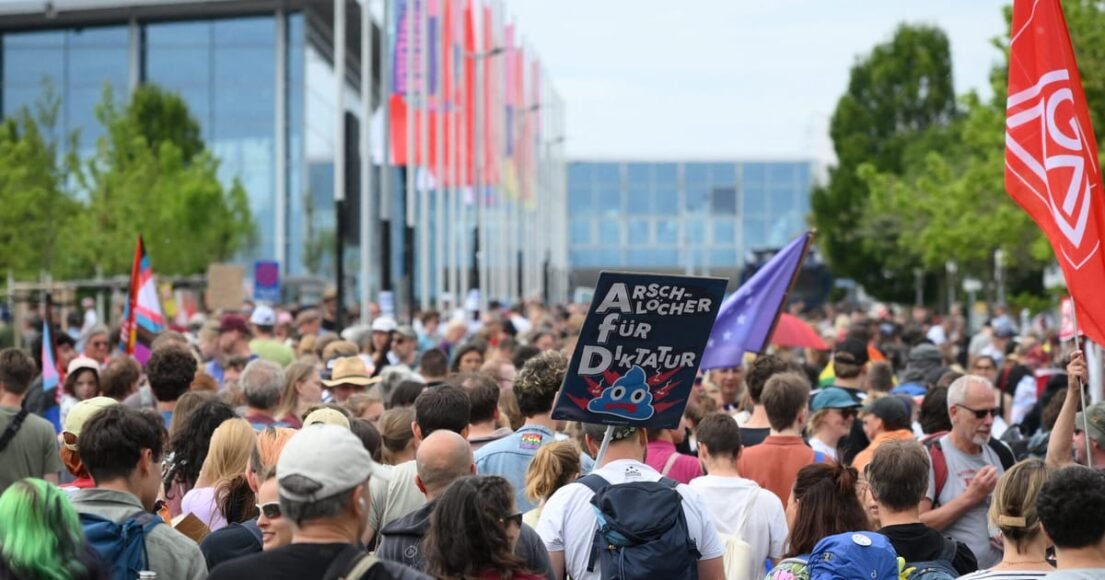
Thousands Protest in Germany Against Far-Right AfD
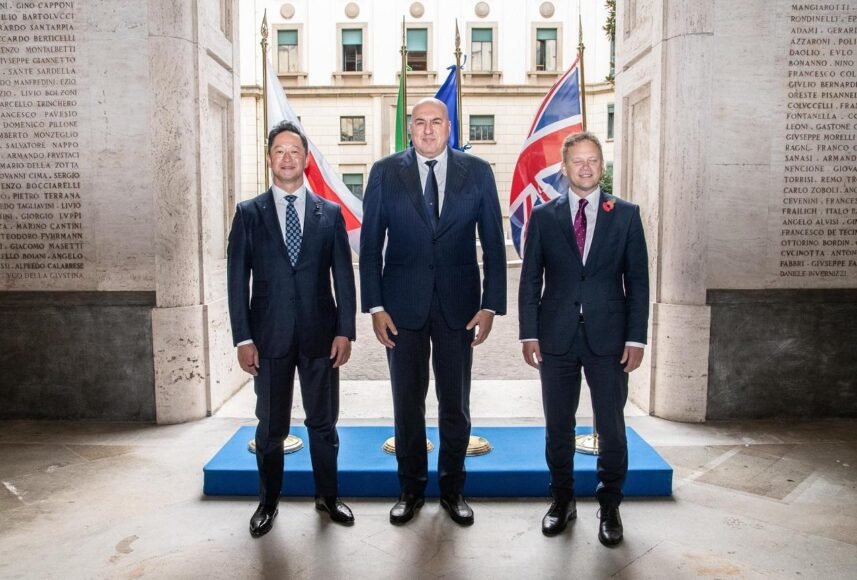
UK, Italy, and Japan Award £4.6 Billion Contract to Advance Combat Aircraft Program
London, July 03, 2026 – Eurotoday Newspaper — combat aircraft program development advanced significantly after the United Kingdom, Italy, and Japan awarded a £4.6 billion contract to support the next phase of the Global Combat Air Programme (GCAP). The agreement strengthens cooperation between the three nations as they work toward delivering a sixth-generation fighter aircraft by 2035.
Contrac

Weather Changes Impact Mental Health
A new study reveals that even slight, short-term weather changes can be significant enough to prompt individuals to seek therapy.
Variations in temperature and sunlight are linked to UK residents accessing mental health services through the NHS, according to researchers in Frontiers in Psychiatry.

Spéciale Aix : l’incroyable manège des prétendants
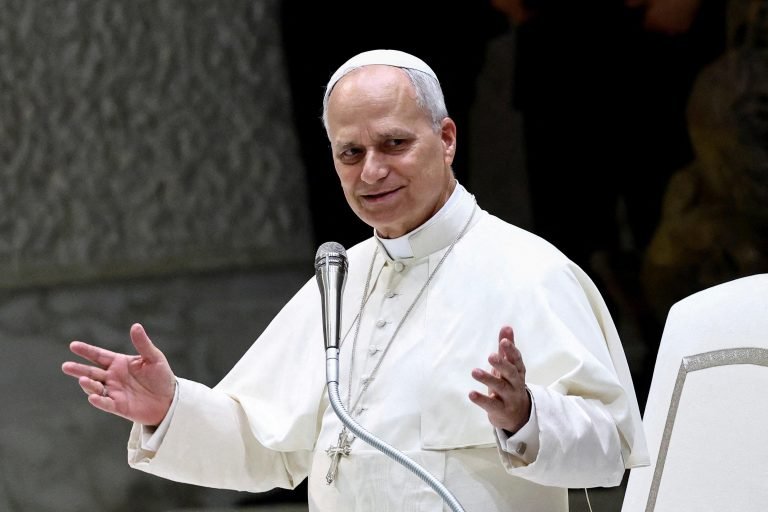
Pope Leo’s Immigration Remarks Highlight America’s 250-Year Immigrant Legacy
Washington, D.C., July 03, 2026 – Eurotoday Newspaper — Pope Leo immigration remarks drew global attention as he praised the United States’ long tradition of welcoming immigrants during events commemorating the nation’s 250th anniversary. The Pope highlighted how generations of immigrants have helped build America’s economy, culture, and communities while encouraging compassion and respect for h
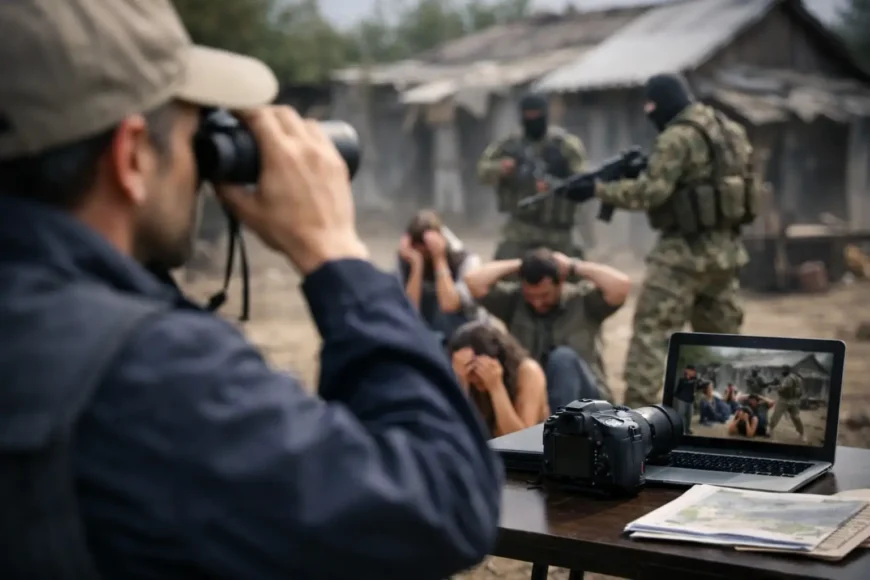
Who Oversees Human Rights Violations?

Europe Faces Its Own Accountability Crisis
The democracies America fostered now show a growing gap at their heart: the U.S. itself. Yet, presuming immunity for the rest of the West would be a mistake.
For Washington, this is no

Two Romanian Men Sentenced for Stabbing Iranian Journalist in London
Sarhan Basem is Eurotoday’s Senior Correspondent to the European Parliament. With a Bachelor’s degree in English Literature, Sarhan brings a unique blend of linguistic finesse and analytical prowess to his reporting. Specializing in foreign affairs, human rights, civil liberties, and security issues, he delves deep into the intricacies of global politics to provide insightful comment

10 Indicators of a Healthy Dog
It’s crucial for pet owners to ensure their dog is content, energetic, and healthy. Signs of a dog’s well-being go beyond just the absence of illness. Often, we notice when something’s wrong but can overlook the indicators that our dog feels good—through their behavior, energy, appetite, movement, and even the gloss of their coat. Observing subtle changes in daily life is vital
Leave a Reply