UN Report Highlights Systemic Gaps in Minority Rights as Human Rights Council Meets in Geneva

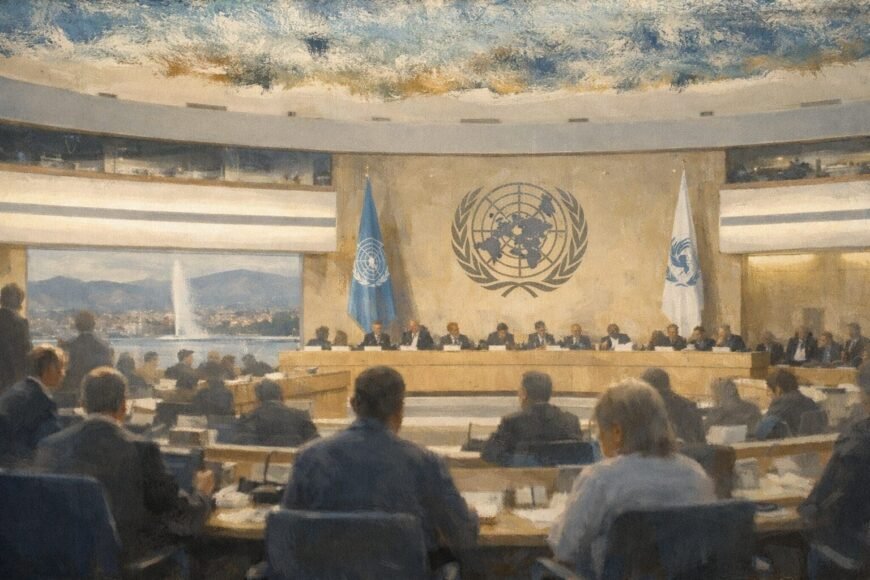
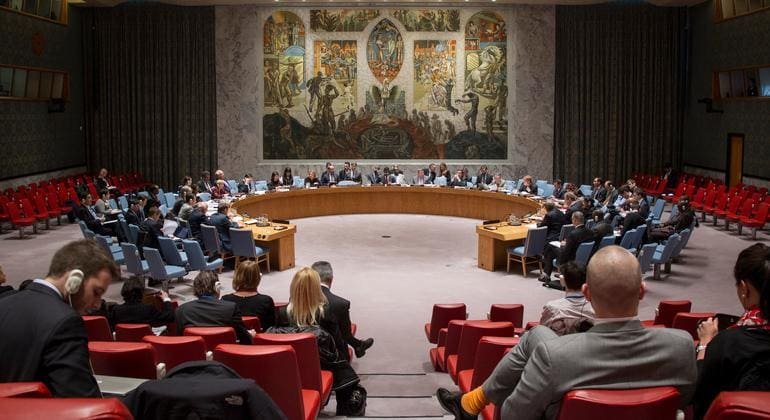
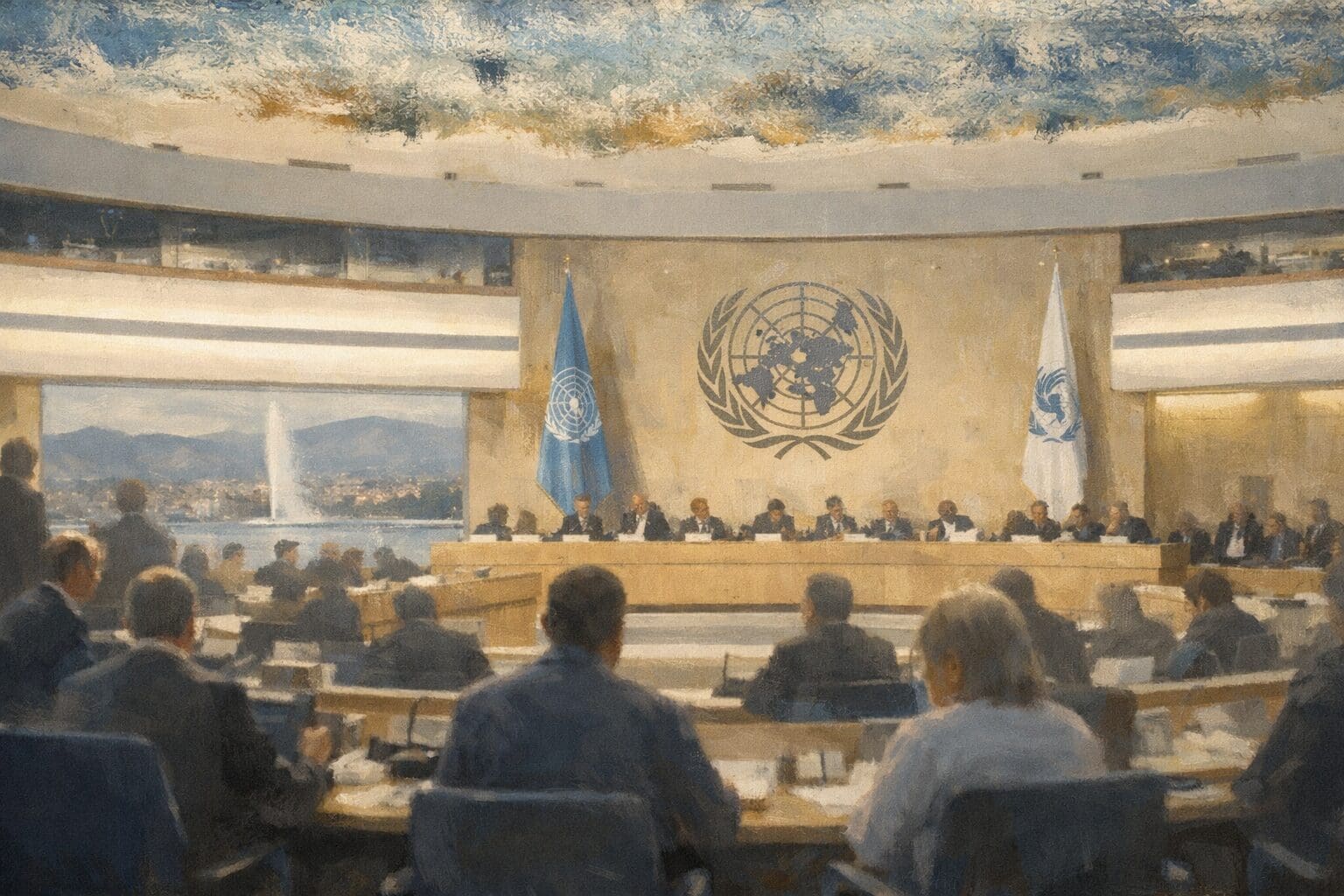
BRUSSELS — A report submitted to the sixty-first session of the United Nations Human Rights Council, which opened on 23 February 2026 in Geneva and runs through 2 April, presents a sobering evaluation of minority rights globally. Compiled by the Office of the United Nations High Commissioner for Human Rights (OHCHR), the document — designated A/HRC/61/33 — reviews developments throughout 2025, revealing entrenched discrimination, legislative gaps, and the rising use of hate speech against national, ethnic, religious, and linguistic minorities.

The report is submitted following Human Rights Council resolution 55/15, adopted on 4 April 2024, which tasked OHCHR with providing an annual record of actions taken to advance the Declaration on the Rights of Persons Belonging to National or Ethnic, Religious and Linguistic Minorities. The High Commissioner emphasizes that “further steps are needed by States to recognize minorities as a group at risk of being left behind” and to implement the Declaration — a document that remains more aspirational than operationally binding.

A Global Landscape of Persistent Exclusion

The report’s core finding is clear: despite decades of international commitments, minorities worldwide continue to face disproportionate poverty, unemployment, housing insecurity, and police violence. High Commissioner Volker Türk, at the eighteenth session of the Forum on Minority Issues in November 2025, noted that “vilifying minorities had become a convenient divide and rule tactic for leaders seeking to polarize, confuse and distract from their own failures.”

A striking data point reveals that as of 2025, fewer than one quarter of countries had enacted anti-discrimination laws meeting international human rights standards. This persists despite OHCHR’s work since 2022 with the Equal Rights Trust on a guide for developing anti-discrimination legislation and the launch of the Equality for All Academic Action Alliance in July 2025.

The report documents violations across numerous regions. In Pakistan, blasphemy laws target Ahmadiyya and Christian communities; in Egypt, Baha’i citizens lack legal recognition; in Iran, ethnic and religious minorities face systematic discrimination, with the death penalty disproportionately applied; in Myanmar, the Rohingya crisis has reached extreme levels; Afghanistan sees Hazara, Ismaili Shia, Turkmen, and Uzbek communities facing forced conversions and land loss. In Russia, a State-backed nationalist ideology reportedly “normalized identity-based discrimination and violence.”

Legal Frameworks Under Strain

These violations must be considered within the framework of international law. Article 27 of the International Covenant on Civil and Political Rights (ICCPR) guarantees minority rights to culture, religion, and language use. The Human Rights Committee, monitoring the ICCPR, noted concerns in 2025 about Spain (racial profiling and delayed anti-racism legislation), Latvia (language-in-education transition discrimination), Viet Nam (freedom of religion violations), and Montenegro (exclusion of Roma, Ashkali, and Egyptian communities).

The report implicitly references Article 18 of the Universal Declaration of Human Rights (UDHR) and its ICCPR elaboration, protecting freedom of thought, conscience, and religion. Cases from Tajikistan’s law banning religious clothing to Estonia’s legislation targeting religious minorities illustrate how States use security rationales for disproportionate and discriminatory restrictions.

Europe provides a notable example. In Estonia, a UN Special Rapporteur warned that targeting a religious minority linked to the Moscow Patriarchate “might amount to institutionalized religious discrimination,” violating ICCPR provisions. Similar concerns arose in Ukraine, emphasizing the balance the European Convention on Human Rights (ECHR) seeks to maintain, particularly under wartime or national security pressures.

The recent volume Faith in United Nations Human Rights Treaties (University for Peace, January 2026) offers an analysis of these developments, arguing that faith-based and legal frameworks, when properly understood, are mutually reinforcing. It notes the UN’s human rights architecture has accumulated substantial jurisprudence on religion, belief, and human rights law — underutilized by States and under communicated to communities needing protection.

Hate Speech: From Online Platforms to Political Discourse

A report section focusing on hate speech observes a “surge in hate speech, particularly online, with incitement to violence against minorities.” This echoes the Rabat Plan of Action (2012), which defines the threshold for incitement to discrimination, hostility, or violence and establishes State responsibilities.

The report notes these trends globally: CERD expressed concerns in December 2025 about hate speech against Muslims, Roma, Jews, and people of African descent in Sweden. The High Commissioner addressed the European Parliament in January 2025, urging stronger measures against antisemitism and anti-Muslim hatred. A Tirana conference in January 2025 produced the Tirana Framework for Confronting Intolerance, calling for transparent mechanisms by technology and social media companies to address hate speech while respecting freedom of expression.

**Data


Comments

3 responses to “UN Report Highlights Systemic Gaps in Minority Rights as Human Rights Council Meets in Geneva”

  1. Morbid Angel Avatar
    Morbid Angel

    Seems like the UN is at it again—gathering in Geneva to discuss gaps in minority rights while the world’s leaders keep playing hide and seek with real action. 💼 Who knew talking about rights would become the new Olympic sport? 🥇

  2. Snow Cream Avatar

    Looks like the UN is busy compiling reports while actual rights seem to be scuttling off to a pub somewhere, leaving us with an impressive collection of paperweights instead. 🍻 Who knew “aspirational” was the new buzzword for doing absolutely nothing? 😏

  3. Atomic Blastoid Avatar
    Atomic Blastoid

    Just what we needed—another UN report to remind us that discrimination is still in fashion! 🙄 But hey, at least it’s nice to see the bureaucracy keeping up with its own paperwork while the world burns, right?

  4. Isn’t it charming how the UN keeps issuing reports on minority rights while member states continue to play a delightful game of “who can ignore it better”? 🤦‍♂️ Must be lovely to know that the only thing more entrenched than discrimination is their annual paperwork! 🥴

Leave a Reply

Your email address will not be published. Required fields are marked *

Last News

Meloni and Macron Delay First High-Level Summit

Meloni and Macron Delay First High-Level Summit

The planned summit in Toulouse, initially reported by POLITICO, aimed to showcase Franco-Italian friendship and address transalpine relationship issues, bringing together the two leaders and key ministers to discuss shared policy priorities.
France and Italy have not held a high-level bilateral summit since 2020 when then-Italian Prime Minister Giuseppe Conte met with Macron in Naples. The Toulous

Read More

UN Report Highlights Systemic Gaps in Minority Rights as Human Rights Council Meets in Geneva

UN Report Highlights Systemic Gaps in Minority Rights as Human Rights Council Meets in Geneva

BRUSSELS — A report submitted to the sixty-first session of the United Nations Human Rights Council, which opened on 23 February 2026 in Geneva and runs through 2 April, presents a sobering evaluation of minority rights globally. Compiled by the Office of the United Nations High Commissioner for Human Rights (OHCHR), the document — designated A/HRC/61/33 — reviews developments throughout 2025, re

Read More

ECB’s Lagarde: EU Doesn’t Need All 27 Members to Advance Reforms

ECB’s Lagarde: EU Doesn’t Need All 27 Members to Advance Reforms

In an interview with the Wall Street Journal, the ECB chief supports the idea of forming smaller country groupings to advance capital markets reform and address other long-standing economic issues.

Read More

Ukraine’s Women at Breaking Point After Four Years of War as Energy and Healthcare Attacks Continue – UN Humanitarians

Ukraine’s Women at Breaking Point After Four Years of War as Energy and Healthcare Attacks Continue – UN Humanitarians

UN Women’s Chief of Humanitarian Action, Sofia Calltorp, reported the hardships faced by Ukrainian families due to energy infrastructure damage, leaving them without heating, electricity, and shelter in severe winter conditions. Sixty-five percent of Ukraine’s energy capacity has been destroyed.
“These energy blackouts are more than technical issues,” she stated. “They impact women’s safety, prot

Read More

Why Germany’s Conservatives Struggle to Move Past Angela Merkel

Why Germany’s Conservatives Struggle to Move Past Angela Merkel

Jens Spahn, now leader of the CDU/CSU parliamentary group and formerly Merkel’s health minister, expressed a similar sentiment. “A party congress is a moment of positioning, but it’s also a family celebration,” he stated. “And Angela Merkel is part of the family.”
Volker Kauder, Merkel’s longtime parliamentary floor leader, was straightforward: “The party wants unity, not dispute.” Michael Kretsch

Read More

As Trump’s tariffs are struck down, EU calls for trade stability

As Trump’s tariffs are struck down, EU calls for trade stability

BRUSSELS — The European Union urged stability in transatlantic trade following the United States Supreme Court’s 6-3 decision on Friday to overturn President Donald Trump’s extensive tariffs.
“We are maintaining close communication with the U.S. Administration to gain clarity on their intended actions following this ruling,” stated European Commission Deputy Chief Spokesperson Olof Gill.
“Bu

Read More

Global News Summary: UN Humanitarian Chief in South Sudan, Shelter Fire Risks in Gaza, West Bank Unrest

Global News Summary: UN Humanitarian Chief in South Sudan, Shelter Fire Risks in Gaza, West Bank Unrest

Tom Fletcher will address the worsening humanitarian situation in the world’s youngest country and the increasing protection risks for civilians and aid workers.
Upon arrival, he went to Malakal in Upper Nile state to meet local communities, leaders, and returnees. He learned about their needs and challenges amid the ongoing war in neighboring Sudan.
Raising awareness
Fletcher plans to visi

Read More

Russia Paralympics Crisis Deepens Amid Ukraine’s Ceremony Boycott Pledge

Russia Paralympics Crisis Deepens Amid Ukraine’s Ceremony Boycott Pledge

The IPC announced that six Russian and four Belarusian athletes have received invitations for the Games in para-alpine skiing, para cross-country skiing, and para-snowboarding. The committee lifted its suspension of the two countries in September, having previously allowed athletes to compete only as neutrals following Russia’s 2022 invasion of Ukraine.
The decision is garnering political op

Read More

‘No corner of Sudan is safe’: UN officials warn of famine and atrocities as war escalates

‘No corner of Sudan is safe’: UN officials warn of famine and atrocities as war escalates

A month ago, Sudan marked a tragic milestone: 1,000 days of a devastating war that has ravaged the third largest country in Africa, according to Rosemary DiCarlo, Under-Secretary-General for Political Affairs.
It has been “1,000 days of staggering violence and unimaginable suffering” and “1,000 days of total impunity” for the perpetrators of numerous atrocities and war crimes.
As the conflict n

Read More

Security Council LIVE: Sudan Highlighted Amid Darfur Genocide Warnings

Security Council LIVE: Sudan Highlighted Amid Darfur Genocide Warnings

The UN Security Council convenes today to address the situation in Sudan as the conflict approaches its third year, with escalating violence in various regions and a worsening humanitarian crisis for civilians. UN political and humanitarian leaders are projected to update ministers on a conflict characterized by shifting battle lines, advanced weaponry, and large-scale displacement. This meeting

Read More