


Kyiv, January, 2026 — Eurotoday notes that before dawn broke over Kyiv, large parts of the capital and surrounding regions were already without electricity, marking another severe chapter in the Ukraine power outage that has come to define daily life across Ukraine. Sirens echoed through residential districts as energy workers assessed damage from overnight aerial strikes that crippled key transmission lines. With temperatures hovering near freezing, millions faced the morning without heating, reliable water supply, or functioning public transport.
The timing of the attack, coming amid winter conditions and strained repair capacity, underscored the growing vulnerability of civilian infrastructure in a conflict that shows no sign of easing.
Sequence of Overnight Attacks
According to Ukrainian officials, waves of missiles and drones targeted multiple energy nodes in coordinated intervals designed to overwhelm air defenses. Power fluctuations were detected minutes before a full shutdown rippled across the grid. The latest Ukraine power outage was not the result of a single strike, but rather cumulative damage that forced operators to disconnect sections of the network to prevent catastrophic equipment failure.
Energy analysts say such tactics aim to maximize disruption while minimizing repair windows, forcing technicians into repeated emergency responses instead of long-term restoration.
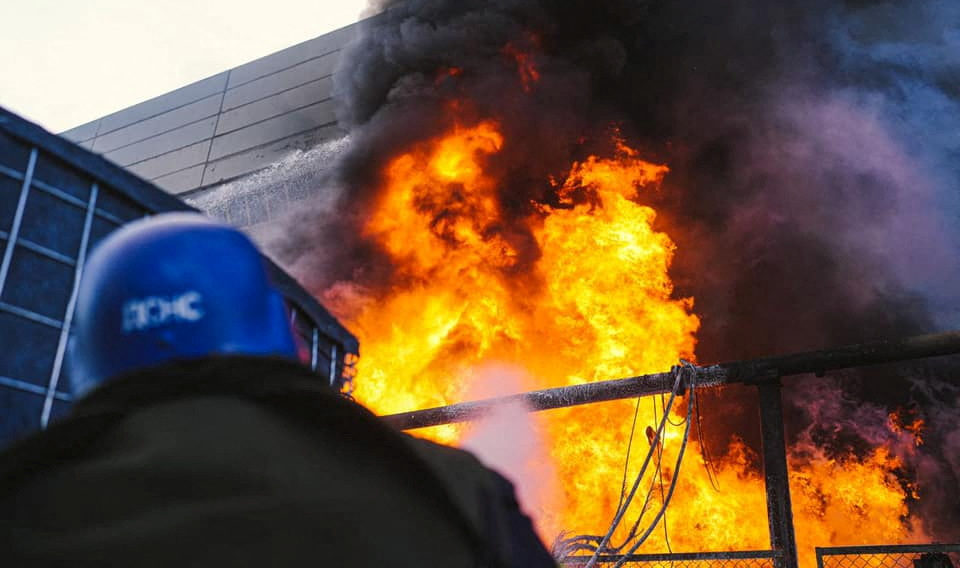
Why Energy Infrastructure Is Vulnerable
Electricity networks rely on highly specialized components, many of which cannot be replaced quickly. Substations, transformers, and control centers are particularly exposed, and damage to any one of them can destabilize vast areas. The ongoing Ukraine power outage reflects this fragility, as repeated strikes degrade redundancy and resilience.
Engineers working on the grid describe a system under constant stress, where even restored lines remain vulnerable to renewed attacks.
Urban Disruption in the Capital
In Kyiv, the blackout halted metro services during peak hours, causing commuters to walk long distances in icy conditions. Traffic lights failed at major intersections, prompting police to manually direct vehicles. Mobile networks slowed as backup batteries drained, adding another layer to the Ukraine power outage affecting communication and emergency coordination.
Municipal authorities opened dozens of resilience centers equipped with generators, heating, and internet access, but capacity remained limited compared to demand.
Struggles Beyond the Cities
Outside










Leave a Reply