Trump’s “Liberation Day” Tariffs Send Shockwaves Through Global Trade

President Donald Trump’s proclamation of April 2, 2025, as “Liberation Day” ushered in a dramatic transformation of U.S. trade policy. Central to the announcement was the implementation of sweeping reciprocal tariffs, including a blanket 10% levy on all imports. Targeted tariffs reached as high as 54% for China, 46% for Vietnam, and 20% for the European Union, accompanied by an additional 25% duty on all foreign-produced automobiles.

Marketed by the administration as a long-overdue correction to decades of “unfair” trade practices, the policy has been framed as a revival of American industry. However, beyond the slogans lies a complex and uncertain economic landscape marked by the threat of retaliatory measures, disruptions to global supply chains, and the possible reconfiguration of international trade norms. The consequences of this policy shift may prove far-reaching for both the United States and its global trading partners.

For U.S. manufacturers, the tariffs present mixed outcomes. On one side, sectors such as steel, automotive, and textiles — long struggling against global competition — could see short-term advantages as costlier imports prompt increased demand for domestic goods. The Alliance for American Manufacturing hailed the announcement as a long-awaited victory for workers “undermined by unfair trade for decades.”

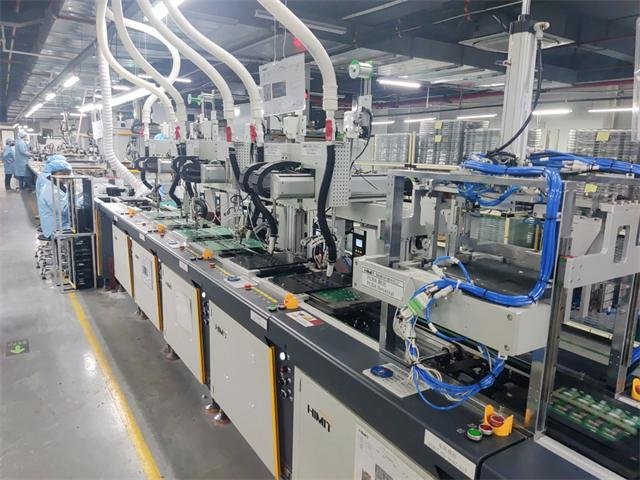
Yet the picture is far from simple. A vast number of American manufacturers depend on global supply chains, importing key materials and components such as auto parts from Mexico and semiconductors from Asia. As an example, the new 25% duty on imported auto parts may raise production costs by $2,000 to $15,000 per U.S.-built vehicle. Automakers face the difficult choice of absorbing the extra costs or transferring them to consumers. Small businesses including electronics assemblers and craft breweries, many of which operate on narrow margins, also face financial strain. The National Association of Manufacturers warned that the tariffs could threaten jobs and investment across a wide array of sectors.

Meanwhile, American consumers are likely to feel the most immediate impact. While the White House has attempted to brand the tariffs as a “tax cut,” economists overwhelmingly argue that such duties effectively increase prices for everyday goods. Items like fruits and vegetables from Mexico, affordable clothing from Vietnam, and electronics from China — all essential components of the American household budget — are expected to become noticeably more expensive.

According to the Yale Budget Lab, the average American family could face annual increases of $2,700 to $3,400 in living costs. Retailers, already grappling with the effects of inflation, are bracing for additional price surges on consumer items such as toys, clothing, and home electronics, many of which are scarcely produced domestically. Even industries temporarily spared from tariffs, like pharmaceuticals, remain on edge amid looming investigations that could extend duties to critical medicines.

The international response has been immediate and forceful, marking the onset of what many fear could become a prolonged global trade war. China, the EU, Canada, and Japan have all pledged retaliatory measures. Beijing condemned the U.S. move as “economic bullying” and vowed to respond aggressively, likely through restrictions on U.S. agricultural and technology imports. The EU, in the process of finalizing counter-tariffs related to earlier steel disputes, warned of new levies targeting major U.S. tech companies. Canadian Prime Minister Mark Carney described the unilateral shift as a “fundamental change” to the postwar trading system and pledged a “forceful” response. Even more neutral countries like Switzerland and Thailand are reassessing their trade approaches, with Thailand’s finance minister predicting a 1% contraction in GDP due to reduced exports.

This mounting backlash threatens to fracture long-standing trade alliances, upend established supply networks, and undermine institutions like the World Trade Organization. With countries increasingly favoring regional agreements such as the China-led Regional Comprehensive Economic Partnership (RCEP), the multilateral framework that has governed global commerce for decades appears increasingly sidelined.

The long-term implications could prove to be even more destabilizing. Trump’s tariff campaign is not merely a policy maneuver; it represents a philosophical shift away from the liberal international order established after World War II. By reinterpreting security alliances through a transactional lens — where partners like Japan or Germany must achieve trade balance to maintain U.S. protection — the administration is challenging decades of cooperative economic tradition.

Economists caution that such uncertainty will likely dissuade foreign investment in the United States. Companies that established domestic production to bypass earlier tariffs now face renewed uncertainty. For instance, international automakers with U.S.-based factories are expected to face operational disruptions given the new 25% auto import tax. Moreover, the administration’s stated aim to substitute income tax revenue with


Comments

One response to “Trump’s “Liberation Day” Tariffs Send Shockwaves Through Global Trade”

  1. Just what we needed—a “Liberation Day” that liberates our wallets from our pockets! At this rate, I might need to start charging customers for the air in my taxi. 😂💸

Leave a Reply

Your email address will not be published. Required fields are marked *

Last News

Portugal and Spain Bear Europe’s World Cup Hopes

Portugal and Spain Bear Europe’s World Cup Hopes

Monday’s Dallas clash sees two Iberian teams, two football eras, and raises questions about Europe’s depth in an expanded World Cup
Portugal and Spain face off in Dallas on Monday in a World Cup round-of-16 match that goes beyond a border rivalry. Spain comes as European champions with a clean knockout win, while Portugal, led by Cristiano Ronaldo, pursue the major international title missing fr

Read More

Belgium Considers Palestinian Recognition Following Hamas Withdrawal from Gaza Governance

Belgium Considers Palestinian Recognition Following Hamas Withdrawal from Gaza Governance

European support for recognizing Palestinian statehood has increased in recent years due to Israel’s war in Gaza, initiated in response to an attack by Hamas on October 7, 2023. The Hamas assault resulted in approximately 1,200 fatalities in Israel, mostly civilians, and 251 hostages were taken.
The health ministry in Gaza, governed by Hamas, reported more than 73,000 Palestinian deaths caused by

Read More

AI Manufacturing Market Grows with Solstice’s $14.5 Billion Acquisition of Element Solutions

AI Manufacturing Market Grows with Solstice’s $14.5 Billion Acquisition of Element Solutions

New York, July 06, Eurotoday Newspaper – AI manufacturing market continues to reshape global industrial investment after Solstice announced an agreement to acquire Element Solutions in a transaction valued at approximately $14.5 billion. The acquisition is one of the largest specialty chemicals deals of the year and reflects growing demand for advanced materials used in semiconductor manufacturing

Read More

Final Vote Approaches for EU Social Security Rules

Final Vote Approaches for EU Social Security Rules

Parliament to Approve Key Changes for Europeans Living and Working Across Borders
European lawmakers are set to finalize new social security coordination rules aimed at reducing uncertainty for millions working and residing across EU borders. The reform is scheduled for debate in Strasbourg on Monday night and a vote on Tuesday, addressing which country is responsible for benefits when EU citize

Read More

Germany Increases Defense Spending in New Budget Plan Before NATO Summit

Germany Increases Defense Spending in New Budget Plan Before NATO Summit

In 2027, the government plans a total expenditure of €555.4 billion, with €109.7 billion, or about 20 percent, allocated to defense spending. This share is expected to increase, reaching €183.7 billion for defense in 2030 from a projected total of €635.4 billion.
The 2027 spending plan was released before the upcoming NATO summit in Ankara, where European leaders aim to persuade U.S. President Don

Read More

Press Releases vs. Digital PR: Understanding the Modern Business Difference

Press Releases vs. Digital PR: Understanding the Modern Business Difference

London, July 06, 2026 – Eurotoday Newspaper — Press Releases vs Digital PR is drawing increased attention as businesses shift toward modern communication strategies that improve media visibility and online authority. Marketing professionals say companies are increasingly combining traditional press releases with digital PR campaigns to reach wider audiences and strengthen their search presence.

Read More

The Myth of Toyota’s Reliability: How a Brand-New Hybrid Left Me Stranded, and Why Japan’s Response Broke My Trust

The Myth of Toyota’s Reliability: How a Brand-New Hybrid Left Me Stranded, and Why Japan’s Response Broke My Trust

While Chinese manufacturers fight aggressively for European market share with premium customer care, Toyota leaves a loyal repeat customer stranded without a car for nearly two months—and responds with a cold, generic letter from corporate headquarters.

Introduction:

For decades, Toyota has rested comfortably on a hard-earned reputation for bulletproof reliability. But for Valerii S., a

Read More

Article 7 – Hungary’s Rule of Law Reset Must Reach Its Privacy Watchdog

Article 7 – Hungary’s Rule of Law Reset Must Reach Its Privacy Watchdog

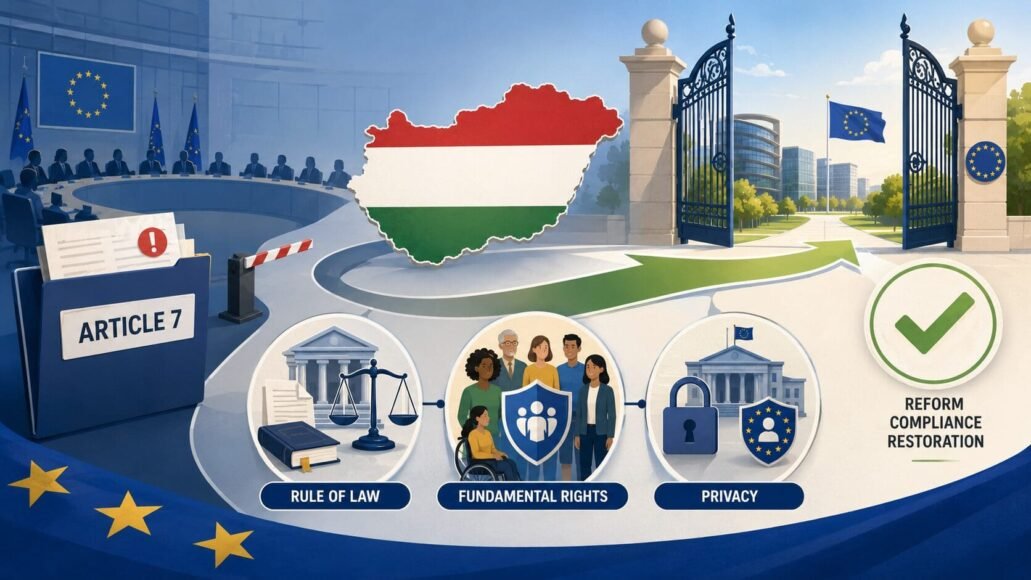
Protecting religious minorities, journalists, civil society, and sensitive personal data should be part of Hungary’s Article 7 recovery plan, which requires new leadership at NAIH. Hungary’s democratic renewal cannot stop at courts, corruption, media freedom, and EU funds. If Prime Minister Péter Magyar’s new administration wants to restore the rule of law, it must rebuild trust in state bodies t

Read More

EU Urges ‘Fair Play’ Following Trump’s World Cup Intervention

EU Urges ‘Fair Play’ Following Trump’s World Cup Intervention

The EU emphasizes that decisions should be based on objective and transparent criteria and supports fair play and transparent competition. Balogun, who received a red card in a match against Bosnia and Herzegovina, faced a suspension for the last-16 game against Belgium. Trump’s call to Infantino led to the suspension being revoked. FIFA, while not confirming any discussions, stated that an

Read More

US Supreme Court to Review Gun, LGBT, and Voting Rights Cases in 2026 Term

US Supreme Court to Review Gun, LGBT, and Voting Rights Cases in 2026 Term

Washington, D.C., July 05, 2026 – Eurotoday Newspaper — US Supreme Court next term will feature several high-profile cases involving gun regulations, LGBT rights, and voting laws, setting the stage for another consequential year at the nation’s highest court. The justices agreed to hear appeals that could clarify constitutional questions affecting states, public agencies, and millions of America

Read More