


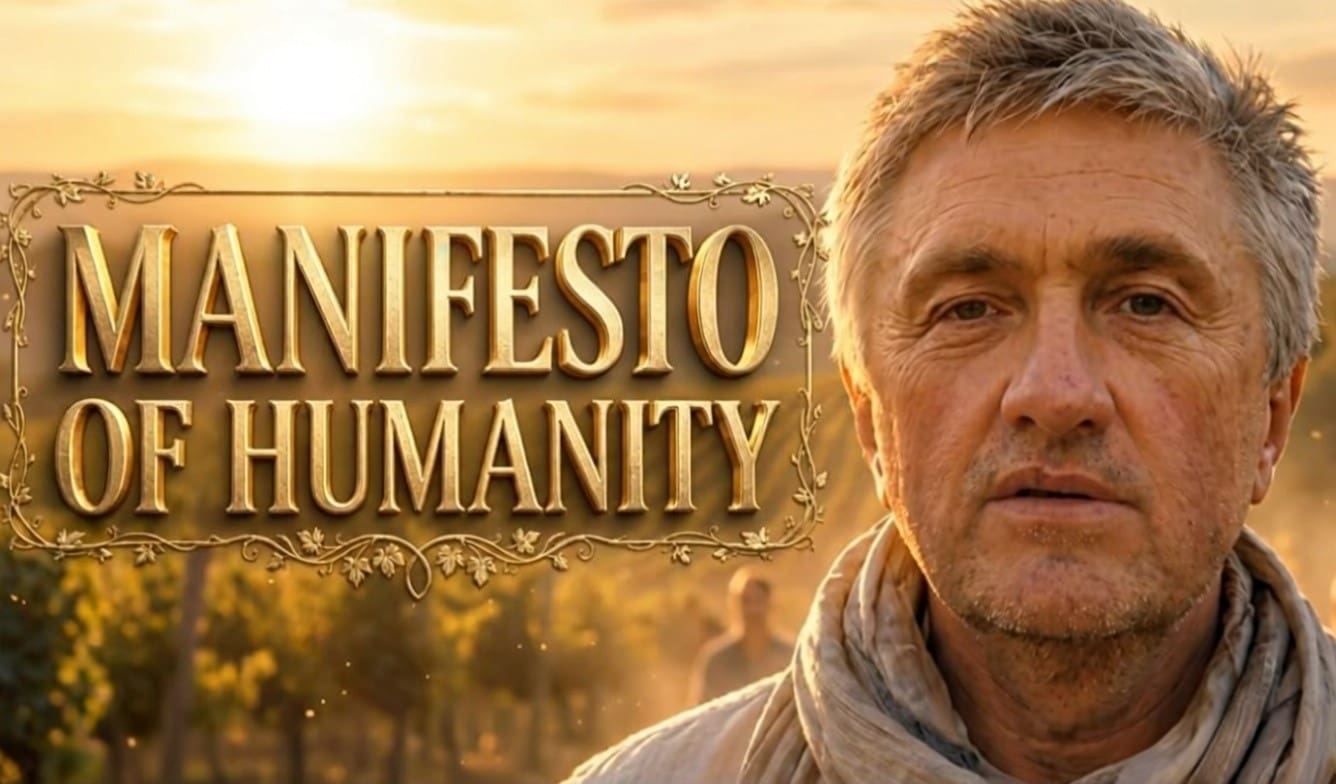
The case of Russian spiritual teacher Konstantin Rudnev exemplifies foreign political interference and unfounded prosecution of “cults” in Argentina. His imprisonment is based on exaggerated claims and mirrors Russian anti-cultism in a democratic society. In June 2026, he published poems about his experiences of deprivation and abuse, titled the “Manifesto of Humanity,” revealing the collision of hope and hopelessness through his fourteen-month ordeal without sunlight.
Rudnev spent fourteen months in a maximum-security federal penitentiary, known as Unit 6, before being allowed to experience sunlight again. During this time, his thoughts evolved into nine interconnected parables, forming the “Manifesto of Humanity.”
The parables aren’t intentional art but a method for Rudnev to process and integrate his suffering. They guide readers through an artistic journey that highlights the importance of freedom, nature, and critiques societal systems that deprive individuals of life’s essentials. These themes underpin the “Manifesto of Humanity.”
The “Parable of the Caged Bird” and “Fourteen Months Without an Open Sky” detail his suffering from deprivation of sunlight, air, and meaningful connections, leading to the “slow destruction of the human soul.”
Prisons often use deprivation to break inmates’ wills, something Rudnev knows from Russian prisons. He questions the effectiveness and morality of such systems in the parables “People Deprived of Sunlight” and “The Central Question for Humanity,” exploring the impact of confinement and highlighting its wider societal harm.
The first parable, “The Caged Bird,” reflects on the sufferings of both prisoners and guards, illustrating how societal systems confine everyone, not just individuals.
Rudnev’s personal experience in “Fourteen Months Without an Open Sky” makes his suffering relatable to anyone who has felt isolation or deprivation.
He describes prisons as punitive “stone traps” that don’t aid recovery, leading to the fading of thoughts, feelings, and hope. His parables “The Central Question for Humanity” and “Prisons Should Be Different” argue that rehabilitation requires shared spaces where empathy flourishes, pointing out societal failures and urging reform to maintain our moral and human nature.
The Manifesto is a call to action, emphasizing that sunlight, air, and nature are fundamental rights for all living beings.
In “Healing Spaces,” Rudnev recalls or imagines experiencing life’s essentials—birdsong, wind, fresh air—highlighting the painful absence of these in confinement.
He speaks for himself and countless others, questioning if civilization should use punishment and deprivation over compassion and dignity.
Besides detailing abuses, Rudnev reveals that prisons exist in various forms, including self-imposed ones, where fear, societal pressures, and disconnection confine individuals, leading to a joyless existence.
Despite bleak prison imagery, the Manifesto carries hope, asserting that “Light cannot be destroyed.” Compassion ensures hope, allowing for survival in persecution and rehabilitation, since “light” endures in everyone.
As noted by sociologist Massimo Introvigne, the poems are reflections on the brutality of the punitive system while striving to remain humane. Rudnev’s experiences—sorrow, suffering, neglect—are ultimately overwhelmed by memories of freedom and nature, culminating in a call for a humane world.
The Manifesto’s final parable, “Healing Spaces,” integrates these themes, advocating for dignity, compassion, and resilience, ending with a powerful call: “I choose humanity. What about you?”



Leave a Reply