


The European Union’s Common Foreign and Security Policy (CFSP) represents a cornerstone of its external relations, aiming to coordinate the foreign and security policies of its member states to present a unified stance on global issues. Over the decades, the CFSP has evolved to address complex international challenges, balancing the diverse interests of its 27 members while pursuing peace, security, democracy, and human rights worldwide.
Coordinating European Union Foreign Policy
The CFSP serves as the EU’s instrument for coordinating member states’ foreign and security policies, enabling the union to act as a unified global actor. While trade and economic policies fall under different EU competencies, the CFSP specifically addresses security, diplomacy, crisis management, and defense initiatives. It seeks to protect common values, maintain international peace, and promote cooperation across nations and regions.

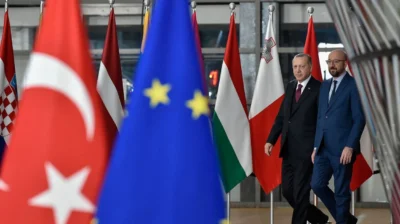
Given the EU’s nature as a supranational entity composed of sovereign states, CFSP decisions require broad consensus, reflecting diverse national interests. The role of the EU High Representative for Foreign Affairs and Security Policy is central to navigating these complexities, representing the EU collectively on the diplomatic stage.
Historical Development of the Common Foreign and Security Policy
The CFSP’s origins trace back to the 1970 establishment of European Political Cooperation (EPC), an informal forum for member states to coordinate foreign policy positions. While EPC was a modest consultative process, it laid the groundwork for more institutionalized cooperation.

The Maastricht Treaty of 1993 formalized the CFSP as one of the EU’s three pillars, embedding it into EU treaties and mandating closer collaboration on foreign affairs. This pillar system, however, maintained intergovernmental decision-making requiring unanimity in the Council of Ministers, which often slowed responses to urgent international issues.
Subsequent treaties sought to strengthen the CFSP’s coherence. The 1999 Amsterdam Treaty created the office of the High Representative for the Common Foreign and Security Policy, first held by Javier Solana, to coordinate and represent EU foreign policy externally.
A major consolidation unfolded with the 2009 Lisbon Treaty, which abolished the pillar structure and merged the High Representative role with that of the European Commissioner for External Relations. This reform enhanced the EU’s diplomatic presence by establishing the European External Action Service (EEAS), effectively a unified diplomatic corps.
Objectives and Principles Guiding the CFSP
The CFSP’s mandate is defined by the EU treaties, especially Article J.1 of the Maastricht Treaty and the Treaty on European Union (








Leave a Reply