


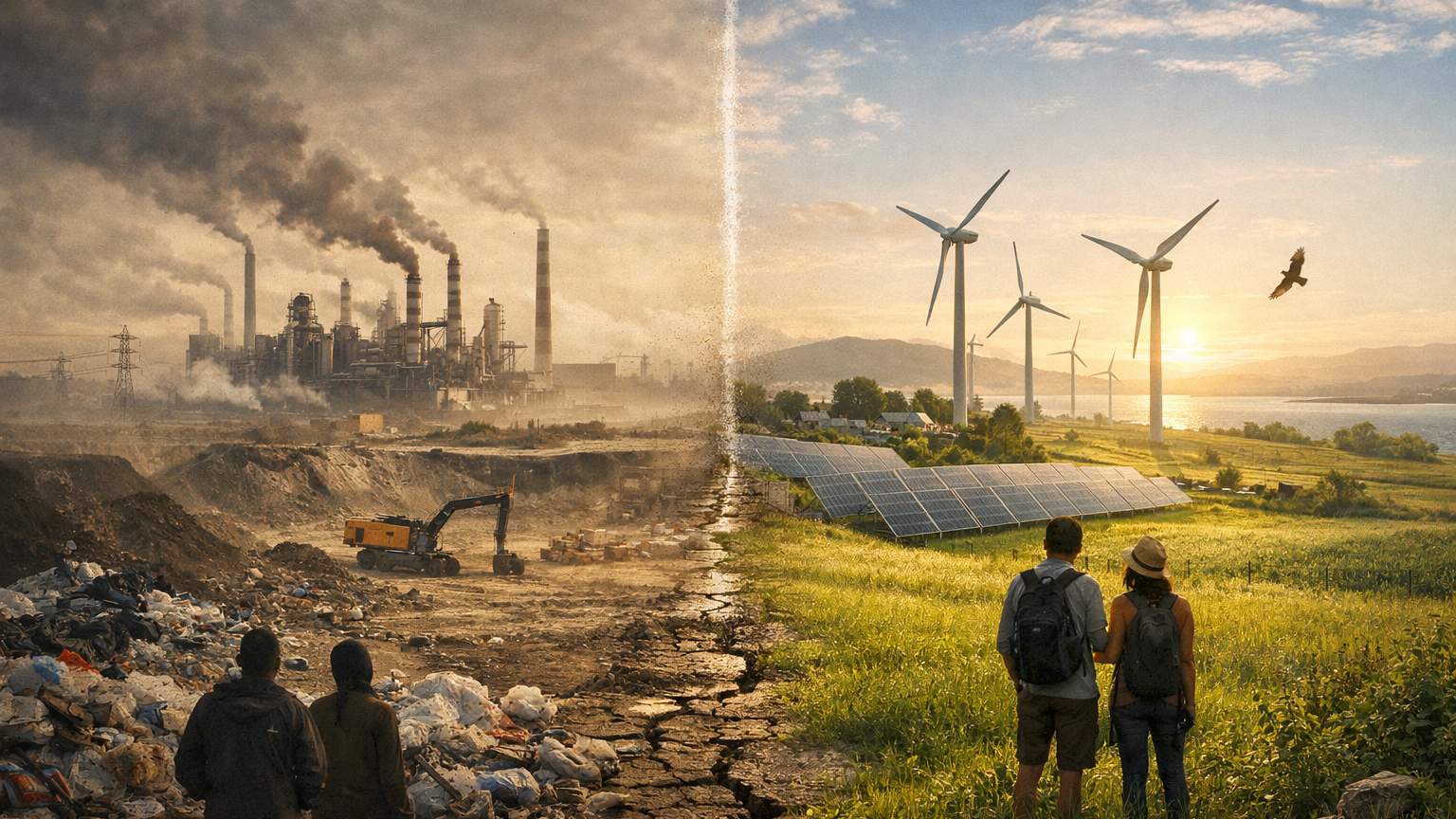
The prevalent strategy for addressing the climate crisis today is focused on sustainability—sustainable development, trade, travel, economics, and more. Essentially, it’s all about going green, continuing current activities but in a more environmentally friendly way. This approach raises three fundamental questions: Can such changes occur in a system reliant on constant expansion and exploitation? If possible, can this green shift happen swiftly enough? Even if achieved, would it be sufficient given the existing environmental damage? These critical questions highlight key issues in the environment-economy relationship worth discussing.
The sustainability narrative includes two main strategies for the climate crisis: climate mitigation and climate adaptation. Climate adaptation involves adjusting to environmental changes economically. For instance, with inevitable sea-level rise, efforts should focus on adapting rather than prevention, like relocating from threatened areas. This approach is unequal, viable only in wealthy regions. In contrast, climate mitigation is more commonly pursued.
Mitigation involves controlling or stopping climate change. Within the current economic system, reversing climate change seems impossible, leaving control and prevention as options. Many climate issues stem from exploitative economic behaviors that separate the environment from the economy. Recognizing the environment’s significance to the economy has led to efforts to conserve environmental resources. This green shift aims to preserve the environment and tackle the climate crisis, termed sustainability—maintaining what is essential.
The essence of sustainability suggests making the economy sustainable to support the environment it depends on. A critical view reveals that sustaining the environment also upholds the economy’s growth. This might resemble a ‘chicken or egg’ dilemma, but it’s crucial to explore the core logic of sustainability. A more candid answer is that sustainability is an approach that maintains our economic system by minimizing its environmental harm. An environment-centric approach is impossible within the current system, as it would disrupt economic growth and expansion.
Even if economic-centered sustainability aids the environment, the question remains—will it occur swiftly enough? The answers are complex. Yes, technological advances allow quick transitions to renewables, electric vehicles, and reusable products, but only affluent societies can afford this transition. Yet, the production of electric car batteries involves extracting resources like lithium and cobalt, often through exploitative labor in Africa, highlighting inequality in sustainable development.
Even assuming these transitions to a greener economy are effective, they might be insufficient due to existing damage, impacting regions with minimal responsibility for the crisis, incapable of adaptation or mitigation. Low-income countries in the Global South bear the brunt of unfair economic developments, experiencing food insecurity, climate migration, and health issues, unlike more developed regions.
Should sustainability be abandoned? Certainly not. Systemic changes rarely happen and involve more than replacing one system with another. Recognizing an approach’s shortcomings is a step towards better solutions. Small actions like using paper straws or reusable bags are beneficial. Maintaining a critical mindset open to alternatives is essential in a changing world. Other approaches beyond sustainable economics merit consideration, bringing diverse ideas. This is explored further in the next article.









Leave a Reply