


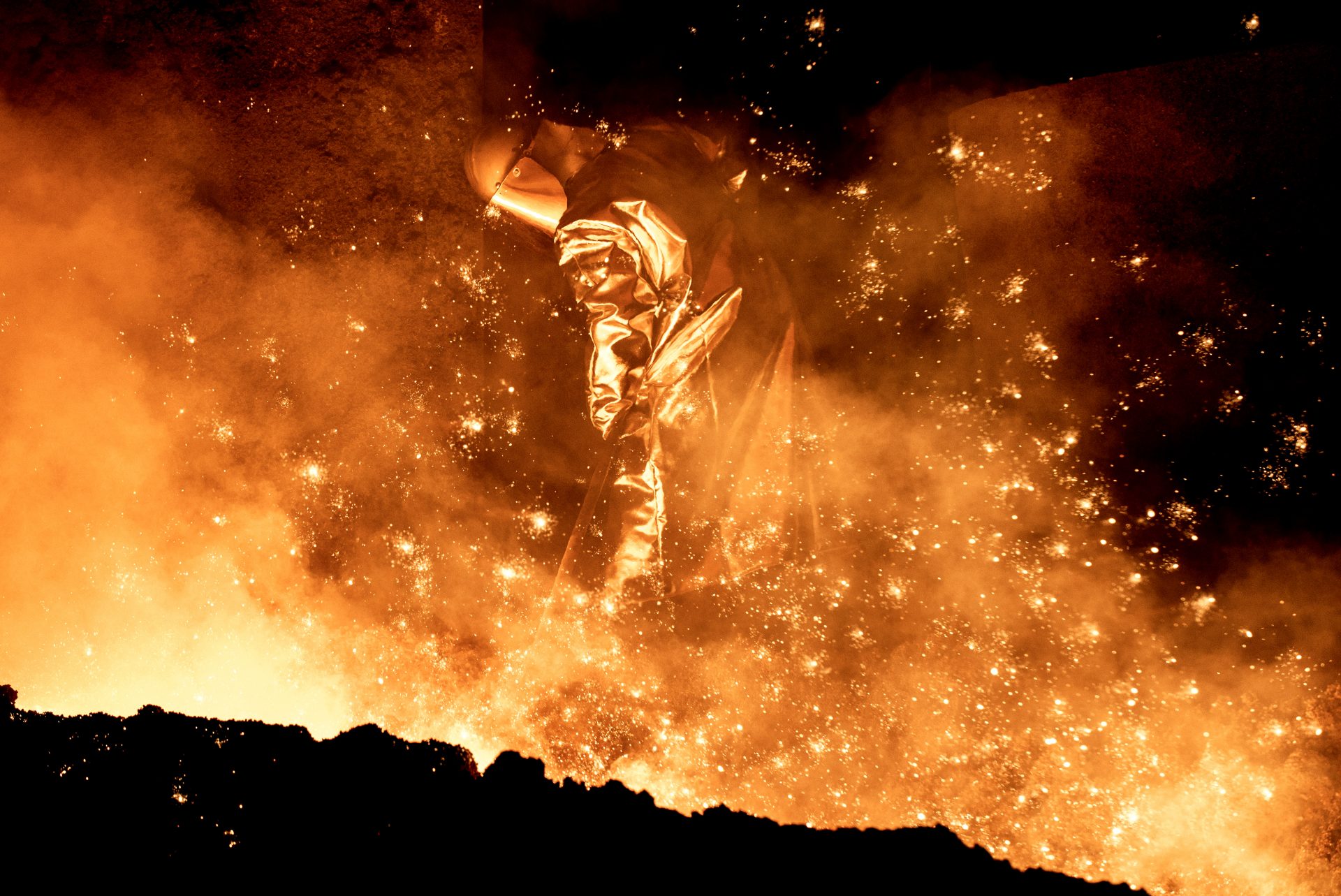
Prague – Steelmakers are urging the Czech Republic to create a strategy to support steelworks with energy costs, akin to Germany’s approach. Without such a plan, Czech steelworks may struggle to remain competitive. This information was released by the Czech Steel Union in a press release. Germany is set to implement a subsidized electricity tariff for industry in January 2026. Following issues at Liberty Ostrava, Třinec Ironworks is now the only remaining domestic producer of raw steel. The Steel Union estimates that Czech producers will incur an additional annual energy cost of three to four billion CZK compared to their German counterparts benefiting from subsidies.
“We view the German government’s support as a means to stabilize the industry amid high costs and an unstable energy policy. Without comparable conditions, Czech steel production will struggle to remain viable in the long run,” stated Roman Heide, CEO of Třinec Ironworks. He cautioned that a lack of clear government support could lead to the extinction of raw steel production in the Czech Republic, resulting in job losses and diminished industrial self-sufficiency.
The Steel Union emphasized that Czech steel production ranks among the most energy-intensive industries, with Třinec Ironworks consuming around one terawatt-hour of electricity annually. Currently, industrial energy prices in the Czech Republic are approximately 100 euros (about 2400 CZK) per megawatt-hour, whereas the new tariff in Germany will halve this cost for the industry.
Under the Clean Industrial Deal, the European Union has permitted member states to implement temporary national measures to support their industries, including energy subsidies and investment incentives. Czech steelmakers assert that this has placed the responsibility for industrial policy on the national level, enabling economically robust countries to better safeguard their industries.
“With the new tariff, the German industry will benefit from energy costs that are roughly half of those faced by Czech businesses, creating a systemic risk in a tightly interconnected region like Central Europe,” added Marcela Kubalová, chair of the Steel Union’s board. (November 19)




Leave a Reply