


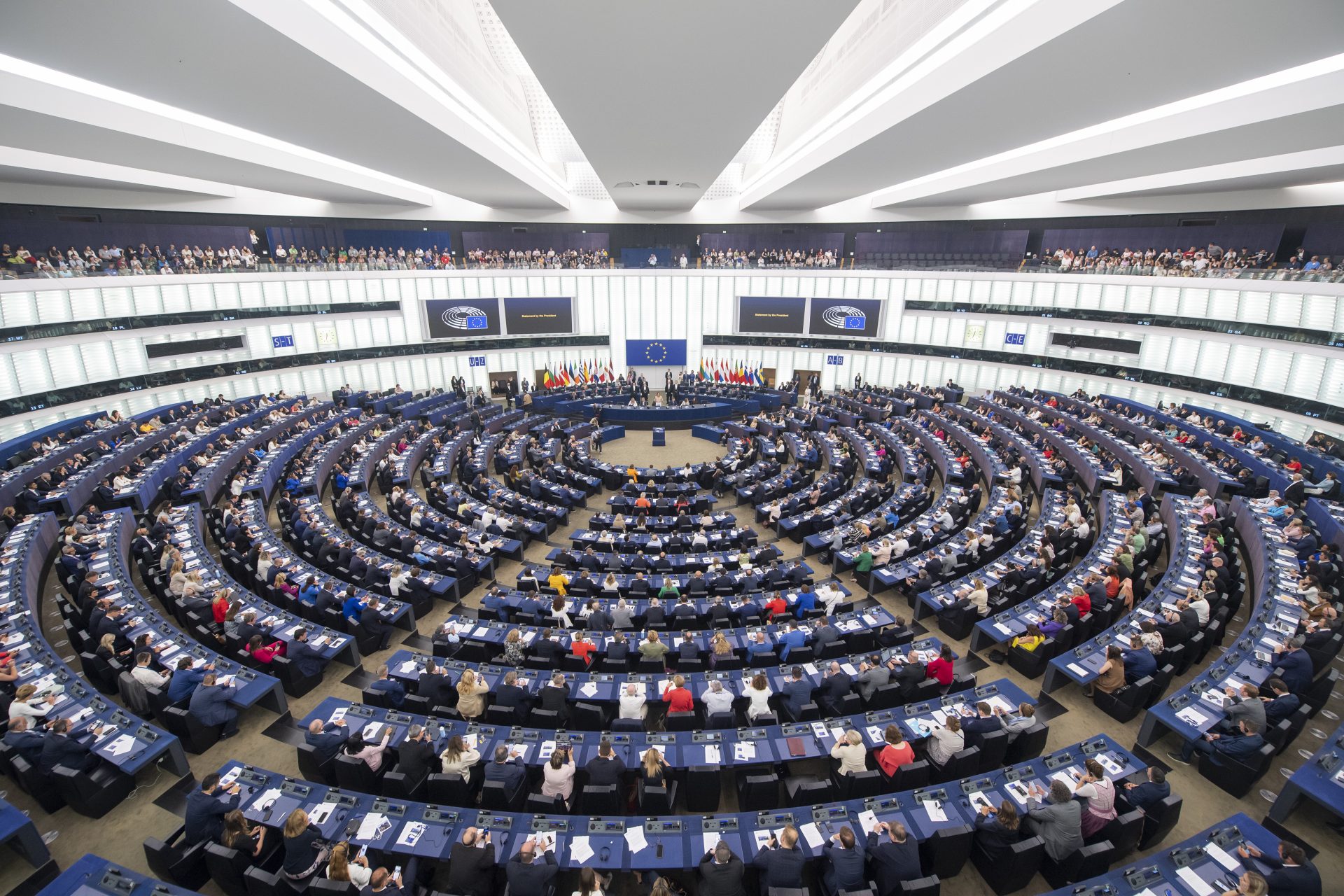
Brussels – On Wednesday, the European Parliament (EP) gathered to discuss the trajectory of EU-US relationships in light of Donald Trump’s presidential election. The conversation incorporated perspectives from Slovak MEPs of different political affiliations, as outlined by TASR’s correspondent in Brussels.
The EP meeting centered on the repercussions of Trump’s election for transatlantic partnerships, featuring attendees from EU member nations and the European Commission.
As reported by Politico, Trump plans to implement new “universal” tariffs that might reach up to 20 percent on all imports to the U.S., with tariffs on Chinese products potentially escalating to 60 percent.
EP Vice-President Martin Hojsík (Renew Europe/Progressive Slovakia) asserted the importance of the EU aiming for enhanced autonomy and robustness. “A more powerful Europe is advantageous for Slovakia; we must pursue a more cohesive EU that can safeguard its interests, whether from the U.S. or any other player,” he remarked.
Maroš Šefčovič, responsible for the Union’s trade policy and economic security within the European Commission, will have to manage any prospective trade disagreements with the U.S. Hojsík proposed that negotiation should take precedence over hostility, expressing hope that Šefčovič would demonstrate his competence and improve transatlantic relations.
Katarína Roth Neveďalová (non-affiliated/SMER-SD) asserted the necessity for more EU independence, highlighting the need to enhance the European economy and industrial sector. “We can’t depend on major U.S. support. We are in a trade conflict, not only with China but also with the U.S.,” she pointed out, recommending a reevaluation of restrictive policies impacting European industries. She critiqued the excessive concentration on the green economy and called for legislative enhancements and fewer bureaucratic hurdles when putting new regulations into effect.
Neveďalová further stated that while Europe shouldn’t hold Trump accountable for focusing on the American economy, it should similarly advocate for its own needs. She mentioned that during his session, Šefčovič recognized the necessity for the EU to prioritize its welfare and consider its operational strategy.
In the scenario of U.S. tariffs being enforced, she urged for a reciprocal action from the EU to support its producers, while cautioning against the EU transforming into a “fortress,” given its dependence on free trade.
Miriam Lexmann (EPP/KDH) conveyed her belief that, despite some controversial statements, Trump will ultimately reinforce transatlantic ties, acknowledging the alliance’s role in promoting peace, human rights, and democracy worldwide. “I hope Trump will stay true to the principles he demonstrated during his term. He advocated for increased defense expenditure, which is vital considering the present conflicts at our borders,” she expressed.
Lexmann supports the EP’s engagement with both Republican and Democratic leaders to strengthen transatlantic collaboration and tackle challenges posed by China. She welcomed Marco Rubio’s recent appointment as head of American diplomacy, referencing her enduring cooperation with him on initiatives advancing global democracy and freedom.
Branislav Ondruš (independent/Hlas-SD) pointed out that the EP’s international trade committee has created a monitoring group aimed at overseeing trade relations with the U.S. While discussions presently remain broad due to uncertainties concerning Trump’s future actions, Ondruš foresees that any U.S. tariffs will be enacted cautiously. “Transatlantic relations are so interconnected that a trade war benefits no one,” he noted, stressing the importance of the EP being vigilant about developments and exploring various outcomes. (November 13)




Leave a Reply