


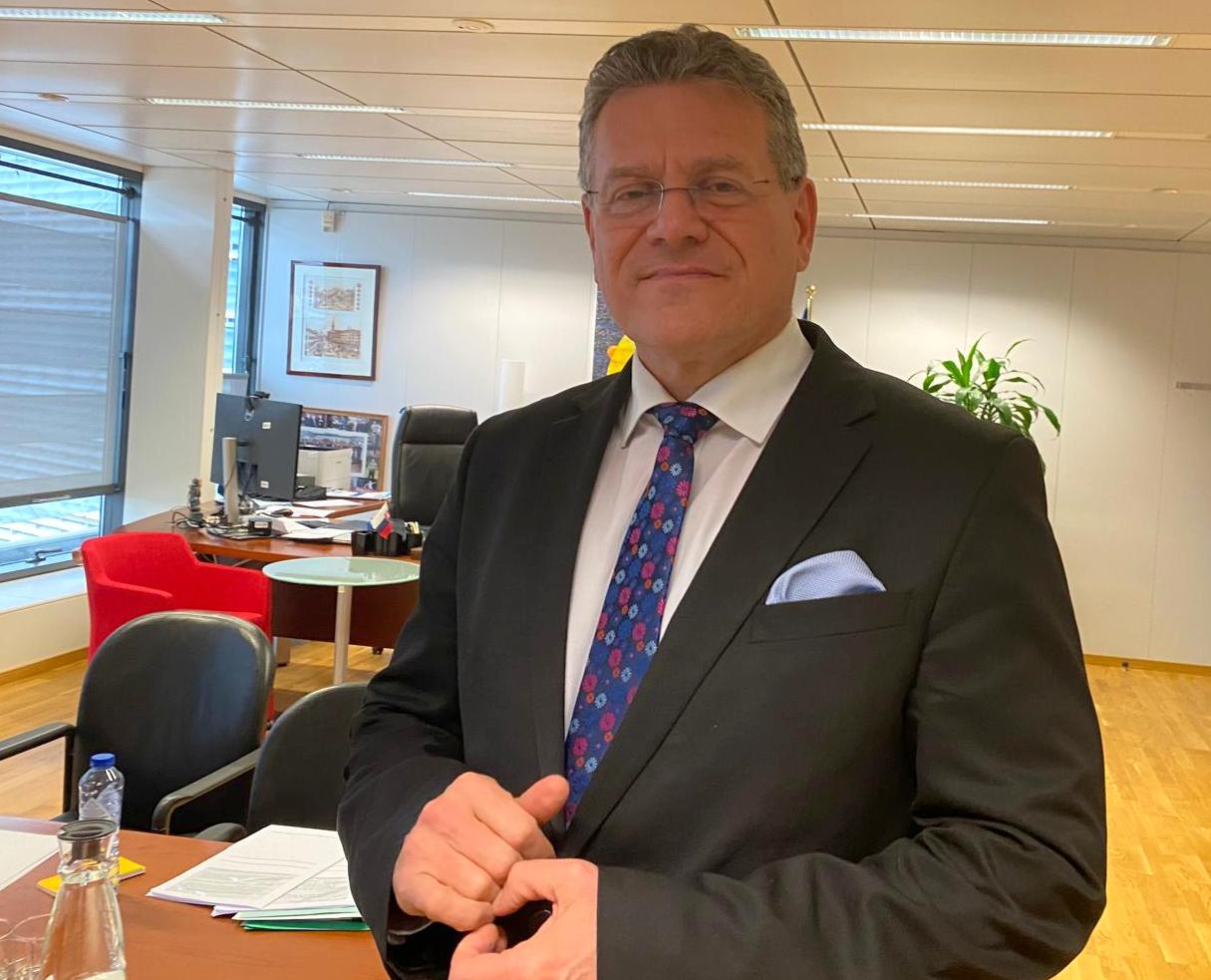
Brussels – In 2025, several journalists referred to the conclusion of EU free trade agreements with third countries as a “turbo charge,” a term inspired by turbochargers. This was affirmed by Slovak European Commissioner for Trade and Economic Security Maroš Šefčovič, who played a key role in these agreements. This year, Šefčovič is maintaining a similarly intense agenda.
“Last year, many characterized these trade negotiations as ‘turbo charge,’ indicating a notable acceleration in trade discussions between the Union and other nations,” Maroš Šefčovič explained. Journalists drew a parallel to combustion engines where turbochargers enhance performance, reflecting Šefčovič’s impact on the success of trade negotiations.
The European Commissioner reminded TASR that following the conclusion of the largest trade agreement to date between the EU and India, 2025 is linked to three significant agreements: with four Mercosur member states, with Indonesia, and the recent agreement with India resulting from last year’s negotiations.
“These three agreements essentially cover over 50 percent of European exports,” he noted. He also mentioned that the Union is awaiting the ratification of the trade agreement with Mexico, which both parties agreed to modernize in January of last year after a decade of negotiations, with completion expected in 2026.
Šefčovič indicated that his agenda for the year is likely to continue as a “turbo charge.” “We are ongoing with negotiations with Asian countries such as Malaysia, the Philippines, and Thailand. Additionally, our Australian partners are keen to resume and expedite trade talks, and we are progressing well with negotiations with the United Arab Emirates,” he added.
He emphasized that the EC views negotiations with the United Arab Emirates as crucial, as successful outcomes could encourage other Gulf Cooperation Council (GCC) countries—Bahrain, Qatar, Kuwait, Oman, and Saudi Arabia—to join. The EU ranks as the second-largest trading partner for GCC nations, with mutual trade reaching 170 billion euros in 2023. A renewed and strengthened trade and investment partnership could significantly enhance this figure.
“This outlines our working agenda moving forward, along with a summary of three pivotal agreements since I assumed this new mandate,” Šefčovič concluded regarding his leadership of EU trade policy, a role he has held since December 1, 2024. (31 January)





Leave a Reply