


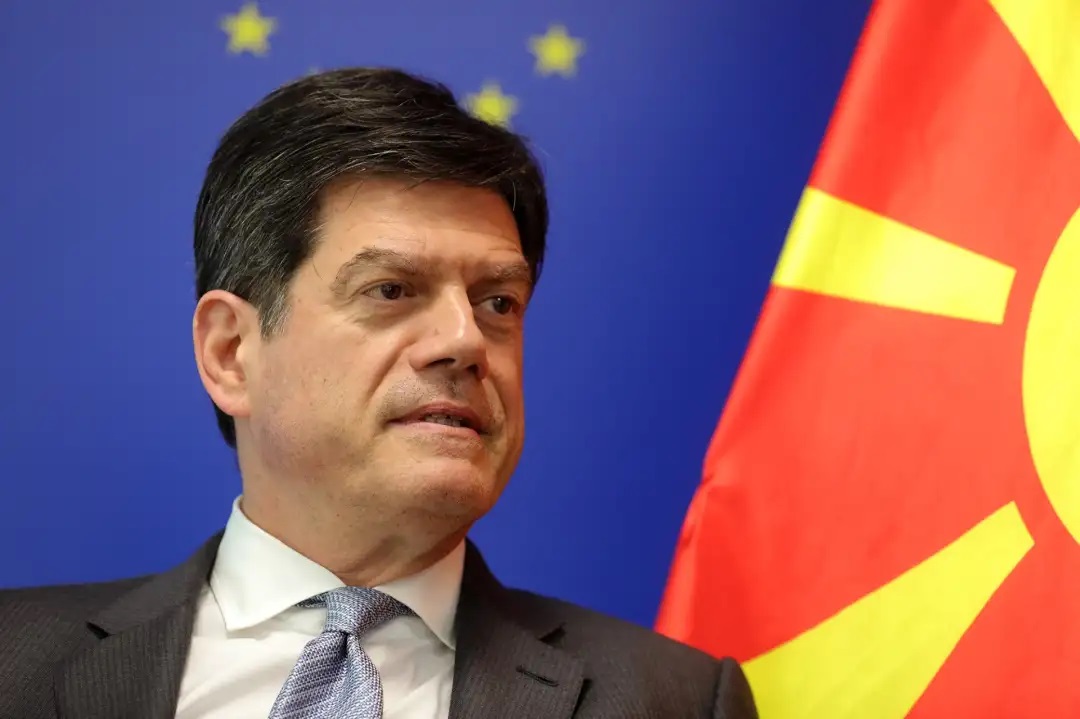
Skopje – The European Union is ready to welcome North Macedonia, and it’s crucial for the country to come together—government, opposition, Parliament, civil society, businesses, and youth—to pragmatically advance reforms, stated EU ambassador Mihail Rokas today.
During the presentation of two research papers, “Analysis of Public Opinion on the Accession of North Macedonia to the European Union (2014 – 2025)” and “New Global Uncertainties, Old European Obligations: Public Opinion on EU Accession in 2025” in Parliament, Rokas expressed his belief that while citizens perceive external factors as obstacles to EU membership, internal unity can help overcome these challenges.
– I assure you that if this unity is achieved, the obstacles to accession will be surmounted, regardless of public sentiment about existing issues. Immediate action is necessary; this is not merely an opportunity but the right moment for progress. We cannot equate this year or last year with the situations from four, five, or six years ago, Rokas noted, stressing the importance of building partnership and trust.
He expressed pleasure that the analysis indicates the EU retains the highest level of trust among partners.
– I am hopeful that with our joint efforts this year, we will see improved outcomes next year—not just in surveys but also in tangible movement towards EU integration, added Rokas.
Comparing this year’s findings to last year’s, he highlighted a significant increase in support for EU membership, rising from 61% to 71% of the population.
– The backing from young people has grown, which is essential. Their support shows a commitment to the future. It’s encouraging that the divide between different ethnic groups and political party participation is narrowing; there is a unified stance in favor of the EU. Citizens are also aligning with the EU growth plan and reform priorities, such as environmental protection, judicial reforms, and combating corruption, Rokas emphasized.
He noted that the EU’s role as a trusted partner, economic ally, and primary donor to the country continues to be a significant motivator.
– A notable finding is that the percentage of citizens believing the country will join the EU has increased from 17% to over 30%, added Rokas. (28 January 2026)






Leave a Reply