Printer: EU Rejects Regulation of Mobile Phones in Schools

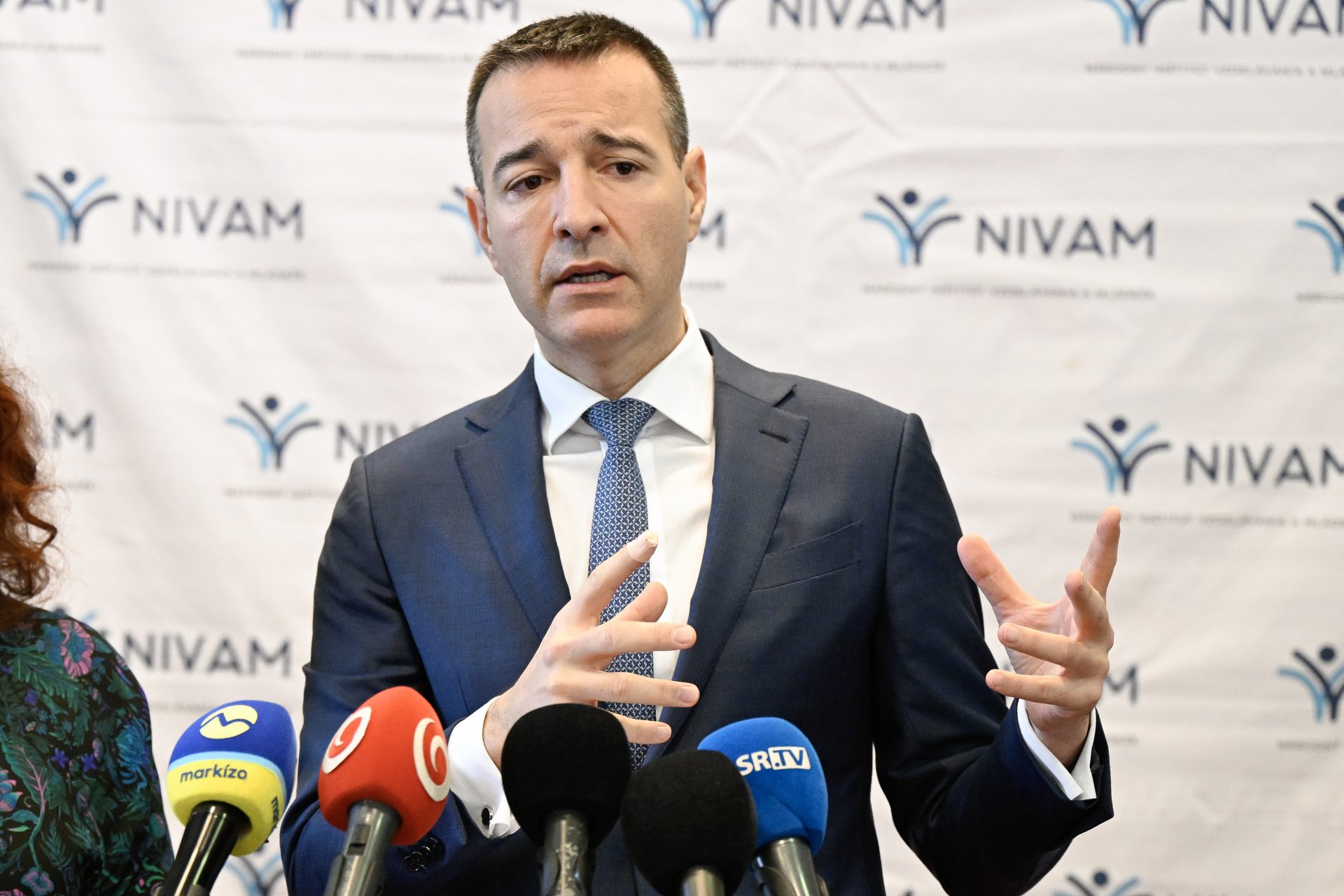
Brussels – The European Union will not impose regulations on the use of mobile phones by students in schools, though member states are encouraged to share advice and best practices. This announcement was made by Minister of Education Tomáš Drucker (Hlas-SD) following a meeting of the EU Council for Education, Youth, Culture, and Sports in Brussels, as reported by TASR correspondent.

The agenda of the Hungarian presidency in the EU Council included several important topics, notably a proposed European diploma. Drucker highlighted Slovakia’s support for student mobility initiatives, such as Erasmus+, while also addressing a new proposal aimed at establishing a collaborative agreement among European schools for a shared diploma.

“The concept holds promise, but there are concerns among some nations that if a certain group forms an agreement while others do not, it could undermine the quality of our universities and lead to a brain drain as young people migrate to foreign institutions,” Drucker explained.

Mobile phone usage in schools was a significant subject of discussion. Drucker noted that many member states recognize that mobile devices, particularly in primary education, can impede students’ concentration and academic performance. Some countries, including Slovakia, have already instituted bans, with Hungary extending these restrictions to the final years of secondary education.

“The dialogue on this issue is informal and based on empirical evidence. It is unlikely any nation would accept regulation in this area. Nevertheless, the Union serves as an excellent platform for us to share experiences, data, and insights, fostering discussion and inspiration,” he added.

According to OECD data, the primary reason for banning mobile phones in schools is the decline in students’ concentration and the deterioration of social interactions during breaks. The data also indicates that students perform better in environments where mobile phone use is restricted.

Drucker also brought attention to the implications of artificial intelligence for competitiveness, warning that Europe is at risk of falling behind other global players in this field.

“We need to adopt a leadership mindset and actively promote the use of artificial intelligence in education,” he asserted.

He mentioned that Slovakia, in conjunction with the OECD, is planning a major educational forum on artificial intelligence in education for November 2025, along with a summit featuring high-profile attendees, including the UN Secretary-General, the President of the European Commission, and leaders from the tech sector.

During his time in Brussels, Drucker engaged in bilateral talks with counterparts from Estonia and France, focusing on early childhood education. He acknowledged that Slovakia faces challenges in accessing preschool education for children from disadvantaged socio-economic backgrounds. He expressed admiration for EU nations where schooling is mandatory from age three, emphasizing its role in better preparing children for primary education by instilling essential skills and habits. (November 25)


Comments

One response to “Printer: EU Rejects Regulation of Mobile Phones in Schools”

  1. SneakerKid Avatar

    Oh, brilliant, let’s just let kids scroll through TikTok in class! Who needs concentration and social skills when you can have a viral dance challenge instead? 🙄📱

Leave a Reply

Your email address will not be published. Required fields are marked *

Last News

UK Remains Open to Chinese Tech After Halting Major Wind Project

UK Remains Open to Chinese Tech After Halting Major Wind Project

Stark, selected by Miliband to lead efforts to transition the U.K. energy system to clean power sources like solar and wind by 2030, mentioned that deals with Beijing will still be part of the green transition.
“China will be part of the future energy system. Chinese technology will be included in the future energy system,” he stated. “It’s about determining how much and in which areas we wa

Read More

Steps to Take If Your Flight Is Cancelled in Europe

Steps to Take If Your Flight Is Cancelled in Europe

At the airport, you check the departure board, only to find your flight cancelled. With no clear explanation, long queues, and uncertainty about what to do next, this scenario is all too common for travelers in Europe.
Fortunately, EU law protects your rights if your flight is cancelled. From refunds to compensation and assistance, you have options — if you know what steps to take.
Quick Guide: W

Read More

May elections: The pollster’s verdict

May elections: The pollster’s verdict

With just a week before voters in Scotland, Wales, and England cast their ballots, could we witness a major transformation in British politics?
In a special episode, Sam and Anne speak with YouGov pollster Patrick English to analyze the data and explore potential impacts on the parties.
As votes distribute across the range, who stands to gain—and is British politics heading towards a new multi-pa

Read More

Die neue Arbeiterführerin Bärbel Bas

Die neue Arbeiterführerin Bärbel Bas

Der 1. Mai ist morgen, ein bedeutender Tag für Bärbel Bas. Als Arbeitsministerin spricht sie in Duisburg vor dem DGB. Die Harmonie in der schwarz-roten Koalition ist kaum noch vorhanden. Bas distanziert sich deutlich von Kanzler Friedrich Merz, der die Rente auf eine „Basisabsicherung“ reduzieren möchte. Gordon Repinski analysiert: Ist Bas die Retterin des Sozialstaates oder steht sie einem notwe

Read More

Récupérer les superprofits de TotalEnergies : oui, mais comment ?

Récupérer les superprofits de TotalEnergies : oui, mais comment ?

Dans son analyse, l’IPP attribue la faible récolte de la taxe sur les profits pétroliers de 2022 à un périmètre d’entreprises concernées plus restreint que prévu ainsi qu’à la possibilité pour les compagnies d’imputer leurs pertes des années antérieures. L’IPP estime que “quelques dizaines d’entreprises représentant 72% des superprofits” ont été épargnées.
C’est pour cette raison que, dans l

Read More

Magyar Aims May Agreement to Unlock €10B of EU Funds for Hungary

Magyar Aims May Agreement to Unlock €10B of EU Funds for Hungary

Following a meeting, described as “highly constructive,” Magyar expressed optimism about Hungary soon receiving EU funds, emphasizing no conditions were imposed against Hungary’s national interests.
Von der Leyen shared on X about a positive exchange with Péter Magyar in Brussels, focusing on steps needed to release EU funds stalled due to corruption and rule-of-law issues. The E

Read More

Berlin Strengthens Military Ties with Washington Amid Merz-Trump Rift

Berlin Strengthens Military Ties with Washington Amid Merz-Trump Rift

A digital marketplace for freelance recruiters is sourcing new combatants for Ukraine, strengthening Vladimir Putin’s position in negotiations and causing concern among European leaders regarding the potential actions of his expanding military force.

Read More

EU Anti-Fraud Office Considers Investigation into Senior Far-Right Patriots Official

EU Anti-Fraud Office Considers Investigation into Senior Far-Right Patriots Official

Transparency International requested the EU’s anti-fraud office (OLAF) on April 24 to investigate administrative failures and recommended disciplinary action against former Belgian MEP and Secretary-General of the Patriots group, Philip Claeys, as per a letter viewed by POLITICO. Transparency International claims Claeys was accountable due to his approval of the spending.
An OLAF spokesperson conf

Read More

Horizon Europe’s SWIFTT Project Unveils Copernicus-Based Tool for EU Forest Threat Prevention

Horizon Europe’s SWIFTT Project Unveils Copernicus-Based Tool for EU Forest Threat Prevention

The SWIFTT platform enhances decision-making in addressing spruce bark beetle outbreaks, wildfires, and windthrow.

The SWIFTT platform enhances decision-making in addressing spruce bark beetle outbreaks, wildfires, and windthrow.
PARIS, FRANCE, April 15, 2026 /EINPresswire.com/ — SWIFTT is an advanced forest management tool utilizing Copernicus Sentinel satellite data and machine learning.

Read More

Last Year’s Heat Was Intense; Next Year Promises Greater Extremes.

Last Year’s Heat Was Intense; Next Year Promises Greater Extremes.

The year 2026 is likely to become the second-warmest on record globally, as indicated by various analyses.
In Europe, last winter was among the coldest in recent times, but temperatures have been recovering. March was the continent’s second-warmest on record.
Wednesday’s report highlighted 2025 as Europe’s worst wildfire season, regarding land burnt and the emissions from these fires.
Sea temperat

Read More