NATO Chief Praised as the ‘Right Leader at the Right Time’ to Handle Trump, Says Portugal’s FM

NATO Allies Face New Defense Spending Challenges Amid Political Shifts

Long vocal about his criticisms of NATO, Donald Trump has regularly accused member nations of relying too heavily on U.S. defense spending while failing to adequately invest in their own military capabilities. With growing momentum to increase NATO’s target for defense expenditure from 2 percent of GDP to 3 percent, member states may soon face heightened financial commitments.

Portugal, which currently allocates just 1.55 percent of its GDP to defense spending, has already pledged to meet the 2 percent benchmark by 2029, moving up its prior timeline of 2030. “We are making a significant effort to reach the 2 percent target by 2029 to demonstrate our dedication to strengthening defense,” Portuguese lawmaker Paulo Rangel said from his office in Lisbon.

Portugal also appears open to further expanding its commitments, should NATO adopt the higher 3 percent spending guideline. “We’re prepared to consider this,” Rangel remarked, adding, “We need to ready ourselves for these potential new demands.”

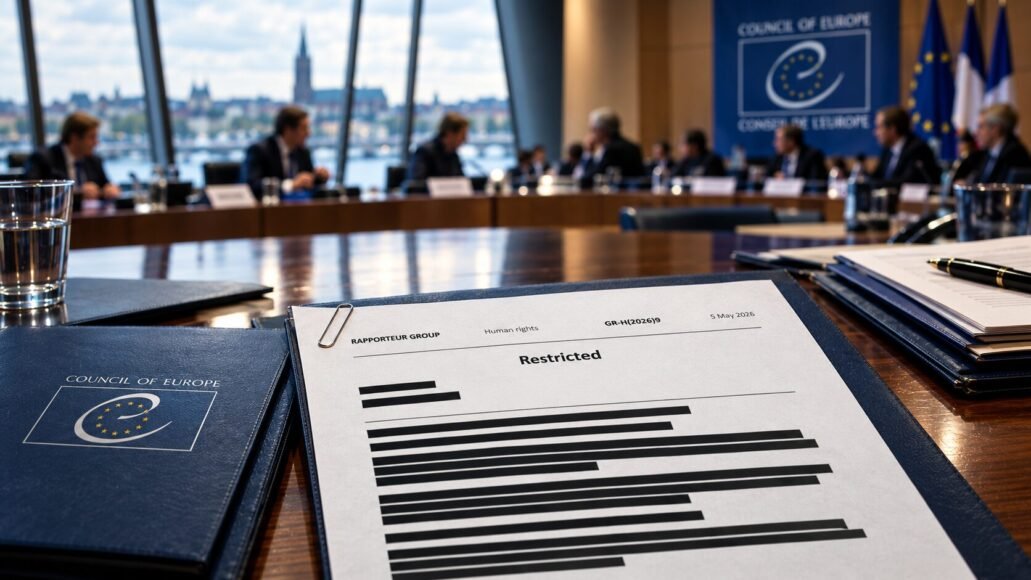
The issue of defense funding is set to dominate discussions when NATO ministers convene in Brussels on Tuesday and Wednesday. Other key topics on the agenda include support for Ukraine and its push to secure an invitation to join the alliance. Ukrainian Foreign Minister Andrii Sybiha will address NATO leaders, while Jordan’s King Abdullah II is scheduled to provide insights on the escalating Middle East conflict.

This meeting comes during a period marked by dramatic geopolitical and political shifts. Trump is on the cusp of returning to the U.S. presidency, while both French President Emmanuel Macron and German Chancellor Olaf Scholz face political vulnerabilities at home. Meanwhile, the European Union is transitioning into a new leadership era with a fresh European Commission and the appointment of Kaja Kallas as the bloc’s new high representative.

“There’s a new cycle ahead, not only because of a possible new American administration but also due to changes within NATO’s own leadership and the European Union,” Rangel emphasized.

As NATO faces mounting security challenges, decisions made during this ministerial meeting may have far-reaching implications for the alliance’s future priorities and its member states’ readiness to shoulder greater defense responsibilities.
Comments

Leave a Reply

Your email address will not be published. Required fields are marked *

Last News

Italy’s defense minister fears nuclear escalation in Iran

Italy’s defense minister fears nuclear escalation in Iran

Guido Crosetto, speaking to Corriere, highlighted the dire consequences of human decisions, referencing Hiroshima and Nagasaki, and noted the ongoing pursuit of nuclear arms. He expressed caution about the nuclear threat, describing it as madness and emphasizing the escalating nature of conflicts.
Despite significant losses in leadership and missile capabilities due to the U.S. and Israel’s milita

Read More

Orbán’s Rival Magyar Criticizes JD Vance’s Hungary Visit as Election Meddling

Orbán’s Rival Magyar Criticizes JD Vance’s Hungary Visit as Election Meddling

For Orbán, who has led Hungary for 16 years under his “illiberal democracy” model, the visit presents an opportunity to showcase global backing during a key phase of the campaign. According to POLITICO’s Poll of Polls, Fidesz is currently behind the opposition Tisza party.
Vance is not the first high-ranking U.S. official to visit Budapest before the election. His visit comes after Sec

Read More

Why EU Foreign Policy Faces Persistent Stalemates

Why EU Foreign Policy Faces Persistent Stalemates

Divergences in EU foreign policy are becoming increasingly apparent as unanimity falters.
Zoya Sheftalovich and Ian Wishart explore the mounting frustration with the EU’s method of crafting foreign policy, especially as disagreements arise regarding Ukraine funding, Russia sanctions, and the conflict in Iran. With Germany and Sweden spearheading efforts to discard the requirement for unanim

Read More

EU Foreign Policy Chaos Sparks Calls for Radical Diplomatic Overhaul

EU Foreign Policy Chaos Sparks Calls for Radical Diplomatic Overhaul

Frustration over the deadlock is increasingly visible, with a coalition led by Germany and Sweden advocating to significantly restrict or completely eliminate national vetoes that permit a single nation to block action.
“We should abolish the unanimity principle in the EU in foreign and security policy before the end of the current legislative period to be better capable of acting internationally

Read More

Germany aims to amend contentious military registration law

Germany aims to amend contentious military registration law

Green defense policy spokesperson Sara Nanni urged a swift clarification from the ministry, stating that citizens should understand their reporting obligations. The provision, dating back to Germany’s 1956 conscription framework, has been largely dormant since 2011 when conscription was suspended. Recently, the military service reform reactivated the rule for peacetime, causing concern about

Read More

Les coulisses de la victoire de Lille pour décrocher l’Autorité douanière européenne

Les coulisses de la victoire de Lille pour décrocher l’Autorité douanière européenne

La délégation a visité la tour blanche destinée à accueillir l’agence, puis s’est rendue dans la vieille ville avec ses architectures flamandes, avant de participer à un cours à l’École européenne portant le nom de l’ancien président de la Commission, Jacques Delors. En fin de journée, plusieurs participants ont reconnu que le fait d’être le premier à se porter candidat constitua

Read More

2026 Hungary Election Highlights Semjén’s Religious Nationalism Initiative

2026 Hungary Election Highlights Semjén’s Religious Nationalism Initiative

As Hungary approaches the parliamentary election on 12 April 2026, Viktor Orbán is once again portraying himself as the protector of Christian Hungary. However, a deeper analysis indicates that the primary force behind the country’s exclusionary church policy is Deputy Prime Minister Zsolt Semjén. Critics suggest that the model he contributed to has politicized rather than protected Christianity,

Read More

EU Cautions Trump Against ‘Illegal’ Bombing of Iran’s Power Stations

EU Cautions Trump Against ‘Illegal’ Bombing of Iran’s Power Stations

The intervention follows Trump’s post on his Truth Social platform on Sunday, stating, “Tuesday will be Power Plant Day, and Bridge Day, all wrapped up in one, in Iran. There will be nothing like it!!! Open the Strait, or you’ll be living in Hell – JUST WATCH!”
“Praise be to Allah,” the president added. Experts and lawyers caution that international law forbids deliberately targeting c

Read More

UN Lawyer Arielle Silverstein Faces Scrutiny for Anti-Religious Online Posts

UN Lawyer Arielle Silverstein Faces Scrutiny for Anti-Religious Online Posts

A senior lawyer within the UN system, Arielle Silverstein, is under scrutiny after archived online posts surfaced in which she mocked various religious communities and advocated political pressure against a minority faith. Silverstein, who has held roles in legal and administrative capacities within the UN, is expected to adhere to the organization’s Staff Regulations, which include upholding the

Read More

What’s at Stake in the May Elections?

What’s at Stake in the May Elections?

With only a month remaining until the local elections in England, Wales, and Scotland, is a significant change in the electoral landscape imminent?
Sir Keir Starmer faces a critical evaluation and assessment of his government and leadership, marking his first major test since the general election. Could the outcomes influence his role as leader?
In this special episode, Sam and Anne welcome electi

Read More