


United States, Minneapolis, January 31, 2026 — According to Eurotoday, ICE protests escalated into a nationwide movement as demonstrators flooded streets, campuses, and public squares following controversial federal immigration enforcement operations that resulted in the deaths of US citizens. The developments renewed scrutiny of federal authority, civil liberties, and law enforcement accountability across the country.
Minneapolis Emerges as Flashpoint
Minneapolis quickly became the center of national attention after two fatal encounters involving federal immigration agents shocked local communities and reverberated far beyond Minnesota. The incidents occurred during a multi-agency enforcement initiative described by federal authorities as necessary for public safety, while critics argued the operation was excessive and poorly coordinated.
Within hours of the shootings, residents gathered at memorial sites across the city. Candles, handwritten signs, and photographs marked spaces of mourning that soon transformed into hubs of civic mobilization. By the following day, demonstrations had grown beyond city limits, reflecting wider frustration with immigration enforcement practices.
Timeline of Events
The enforcement operation, carried out earlier in January, involved multiple federal agencies working in coordination across several Minneapolis neighborhoods. Officials stated the initiative targeted individuals with outstanding warrants. However, questions quickly emerged regarding the intelligence used, the degree of force applied, and the decision-making process during the encounters.
As new details surfaced, local leaders demanded transparency, while civil rights organizations called for independent investigations. By the end of the week, coordinated demonstrations were announced in dozens of cities, indicating the issue had moved beyond a localized tragedy into a national debate.
Expansion Into a Nationwide Movement
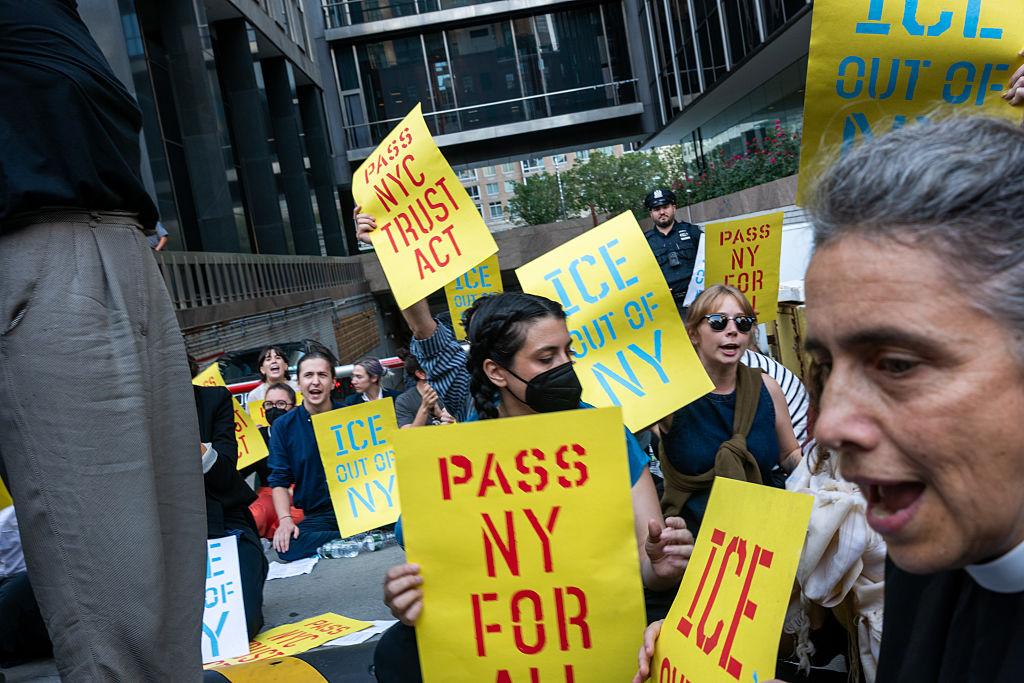
What began as localized outrage soon evolved into synchronized national action, with ICE protests appearing in major metropolitan areas including New York, Los Angeles, Chicago, Atlanta, Boston, and Seattle, as well as in smaller cities and college towns.
Organizers relied heavily on digital platforms to coordinate marches, walkouts, and economic shutdowns. Messaging emphasized solidarity with affected families and framed the demonstrations as a defense of constitutional protections rather than a partisan campaign. The scope and speed of mobilization positioned the ICE protests among the fastest-spreading protest movements in recent years.
Student Walkouts and Labor Participation
Educational institutions played a significant role in amplifying the demonstrations. High school and university students organized walkouts, citing concerns over civil liberties and the long-term effects of enforcement practices on immigrant communities. In several regions, the ICE protests were accompanied by teach-ins and campus forums examining federal authority and civil rights.
Labor unions and worker advocacy groups also joined demonstrations in select cities, temporarily halting operations or encouraging members to participate during off-hours. While participation varied by region, organized labor added






Leave a Reply