


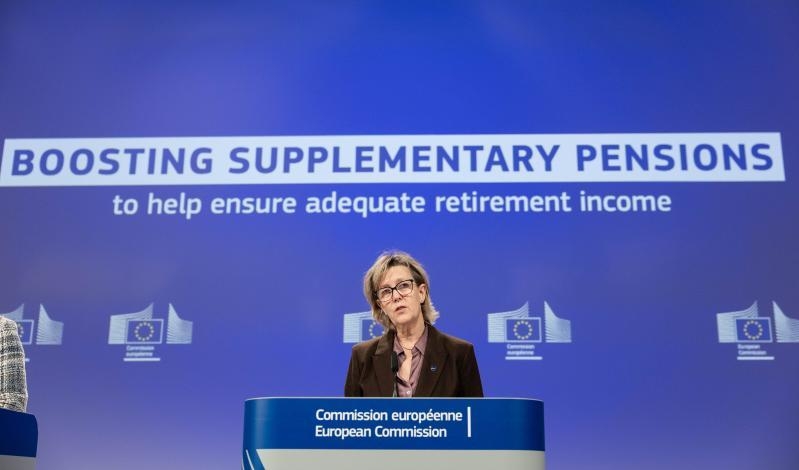
BRUSSELS – The European Commission aims to ensure that future generations have “adequate living conditions in old age” within the European Union (EU) as part of its commitment to complementary pensions.
“Our focus is not merely on estimating potential gains, but rather on fostering conditions that will allow for adequate pensions for future generations,” stated Maria Luís Albuquerque, the European Commissioner for Financial Services and the Union of Savings and Investments, during a press conference in Brussels where proposals for automatic complementary pensions and professional funds were unveiled.
She expressed concern for younger individuals whose pensions, reliant solely on the public system, may not provide sufficient support for a comfortable retirement. “We seek to encourage member states to adhere to these recommendations to ensure a better quality of life for future retirees,” she emphasized.
Maria Luís Albuquerque acknowledged the low salary situation in Portugal, highlighting that those with lower incomes face a greater risk of poverty in retirement if issues remain unaddressed. “This concern is particularly significant for populations in member states where low-income individuals constitute a larger demographic,” she said.
When questioned about the possibility of Portuguese companies offering complementary pension plans, Albuquerque noted that there are various models for implementation, advocating for participation from all companies of varying sizes and addressing the needs of workers in less traditional employment scenarios who also require pension security.
The European Commission is urging EU nations to reform their pension systems to encourage complementary options—such as retirement insurance and savings plans (PPR)—which are not widely utilized in Portugal, recommending automatic enrollment and professional funds.
The Portuguese pension system, primarily reliant on the public Social Security pension, faces challenges similar to other EU states, including rapid demographic aging, the likelihood of reduced future pensions, low participation in supplementary plans, and irregular contribution patterns.
To tackle these challenges, Brussels recommends that Portugal and other EU countries implement automatic enrollment in complementary pension plans, allowing workers to contribute a small percentage of their salary with the option to exit freely.
These recommendations require approval by the Council and Parliament, as the matter falls under national jurisdiction.
The Commission estimates that transitioning to complementary savings mechanisms could yield over one trillion euros for EU citizens. (20/11/2025)











Leave a Reply