London Hosts Emergency Talks as Sudan Nears Total Collapse

On April 15, as Sudan marks two years of relentless conflict, Britain will co-host a high-level summit at Lancaster House in London alongside Germany and France. The conference will gather foreign ministers from nearly 20 countries and international organizations with a single objective: to unite efforts in pushing Sudan’s rival generals toward a ceasefire—or, at the very least, toward accountability.

This diplomatic move is modest in contrast to the scale of Sudan’s suffering, a crisis that remains among the most devastating and underreported humanitarian emergencies in the world. While global attention remains largely concentrated on Gaza and Ukraine, Sudan—Africa’s third-largest country—is experiencing a slower-moving catastrophe that is every bit as grim.

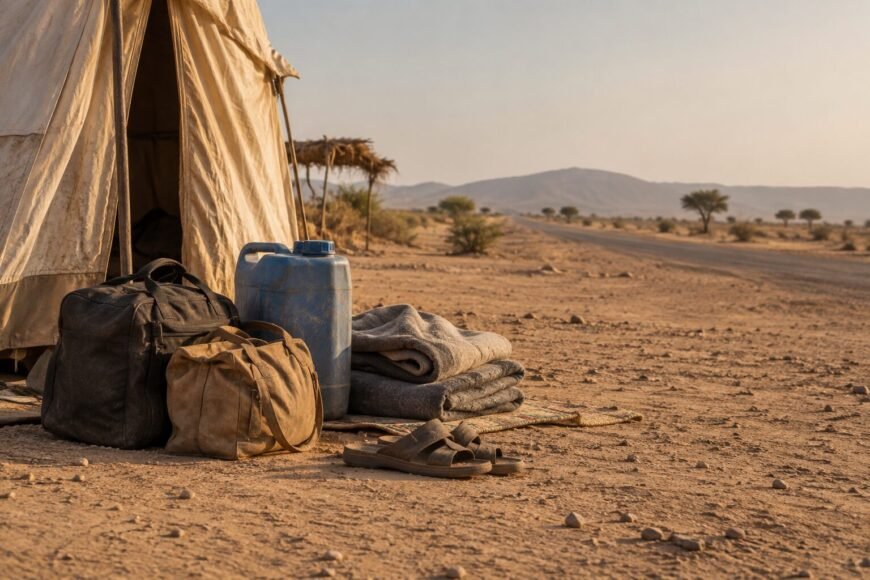
Over 12 million people have been displaced since the conflict broke out in April 2023. Entire cities lie in ruins, children face starvation, and the vibrant communities that once defined the nation are now little more than statistics in aid reports. What began as an internal power struggle has devolved into full-blown humanitarian collapse—and much of the world has looked away.

The conflict stems from a violent rivalry between Gen. Abdel Fattah al-Burhan of the Sudanese Armed Forces (SAF) and Gen. Mohamed Hamdan Dagalo—commonly known as Hemedti—who leads the paramilitary Rapid Support Forces (RSF). Once partners in a post-coup transition, they have turned on each other in a brutal war for control, fueled by impunity and international indifference.

The devastation is most visible in Darfur, where cities like El Geneina have suffered repeated attacks targeting the Masalit ethnic minority. Eyewitness reports and satellite imagery show widespread destruction. The RSF—descendants of the Janjaweed militias once accused of genocide—appear to be repeating history. Survivors recount brutal acts of sexual violence, starvation as a siege tactic, and the conscription of child soldiers.

In Sudan’s capital, Khartoum, once a bustling metropolis, war has shut down hospitals, cut off water supplies, and left schools inoperative. The RSF controls key urban areas and has established a shadow regime centered around torture, looting, and extortion.

One particularly tragic case involves Alwaleed Abdeen, a young Sudanese entrepreneur who was rescued from an RSF-run detention facility so emaciated and injured that his family did not recognize him. He later died of his wounds. His case is just one of many—made notable only because his story made it out.

The statistics reflect a crisis of immense proportions. According to the United Nations, nearly 18 million Sudanese are suffering from acute food insecurity. In North Darfur, famine is not a looming threat—it is already unfolding, slowed only by bureaucratic inertia and blocked aid corridors. Still, Sudan rarely garners media attention. Why? Because it is geopolitically inconvenient.

There are no clear heroes, no moral clarity, and no strategic benefits for the West. Instead, there are two ruthless commanders backed by regional powers, each seeking dominance at any cost.

Efforts by the African Union and Intergovernmental Authority on Development to mediate have yielded little progress. Western nations—quick to condemn atrocities elsewhere—have offered only muted responses to Sudan’s descent. But silence is not neutrality; it is complicity through inaction.

The London conference presents a vital opportunity to mobilize humanitarian resources, open aid corridors, and issue a united diplomatic demand for an end to the violence. For Sudanese civilians, it offers a flicker of hope.

Western and regional actors must pledge to apply real pressure on both warring factions, which includes targeted sanctions—not just symbolic visa bans—on those responsible for atrocities. It also means imposing a comprehensive arms embargo and confronting the countries that continue to supply weapons to both sides. Long-term diplomatic engagement, led not only by European partners but also by the United States, which once supported Sudan’s democratic transition in 2019, is urgent.

Notably, the Sudanese Armed Forces and the Rapid Support Forces have not been invited to the London talks—nor has the Sudanese government. The exclusion of these parties signals a calculated judgment: that neither side is currently willing to negotiate in good faith, both locked in a nihilistic power struggle.

For the UK, Germany, and France, the immediate aim is to build consensus among external players who are, in many cases, quietly prolonging the war. Yet this exclusion is not without consequence. Sudan’s foreign minister has already dismissed the conference as

Comments

7 responses to “London Hosts Emergency Talks as Sudan Nears Total Collapse”

  1. silver agent Avatar
    silver agent

    Look at that, London’s hosting a summit to resolve Sudan’s chaos while the rest of us are just trying to figure out how to keep our tea from going cold! ☕️🙄 Must be nice to gather 20 foreign ministers to chat while the real action is happening in a country that’s basically gone ‘off the grid.’

  2. rando tank Avatar
    rando tank

    Oh, lovely, another summit in London, because clearly a posh meeting with diplomats will magically fix all of Sudan’s problems—who needs boots on the ground when you have a fancy table and a nice tea set? 🙄☕ Let’s just hope the only thing getting bombed this time is their overpriced biscuits.

  3. blood taker Avatar
    blood taker

    Isn’t it just charming how the West organizes a fancy summit to “discuss” Sudan while the real action is happening in the back alleys? 🎩 Meanwhile, the Sudanese are probably thinking, “Cheers for the verbal gymnastics, but can we just get some food instead?” 😏

  4. Skirble Avatar

    In a world where we solve problems with high-level summits instead of, you know, actual solutions, it’s comforting to see London hosting talks about Sudan—maybe we should all just send a strongly worded email instead? 🤷‍♂️ #DiplomacyAtItsBest

  5. Lady Peach Avatar
    Lady Peach

    another lovely tea party for diplomats, where the only thing more absent than a solution will be any actual interest in helping. 🍵😏

  6. hemingway mirmillone Avatar
    hemingway mirmillone

    “just another posh tea party” ☕, while the rest of us wonder if they’ve considered sending a few scones to the folks on the ground—at least they might enjoy a nibble while the world debates from a distance. 🤷‍♂️

  7. flame out Avatar
    flame out

    just another posh tea party with a side of empty platitudes, innit? 🤷‍♂️ As if a bunch of diplomats in fancy suits can just wave a magic wand and fix a country that’s been a hot mess since forever! 🍵😏

Leave a Reply

Your email address will not be published. Required fields are marked *

Last News

Referendum Loss Brings Italy’s Meloni Down to Earth

Referendum Loss Brings Italy’s Meloni Down to Earth

Elly Schlein, leader of the opposition Democratic Party, expressed confidence in defeating Meloni in the next general election, highlighting the significant and unexpected democratic participation as a clear message to the current government to focus on the country’s actual priorities.
Former Prime Minister Giuseppe Conte, leader of the populist 5Star Movement, welcomed “a new spring and a n

Read More

The "New" Face of Racism in Europe: When Prejudice Wears a Cultural Mask

The "New" Face of Racism in Europe: When Prejudice Wears a Cultural Mask

Bashy Quraishy
Secretary General – European Muslim Initiative for Social Cohesion – Strasbourg
Thierry Valle
Coordination des Associations et des Particuliers pour la Liberté de Conscience
The International Day for the Elimination of Racial Discrimination, observed annually on 21 March, commemorates the Sharpeville Massacre in 1960, when police in Sharpeville opened fire on a peaceful protest aga

Read More

EU Special Envoy for Cyprus Resigns

EU Special Envoy for Cyprus Resigns

A Cypriot official stated that flight disruptions were experienced not only to Cyprus but also to other regional countries due to developments in the area, necessitating flexibility.

Read More

European Commission Requests Hungary to ‘Clarify’ Alleged Information Sharing with Russia

European Commission Requests Hungary to ‘Clarify’ Alleged Information Sharing with Russia

Szijjártó has dismissed the report. Hungary’s Europe Minister János Bóka stated to POLITICO: “This is false information being circulated as a desperate response to [Hungarian Prime Minister Viktor Orbán’s] Fidesz gaining ground in the election campaign. The Hungarian people are not easily misled.” Hungarian voters are preparing for a significant election on April 12.
Commission President Ursula vo

Read More

Is Hungary Compromising EU Secrets? Trust Issues in Brussels

Is Hungary Compromising EU Secrets? Trust Issues in Brussels

Is Hungary leaking EU secrets? A crisis of trust in Brussels
Zoya Sheftalovich and Nick Vinocur discuss Donald Tusk’s accusation that Hungary might have disclosed confidential European Council discussions to Moscow and the implications for trust, decision-making, and EU politics.

Read More

How Two Wars Are Dividing Europe and the US

How Two Wars Are Dividing Europe and the US

EU leaders are visibly anxious as Trump has criticized them for not assisting in unblocking the Strait of Hormuz, a crucial shipping route for global oil affected by Iran. He also linked NATO’s relevance to the Middle East conflict, stating on Truth Social that NATO is ineffective and accusing EU leaders of cowardice for complaining about oil prices while avoiding action. Additionally, Mosco

Read More

EU Excludes Hungary from Sensitive Talks Amid Russia Leak Concerns, Say Diplomats

EU Excludes Hungary from Sensitive Talks Amid Russia Leak Concerns, Say Diplomats

In a Saturday report, the Washington Post stated that Orbán’s government maintained close ties with Moscow during the Ukraine war, with Foreign Minister Péter Szijjártó updating Russian Foreign Minister Sergey Lavrov during meetings. Concerns about Hungary sending information to Moscow led to increased use of breakout formats with like-minded leaders instead of meetings with all 27 EU members, acc

Read More

Tusk: Hungary’s Leaks to Moscow from EU Summits Not a ‘Surprise’

Tusk: Hungary’s Leaks to Moscow from EU Summits Not a ‘Surprise’

Szijjártó dismissed the accusations in a post on X, labeling it as “fake news.”
Szijjártó was replying to a post by Poland’s Foreign Minister and Deputy Prime Minister Radosław Sikorski, which referenced the Washington Post claim. “This would explain a lot, Peter. @FM_Szijjarto,” Sikorski wrote.
“Fake news as always,” Szijjártó responded to Sikorski. “You are telling lies to support Tisza Party fo

Read More

Tehran Targets Near Israeli Nuclear Facility Amid Trump’s Threats to Attack Iranian Power Plants

Tehran Targets Near Israeli Nuclear Facility Amid Trump’s Threats to Attack Iranian Power Plants

Iranian state TV reported that Saturday’s strikes by Tehran were in response to an earlier attack on Iran’s Natanz nuclear facility, according to the BBC. Mohammad Bagher Ghalibaf, the speaker of Iran’s parliament, stated that ballistic missiles bypassing Israeli defenses near the nuclear research site suggests “a new phase” in the conflict. He posted on social media

Read More

The Impact of a Legal Error: How a Jurisdictional Mistake Influenced Decades of War

The Impact of a Legal Error: How a Jurisdictional Mistake Influenced Decades of War

In the quiet realm of international law, where treaties and resolutions lie undisturbed, there’s been a longstanding silence regarding the origins of one of today’s most persistent conflicts. Typically, the Middle East’s strife is perceived through political failures, diplomatic impasses, or age-old hatreds. However, Mehmet Şükrü Güzel’s new book, “The Misclassification,” propos

Read More