


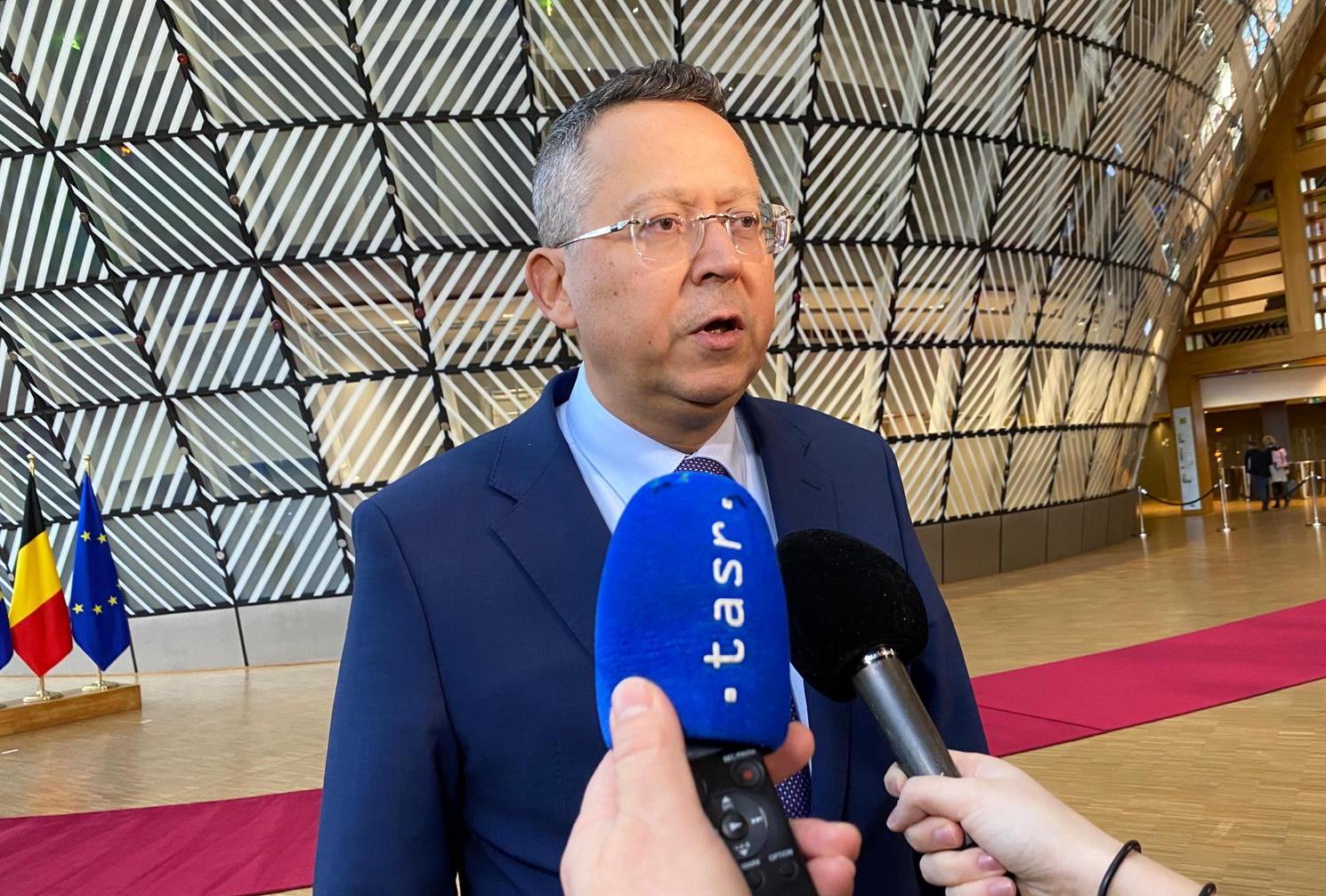
Brussels ** Slovakia Will Maintain Current Defense Spending Levels
In a statement made in Brussels on Tuesday, Slovak Finance Minister Ladislav Kamenický (Smer-SD) confirmed that Slovakia has no plans to exceed its defense spending commitment of two percent of GDP, a target already met as part of its obligations to the North Atlantic Alliance. This remark follows discussions among Eurozone and EU finance ministers, as reported by TASR’s Brussels correspondent.
When questioned about the informal meeting held on Monday among select EU leaders at the invitation of French President Emmanuel Macron, Kamenický admitted he lacked direct insights from the Paris gathering, which did not result in any binding agreements regarding increased defense budgets.
“What I can confirm is that Slovakia is committed to maintaining its two percent of GDP allocation for defense, and we do not intend to alter this commitment,” he stated.
Kamenický acknowledged ongoing discussions among some EU countries about raising defense expenditures. However, he regards this as a matter for the Prime Minister. As Finance Minister, he is primarily focused on how such spending might affect fiscal regulations imposed by Brussels, particularly during efforts to stabilize the national economy.
“We want to avoid facing penalties related to any increases in spending. Therefore, we stand firm that two percent is adequate,” he asserted.
He also emphasized Slovakia’s strategy of dual-use military expenditures, where some defense spending can benefit civilian sectors as well. This includes projects like bridge repairs that serve both civilian and military purposes, or the development of a military hospital in Prešov.
European Commission President Ursula von der Leyen recently suggested the possibility of exempting member states’ defense spending from the constraints of the Stability and Growth Pact, which mandates responsible fiscal management to prevent excessive debt accumulation. Kamenický highlighted that he must assess this proposal from a financial perspective due to his role.
“I need to consider how this might affect our deficit. It could have implications for Slovakia’s debt and potentially influence our credit rating, so various factors need to be taken into account,” he explained. He also mentioned discussions about increasing the European Investment Bank’s (EIB) role in financing defense expenditures and creating a fund similar to the Recovery and Resilience Plan for defense projects. Still, he pointed out that there remains a lack of consensus among EU member states on this issue. (February 18)
“What I can confirm is that Slovakia is committed to maintaining its two percent of GDP allocation for defense, and we do not intend to alter this commitment.” ** Ladislav Kamenický




Leave a Reply