


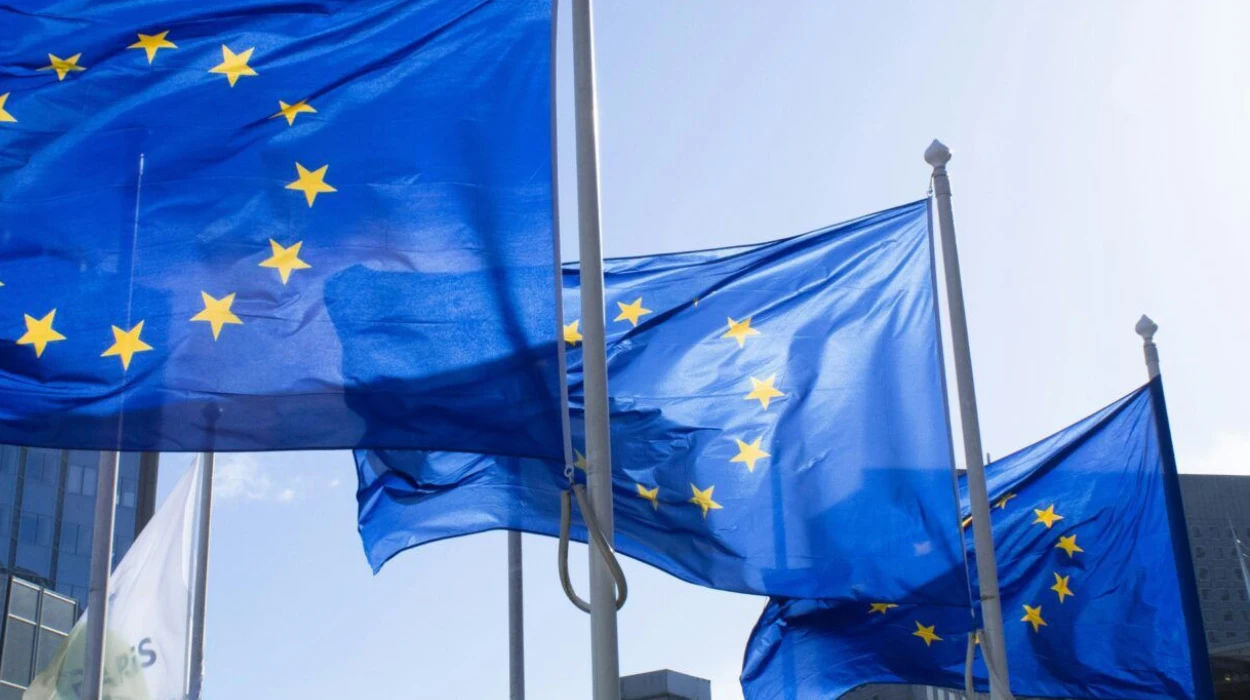
The European Union’s status as a global leader in sustainability and climate action has come under increasing scrutiny in the current legislative term.
When the European Commission unveiled the Green Deal in 2019, it signaled the EU’s ambition to reach net zero greenhouse gas emissions by 2050, positioning itself at the forefront of the global climate effort.
However, momentum has faltered. In December, a last-minute delay of the EU Deforestation Regulation (EUDR)—a flagship policy aimed at ensuring imports into the EU are not linked to global deforestation—raised questions about the bloc’s readiness and the preparedness of suppliers to comply with the administrative burdens imposed by the new rules.
Only weeks later, the European Commission introduced its Omnibus Simplification Package, widely perceived as an effort to scale back requirements on corporate sustainability reporting and supply chain transparency. The stated goal: to help European companies stay competitive alongside economic powerhouses like the United States and China.
Despite confirmation that the EU’s 2050 net zero targets remain unchanged, the move was seen as a retreat from the Green Deal’s once-bold ambition.
Such a shift had been anticipated in some circles following the election of Donald Trump as U.S. President. Business leaders quickly echoed his rhetoric, particularly criticizing the financial burden of sustainability regulations.
Even before Trump’s inauguration, America’s six largest banks withdrew from the Net Zero Banking Alliance (NZBA), fearing backlash from critics of “woke capitalism.”
Founded during COP26 in 2021, the NZBA aimed to align banking activities with climate goals. But that vision seems increasingly distant.
The fossil fuel industry has also taken a step back. With a White House championing “Drill, Baby, Drill,” oil and gas development has regained appeal. BP recently announced a retreat from renewables—following Shell’s example, which reaped higher profits from similar moves a year earlier.
Meanwhile, several large corporations have reneged on Science-Based Target Initiative commitments meant to align emissions reductions with the Paris Agreement. Microsoft, Walmart, and Amazon were among the 200 companies that dropped such pledges in March. Unilever, once a leader in environmental and social governance (ESG), reversed course so significantly that its integrity was questioned by many observers.
Nike also drastically scaled back sustainability efforts, laying off dozens of environmental managers just eight years after then-CEO Mark Parker declared that sustainability would be a “powerful engine for growth.” Facing stagnant sales, Nike initiated an internal “sustainability bloodbath” to trim $2 billion in costs.
In this climate, it was little surprise when a Bain & Company report last year concluded that many CEOs were deprioritizing sustainability in the face of inflation, disruptive tech, and geopolitical instability. When tough choices arise, climate efforts often end up on the chopping block.
It didn’t take long for U.S. business interests to lobby against EU green policies. Most recently, the American wood and paper lobby urged that U.S. companies be excluded from EUDR compliance. Heidi Brock, CEO of the American Forest and Paper Association, argued that requiring proof of deforestation-free sourcing since 2020 would be “costly and unnecessary.” She called for the U.S. to be designated a “no risk” country, exempt from the regulation, to protect the $1.3 trillion transatlantic trade relationship.
But what about companies worldwide that have already invested in costly adjustments to comply with EUDR? While differentiating between “high-risk” and “low-risk” countries might be justified, giving any nation a complete pass threatens to undermine global climate accountability. Exemptions could set a dangerous precedent.
Still, not every sector is abandoning sustainability. FoodDrink Europe, while supporting the EU’s simplification proposals, emphasized the continued need for “swift and appropriate incentives for decarbonisation.”
Some businesses welcomed the easing of reporting burdens under the revised Corporate Sustainability Reporting Directive (CSRD). The changes now exclude 80% of companies, saving Europe’s small and medium-sized enterprises (SMEs) an estimated €6.3 billion in administrative costs. Firms with fewer than 1,000 employees and less than €50 million in turnover will be exempt from CSRD, though approximately 6,000 of the EU’s largest companies will remain subject to the Corporate Sustainability Due Diligence Directive (CSDDD).
European Commission President Ursula
Comments
One response to “Is the EU Retreating from Its Green Deal Promises?”
-
Looks like the EU’s Green Deal is now on a “sabbatical” – who knew saving the planet could be so exhausting? 🌍💤 At this rate, they’re just a few bureaucratic hiccups away from becoming the world’s leading experts in “greenwashing”! 😂

Last News
Bardella oder Le Pen: Wer führt Frankreichs Rechte in die Wahl?
Heute entscheidet ein französisches Berufungsgericht über die politische Zukunft von Marine Le Pen. Eine Bestätigung des Urteils wegen Veruntreuung von EU-Geldern, das auch ein fünfjähriges Ämterverbot einschließt, könnte erhebliche Auswirkungen auf die Führung der rechtsextremen politischen Landschaft in Frankreich haben. Jordan Bard

Iran’s Sovereignty at the Forefront Amid Khamenei Funeral Indicating Regional Shift

Portugal and Spain Bear Europe’s World Cup Hopes
Monday’s Dallas clash sees two Iberian teams, two football eras, and raises questions about Europe’s depth in an expanded World Cup
Portugal and Spain face off in Dallas on Monday in a World Cup round-of-16 match that goes beyond a border rivalry. Spain comes as European champions with a clean knockout win, while Portugal, led by Cristiano Ronaldo, pursue the major international title missing fr
Belgium Considers Palestinian Recognition Following Hamas Withdrawal from Gaza Governance
The health ministry in Gaza, governed by Hamas, reported more than 73,000 Palestinian deaths caused by
AI Manufacturing Market Grows with Solstice’s $14.5 Billion Acquisition of Element Solutions

Final Vote Approaches for EU Social Security Rules
Parliament to Approve Key Changes for Europeans Living and Working Across Borders
European lawmakers are set to finalize new social security coordination rules aimed at reducing uncertainty for millions working and residing across EU borders. The reform is scheduled for debate in Strasbourg on Monday night and a vote on Tuesday, addressing which country is responsible for benefits when EU citize
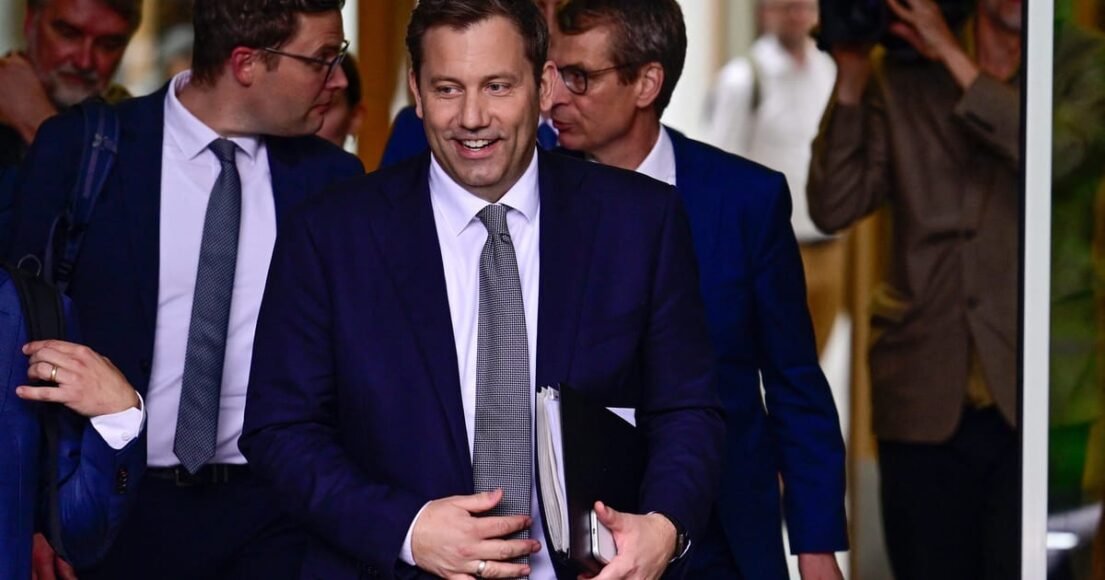
Germany Increases Defense Spending in New Budget Plan Before NATO Summit
The 2027 spending plan was released before the upcoming NATO summit in Ankara, where European leaders aim to persuade U.S. President Don

Press Releases vs. Digital PR: Understanding the Modern Business Difference
London, July 06, 2026 – Eurotoday Newspaper — Press Releases vs Digital PR is drawing increased attention as businesses shift toward modern communication strategies that improve media visibility and online authority. Marketing professionals say companies are increasingly combining traditional press releases with digital PR campaigns to reach wider audiences and strengthen their search presence.

The Myth of Toyota’s Reliability: How a Brand-New Hybrid Left Me Stranded, and Why Japan’s Response Broke My Trust
Introduction:
For decades, Toyota has rested comfortably on a hard-earned reputation for bulletproof reliability. But for Valerii S., a
Leave a Reply