Iran Escalates Strikes on the United Arab Emirates

The hybrid conflict involving Iran and several regional powers has reached a particularly concerning phase of escalation. On March 16, the United Arab Emirates’ Ministry of Defense reported that its air defense systems intercepted six ballistic missiles and twenty-one drones launched from Iran targeting Emirati territory. This announcement, made via the Emirati news agency WAM, is part of ongoing attacks that Abu Dhabi claims have been occurring for weeks, reflecting increasing military tension in the Gulf.

The figures from Emirati authorities highlight the scale of this conflict. Since the start of what the government terms “blatant aggressions,” 304 ballistic missiles, 15 cruise missiles, and 1,627 drones have been intercepted. These numbers demonstrate both the intensity of the attack campaign aimed at the UAE and the effectiveness of the country’s defense systems in neutralizing many threats before they reach their targets.

Modern conflicts in the Middle East increasingly rely on drones and precision missiles. Over recent years, Iran has built a significant arsenal of medium-range ballistic missiles, kamikaze drones, and cruise missiles capable of long-range strikes. Drones have become a strategic tool due to their cost-effectiveness, low-altitude flight capability, and potential to overwhelm air defenses. Such technology enables coordinated attacks meant to test, exhaust, or bypass defenses.

Despite reported interceptions, the attacks have caused casualties, with two UAE armed forces members killed in the line of duty and five civilian fatalities. The victims included individuals of varied nationalities such as Pakistani, Nepali, Bangladeshi, and Palestinian, reflecting the demographic diversity of the UAE, with many expatriate workers from Asia and the Arab world.

The number of injured further illustrates the attacks’ impact. According to the Ministry of Defense, 145 people sustained injuries ranging from minor to severe, including Emirati citizens and individuals from numerous nationalities such as Egyptians, Sudanese, Ethiopians, Filipinos, Pakistanis, Iranians, Indians, Bangladeshis, Sri Lankans, Azerbaijanis, Yemenis, Ugandans, Eritreans, Lebanese, Afghans, Bahrainis, Comorians, Turks, Iraqis, Jordanians, Palestinians, Ghanaians, Indonesians, and Swedish citizens.

These attacks pose a strategic question about the Gulf’s stability and the security of global energy infrastructure. The UAE holds a central position in the global economy as an energy producer and a major financial, logistical, and commercial hub connecting Asia, Europe, and Africa. A prolonged threat against its territory could impact energy markets, international trade routes, and maritime security in the Strait of Hormuz.

In response, the Emirati Ministry of Defense has emphasized readiness and determination, stating that the armed forces remain prepared to respond to any threat to national security. Authorities reiterated their commitment to protecting sovereignty, preserving stability, and safeguarding strategic and economic interests.

This approach is part of a broader military modernization strategy pursued by the UAE over the past decade. The country has invested significantly in advanced air defense and anti-missile systems, including Patriot batteries, alongside enhancing surveillance, intelligence, and coordination with international allies.

However, the current escalation cannot be viewed solely through a military lens, as it is part of a broader geopolitical context marked by the rivalry between Iran and Gulf states and a network of indirect conflicts from Yemen to Syria, including Iraq and Lebanon. Tehran and its regional adversaries have engaged in strategic confrontations through proxies and allies for years. The recent attacks on Emirati territory may signal an expansion of this confrontation.

The UAE, seen as a pragmatic and influential regional actor, is now at the center of a tension dynamic that could reshape the Gulf’s strategic balance. Its growing economic influence, international alliances, and role in global energy routes make it a strategic target in regional rivalries.

The international community is increasingly concerned about this development, as a direct confrontation between Iran and Gulf states would significantly impact Middle Eastern stability and global security. The repeated threats against the UAE underscore the Gulf’s sensitivity and strategic importance.

For Abu Dhabi, the challenge is maintaining an effective defensive stance while avoiding an escalation spiral that could turn these attacks into a broader conflict. The coming weeks will be crucial in determining whether these strikes are a limited pressure strategy or the start of a prolonged confrontation in the Gulf’s heart.

Comments

One response to “Iran Escalates Strikes on the United Arab Emirates”

  1. Paris Boost Avatar
    Paris Boost

    Isn’t it just delightful when a country decides to throw a few missiles around like confetti at a wedding? 🎉 Clearly, the Gulf’s become the hottest venue for a not-so-fun game of “Drones and Missiles: The Musical!”

  2. Seems like Iran’s trying to turn the Gulf into their personal shooting range; good thing the UAE’s got a defense budget bigger than a small European country’s GDP! 🎯💸

Leave a Reply

Your email address will not be published. Required fields are marked *

Last News

Iran Escalates Strikes on the United Arab Emirates

Iran Escalates Strikes on the United Arab Emirates

The hybrid conflict involving Iran and several regional powers has reached a particularly concerning phase of escalation. On March 16, the United Arab Emirates’ Ministry of Defense reported that its air defense systems intercepted six ballistic missiles and twenty-one drones launched from Iran targeting Emirati territory. This announcement, made via the Emirati news agency WAM, is part of o

Read More

EU Diplomat to Trump: Europe Seeks to Secure Strait of Hormuz

EU Diplomat to Trump: Europe Seeks to Secure Strait of Hormuz

At present, missions initially created to safeguard EU commercial ships from Houthi rebel attacks in Yemen are inactive in the strait and constrained by engagement rules limiting their impact, according to a senior EU diplomat.
“We will discuss with member states if changing this mission’s mandate is feasible,” Kallas stated. “We have proposals available… The question

Read More

Former Top Diplomat Criticizes EU for Not Confronting Trump, Claims Loss of Credibility

Former Top Diplomat Criticizes EU for Not Confronting Trump, Claims Loss of Credibility

The criticism arises as von der Leyen encounters increasing dissent from Spanish socialists from Sánchez’s party, a crucial element of her leading coalition in the European Parliament. Last week, senior lawmakers criticized comments from the Commission president, where she stated “Europe can no longer be a custodian for the old-world order, for a world that has gone and will not return.”
Represent

Read More

5 Key Insights from France’s Local Elections

5 Key Insights from France’s Local Elections

The prime example is the northern city of Lille, where the France Unbowed candidate was by one projection tied with the incumbent center-left mayor. France Unbowed is also positioned to come in first in Roubaix, a populous, working-class city on Lille’s outskirts.
The party’s prospects in this contest were uncertain after a controversy regarding the death of a far-right activist last month. Howeve

Read More

Sánchez’s Socialists Expected to Face Another Defeat in Castilla y León Regional Elections

Sánchez’s Socialists Expected to Face Another Defeat in Castilla y León Regional Elections

The People’s Party, governing in Castilla y León, is estimated to remain the largest party with 30 to 32 lawmakers but will not achieve a governing majority. They may seek a coalition with the far-right Vox, which is projected to obtain over 20 percent of the vote, increasing its seats from 13 to 17-19. Alfonso Fernández Mañueco, the regional president, formed the first PP-Vox coalition in 2022, w

Read More

‘Tusk Warns of Real Threat of ‘Polexit”

‘Tusk Warns of Real Threat of ‘Polexit”

The alert follows Nawrocki’s veto of legislation on Thursday that would have enabled Poland to acquire up to €43.7 billion in low-interest EU defense loans. Tusk’s administration lacks the parliamentary majority required to overturn the veto, intensifying uncertainty about how Poland will fund planned military expenditures projected to reach nearly 5 percent of GDP this year.
Tusk has cauti

Read More

Iran Under U.S. Airstrikes

Iran Under U.S. Airstrikes

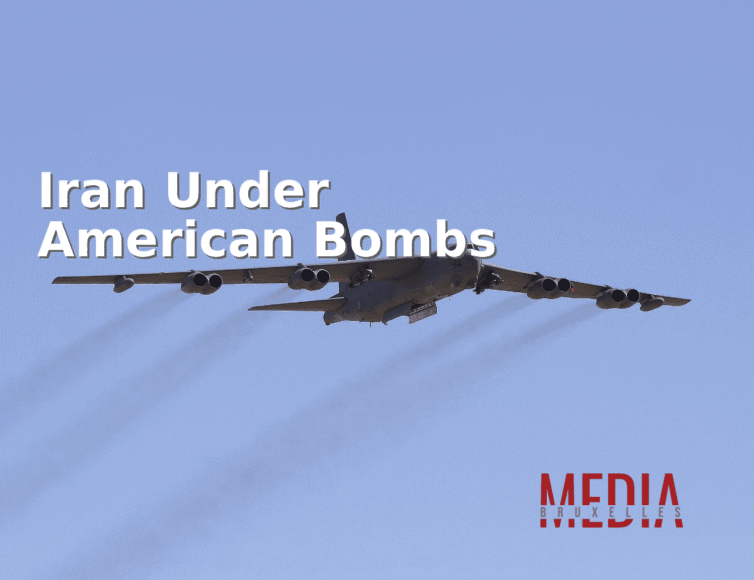
Several major Iranian cities, including Tehran, have experienced explosions, signaling a new phase in the military escalation involving Iran, the United States, and its allies. The confirmed deployment of B-52 bombers as part of the U.S. operation Epic Fury indicates that the conflict has reached a particularly dangerous level. These bombers, symbols of American air power, demonstrate Washington&

Read More

Iran Reports ‘Military Cooperation’ from Russia and China

Iran Reports ‘Military Cooperation’ from Russia and China

On Friday, U.S. President Donald Trump speculated that Russian President Vladimir Putin might be assisting Iran “slightly.”
“I guess, and he probably thinks we’re helping Ukraine, right?” remarked Trump, referring to support for Kyiv against Moscow’s invasion.
Iran and Russia have fortified ties in response to U.S. opposition, with Iran supplying Russia with its Shahed drones, us

Read More

Orbán’s Still Winning Over Older Rural Voters — But Not the Young

Orbán’s Still Winning Over Older Rural Voters — But Not the Young

Tisza believes this election will be different because it is putting forth local star László Gajdos as its main candidate. Hungarians have two votes—one for the national party list and another for their preferred candidate in single-member district constituencies. Of the 199 seats in the National Assembly, 106 are filled by district race winners, while 93 are filled from party lists. Gajdos, a pop

Read More

Can Strasbourg Align with the CRPD?

Can Strasbourg Align with the CRPD?

Europe Must Rethink Article 5(1)(e)
Europe’s human rights framework is facing a challenge: can the European Court of Human Rights align more closely with the disability-rights standards of the UN Convention on the Rights of Persons with Disabilities, despite the European Convention’s text still allowing psychiatric detention and coercion? The answer is partially affirmative, as Stras

Read More