Investing in Early Childhood Could Lift Millions Out of Poverty – Why Wait?

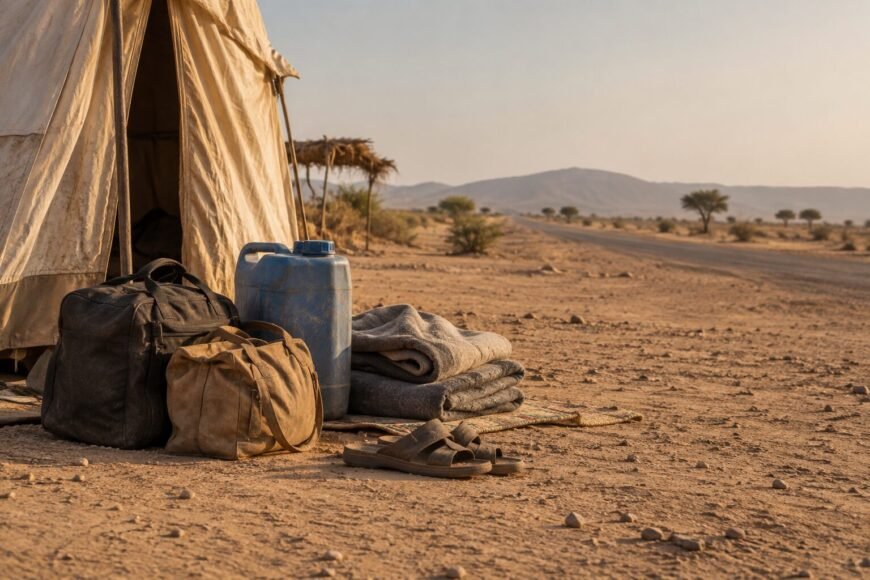
Investing in early childhood development could offer a critical opportunity to lift millions of children out of poverty. Addressing inequalities during the first five years of life is vital, as this period is crucial for cognitive, emotional, and physical growth. By acting now, there is a chance to disrupt the cycle of poverty and inequality that affects future generations across the globe.

Poverty during early childhood negatively impacts nutrition, healthcare, education, and overall well-being. Children raised in such environments are more likely to face malnutrition, limited access to medical care, and a lack of educational resources. This deprivation can have long-lasting effects, perpetuating a cycle of disadvantage into adulthood.

By strategically investing in robust early childhood programs—such as healthcare services, nutrition support, and quality education—we can reduce inequality from its roots. Countries worldwide, especially those within influential global networks like the G20, have the chance to prioritize these investments, ensuring millions of children are better prepared for the future. So the question remains, why wait?

The benefits of early intervention are widely recognized. Quality childhood development programs can level the playing field, offering better lifelong health outcomes, improved educational achievements, and greater economic productivity. The return on these investments is not only societal but also economical—creating healthier, more educated workforces in the long run.

In a world where disparities continue to deepen, taking urgent action now could change the trajectory for millions of children. The time is now: Let us not delay investing in the most critical years of future generations.


Comments

4 responses to “Investing in Early Childhood Could Lift Millions Out of Poverty – Why Wait?”

  1. Easy Sweep Avatar

    Ah, investing in early childhood—the latest revelation since someone discovered that water is wet. I mean, why not just toss a few euros into the fountain of youth while we’re at it? At this rate, we might as well start a charity for teaching toddlers about stocks and shares; after all, who needs a solid financial foundation when you can just wing it like the rest of us?

  2. Oh, of course, let’s just throw a few euros at early childhood education and watch all those pesky poverty problems vanish overnight, shall we? I mean, who needs a comprehensive strategy when we can just sprinkle some fairy dust on toddlers and cure societal woes! It’s not like investing in the next generation requires more than a cheeky chat over a pint, right?

  3. Ah, investing in early childhood—because who wouldn’t want to fork out cash now to save a few quid later? It’s almost as if we expect those tiny tots to contribute to the tax pool sooner rather than later. But hey, let’s just keep waiting, shall we? After all, nothing says “brilliant economic strategy” quite like letting future generations sort out our mess!

  4. Oh, brilliant! Who knew that investing in early childhood could potentially lift millions out of poverty? I suppose we should just toss a few euros into a piggy bank and wait for the magic to happen, right? It’s almost as if nurturing the future is a better strategy than relying on a fairy godmother!

Leave a Reply

Your email address will not be published. Required fields are marked *

Last News

Irish Lawmaker Urges Stripe to Defy US Sanctions on UN Investigator Albanese

Irish Lawmaker Urges Stripe to Defy US Sanctions on UN Investigator Albanese

Sanctions placed on Albanese by the Trump administration, following her allegations against governments and corporations for being involved in genocide in Gaza, resulted in her and her family being cut off from U.S. banking, travel, and technology — including transactions by American intermediaries such as Stripe. The Israeli government has firmly denied allegations of genocide.
“I understand, as

Read More

Ignitis Group Finalizes Sale Transaction

Ignitis Group Finalizes Sale Transaction

AB “Ignitis grupė“ (the Group) announces the completion of selling 49% of its shares in UAB Vilniaus kogeneracinė jėgainė (Vilnius CHP). The 49% stake was purchased by Quaero European Infrastructure Fund III, managed by Quaero Capital SA (Quaero Capital).
The transaction finalized on 30 March 2026, following approval from the Group’s General Meeting of Shareholders on 25 March 2026, regulat

Read More

Poland to Keep Patriot Air Defense Systems, Not Diverting to Gulf

Poland to Keep Patriot Air Defense Systems, Not Diverting to Gulf

The report from Polish daily Rzeczpospolita on Tuesday claimed that U.S. officials requested Poland to relocate one of its Patriot batteries to the Middle East due to increased pressure on air defense resources amid Iran’s retaliatory drone strikes on U.S. Gulf allies.
A senior defense official from a NATO country, speaking anonymously, clarified that Poland was not specifically targeted by

Read More

OSCE Evaluation of France: Secularism, Security, and Minority Issues

OSCE Evaluation of France: Secularism, Security, and Minority Issues

A Rigorous Assessment in Paris
PARIS — In June 2025, a delegation of officials from the Organization for Security and Co-operation in Europe (OSCE) arrived in Paris. Led by Ambassador Evren Dağdelen Akgün, Rabbi Andrew Baker, and Professor Wolfgang Palaver, the Personal Representatives of the OSCE Chair-in-Office undertook a comprehensive mission to assess the state of freedom of religion or beli

Read More

Sudan’s Worsening Conflict: Drones, Foreign Aid, and the Road to Accountability

Sudan’s Worsening Conflict: Drones, Foreign Aid, and the Road to Accountability

The conflict in Sudan has persisted for nearly three years, with United Nations agencies declaring it the globe’s largest humanitarian crisis, characterized by “sustained violence” and “restricted humanitarian access.” Civilian casualties are rising due to an increased use of advanced weaponry, notably drones. By March 24, 2026, drone strikes had killed over 500 civi

Read More

Are Fuel Cuts Being Considered Again?

Are Fuel Cuts Being Considered Again?

Europe may be on the brink of another energy crisis, and Brussels is now suggesting a politically sensitive measure: reducing fuel consumption.
Host Zoya Sheftalovich talks with POLITICO’s senior EU politics editor Ian Wishart about a warning from Brussels indicating a potential need to decrease fuel usage, amid rising concerns of a prolonged disruption caused by the conflict in Iran.
They also fo

Read More

Iran: Fragmented Power Structure and Rising Tensions in State Leadership

Iran: Fragmented Power Structure and Rising Tensions in State Leadership

Au centre du système iranien, il y a une fracture identifiée depuis longtemps par les observateurs, mais que les autorités s’efforcent de maîtriser : la tension croissante entre les institutions politiques civiles et le puissant Corps des gardiens de la révolution islamique.
Cette tension n’est ni nouvelle ni accidentelle. Elle est ancrée dans la structure même du régime. Cependant,

Read More

Hungarian Election Reaches Boiling Point in Final Stages

Hungarian Election Reaches Boiling Point in Final Stages

“Independent and critical outlets operate alongside a much larger pro-government media sector,” stated the report.
Kovács dismissed the OSCE’s concerns, labeling its warnings about government media influence as a “political opinion” and questioning the credibility of its findings.
As the campaign heats up and polls indicate that the opposition Tisza Party might win, a

Read More

UN Relief Chief Condemns Middle East War’s ‘$1 Billion-a-Day’ Cost

UN Relief Chief Condemns Middle East War’s ‘$1 Billion-a-Day’ Cost

The UN emergency relief chief, Tom Fletcher, warned of the rapid spread of violence causing mass displacement and economic shocks, stating, “We’re seeing the consequences spread faster than we can respond”.
In Geneva, the UN’s top humanitarian aid official called this a moment of grave peril and stated that without more support, “millions of people will die”.
$14 Billion Needed
The $23 billion

Read More

Pourquoi les partis de centre-gauche en Europe enchaînent les revers électoraux

Pourquoi les partis de centre-gauche en Europe enchaînent les revers électoraux

Le commissaire européen responsable du dossier, Dan Jørgensen, prévient les États membres : ils doivent aborder sérieusement la question de l’accès au logement, sous peine de voir le pouvoir passer aux mains des populistes d’extrême droite.

Read More