


MADRID, January, 2026 — Eurotoday Newspaper notes that the Spain train accident investigation has entered a decisive phase as Spanish authorities intensify technical, legal, and institutional scrutiny following a fatal derailment near the capital. The inquiry is unfolding amid heightened public attention and is expected to influence rail safety standards, infrastructure investment, and regulatory oversight across the country.
The derailment occurred on a heavily used passenger corridor serving the Madrid metropolitan region, triggering an immediate emergency response and widespread disruption. As investigators work methodically through physical evidence and operational data, the case has become a national test of transparency, engineering accountability, and public trust.
A Derailment That Shook Spain’s Transport System
The incident sent shock-waves through Spain’s rail network, long regarded as one of Europe’s safest. Passengers described sudden instability, followed by confusion and panic as the train left the tracks. Emergency services arrived quickly, evacuating the injured and securing the site before further risks could emerge.
The psychological impact extended far beyond those onboard. Commuters across the country questioned the reliability of infrastructure that had been considered dependable for decades, elevating the Spain train accident investigation into a defining public issue.
Emergency Response and Site Control Measures
Authorities acted swiftly to establish a security perimeter around the crash location. Rail traffic on the affected line was suspended, and alternative routes were arranged to limit wider disruption. Medical teams coordinated hospital transfers while fire crews inspected the area for secondary hazards.
Preservation of evidence became an immediate priority. Investigators documented rail alignment, track components, and environmental conditions before any recovery operations began, ensuring that the Spain train accident investigation would be based on intact physical data.
How the Inquiry Was Organised
From the outset, officials outlined a multi-layered investigative framework. Technical experts were assigned to assess infrastructure and rolling stock, while safety regulators reviewed compliance records. Judicial authorities launched parallel assessments to determine whether legal accountability might arise.
Coordination between agencies has been presented as essential within the Spain train accident investigation, both to avoid fragmented conclusions and to maintain public confidence in the outcome.
Reconstructing the Final Moments Before Impact
Preliminary timelines suggest the train was operating within permitted parameters when it encountered instability along a specific stretch of track. Data from onboard systems is being used to reconstruct speed, braking inputs, and driver response in the moments leading up to the derailment.
Investigators have repeatedly cautioned against assuming a single cause, emphasizing that modern rail incidents often result from a convergence of technical and operational factors.
Track Integrity and Structural Examination
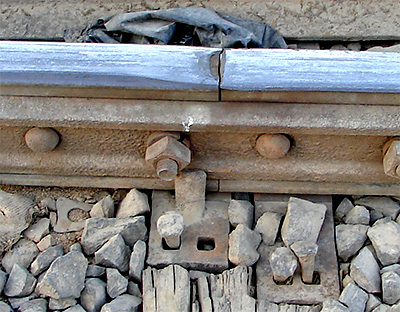
Engineering teams identified irregularities in track components near the derailment point, focusing on joints,









Leave a Reply