



Here is a rewritten version of the article that preserves its core message while using different wording and structure:
Title: Gaza Crisis Worsens as Children Suffer, Aid Blocked, and Health System Collapses
As the conflict in Gaza intensifies, the impact on civilians — particularly children — continues to deepen, according to multiple United Nations agencies operating on the ground.
Rosalia Bollen from UNICEF, currently stationed in Gaza, described the escalating toll the violence is taking on the most vulnerable. “Hundreds of children have suffered fatal or serious injuries — some with burns, shrapnel wounds, fractures, and amputations,” she told UN News. Despite the heavy bombardment on 18 March, many children remained hopeful it would be an isolated incident. “But the attacks haven’t stopped — airstrikes, tank fire, gunfire, and forced displacement are ongoing,” she said. “Families are constantly on the move with only a few of their possessions.”
A Humanitarian Breakdown
Philippe Lazzarini, the head of UNRWA — the UN agency for Palestinian refugees, which remains active in Gaza despite being banned by Israel — warned that the situation continues to deteriorate rapidly. “For nearly three weeks, Israeli authorities have blocked all humanitarian and commercial goods from entering,” he stated via social media. “The people of Gaza are reliving relentless and brutal conditions that amount to a humanitarian nightmare.”
The UN’s World Food Programme (WFP) further warned that food shortages in Gaza could soon reach catastrophic levels. With only about 5,700 tons of food left, WFP estimates it can support relief efforts for just two more weeks if supplies are not replenished.
To address the urgent needs, WFP is expediting the distribution of available food:
– Food Parcels: Enough to support 500,000 people for a week with reduced-size rations.
– Bakeries: Current wheat flour reserves can sustain bread production for about 800,000 people for five days. Nineteen of 25 WFP-assisted bakeries are still operational, though many are overwhelmed by crowds.
– Hot Meals: Supplies support 37 kitchens serving up to 500,000 people daily for two weeks.
– Emergency Biscuits: High-nutrition biscuits are available for 415,000 people as a last resort.
WFP and its partners have also pre-positioned over 85,000 tons of food outside Gaza, waiting for border crossings to reopen.
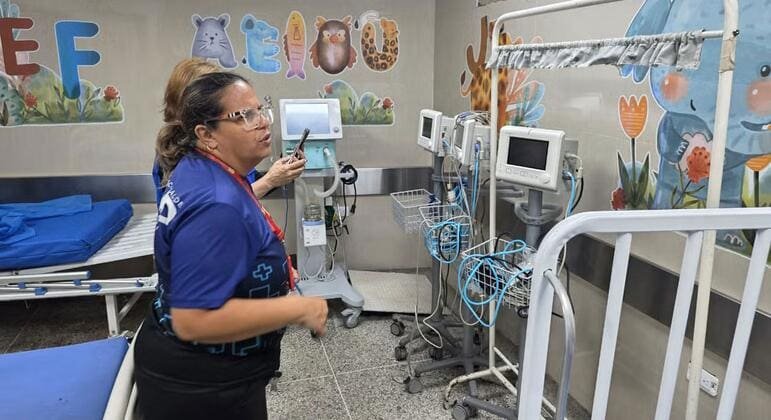
UNRWA continues to operate healthcare services within its Gaza-based clinics, ensuring some level of medical support despite ongoing challenges.
Humanitarian Aid Under Threat
Amid the increasing violence, UN spokesperson Stéphane Dujarric reported that humanitarian efforts are being severely hindered. “Hostilities across the territory are killing and injuring civilians and making it nearly impossible for aid workers to provide relief,” he said at a press briefing in New York.
Since the start of Israel’s ground campaign in Rafah, several rescue vehicles from the Palestinian Civil Defense and the Palestine Red Crescent Society were struck while attempting to evacuate wounded individuals. “Communication with those teams has been lost, and several casualties are feared,” Dujarric confirmed. A joint UN and Red Crescent mission attempted to reach the affected area but was unsuccessful.
“It’s a basic principle: healthcare workers and first responders must not be targeted,” he emphasized. “Civilians trying to escape danger must be allowed to do so safely and should be able to return when conditions permit.”
Displacement is once again accelerating, with evacuation orders now encompassing about 18% of the Gaza Strip. “Humanitarian access is being stifled,” Dujarric noted. “A complete closure of border crossings, combined with ongoing fighting, is making our work increasingly difficult.”
Critical Supplies Stranded at Border
As winter gives way to warmer weather, tens of thousands of tents and hundreds of thousands of essential shelter items remain stuck outside Gaza, unable to cross in due to the closed borders. Families fleeing violence often do so without belongings, worsening the shelter shortage.
“The available shelter resources inside Gaza are far from sufficient for the scale of displacement we’re witnessing,” Dujarric said.
Health Crisis Deepens
Meanwhile, the World Health Organization (WHO) has issued a stark warning about the collapse of Gaza’s healthcare system.
With a surge in trauma cases, hospitals are running dangerously low on essentials needed to respond to mass casualty events. WHO highlighted one particularly dire statistic: fewer than 500 units of blood are currently available — far below the 8,000 required monthly.
Health systems, already under immense strain, now face a tipping point unless rapid aid and medical resupply are delivered.
Photo credit: © UNRWA/Mohammed Hinnawi — UNRWA continues to offer critical medical care through its clinics in Gaza.








Leave a Reply