



In 2015, German Chancellor Angela Merkel stood before the European Parliament and declared, “Wir schaffen das”—“We can do it.” Over one million refugees fleeing conflict in Syria crossed into Germany, and the continent responded with a humanitarian embrace. It was a moment of moral clarity during one of Europe’s most challenging crises.
Why This Shift?
Nearly a decade later, the open borders of that era are closing. Germany has ramped up land border patrols, Poland has suspended asylum procedures, and the EU’s 2024 Migration Pact heralds tougher external controls. Yet even as refugees face increasing rejection, highly skilled migrants are being welcomed with open arms.
The EU’s Migration Pact, adopted in May 2024, seeks to establish a more uniform asylum process, distributing the burden among member states through a mechanism of relocating 30,000 applicants per year—or paying €20,000 per rejected individual—according to the European Union Agency for Asylum. While some call it a flexible framework, others denounce it as shirking responsibility.
More impactful, however, are the Pact’s provisions for stronger borders: expedited deportations, holding centers akin to detention facilities, and international agreements with nations like Egypt and Tunisia to manage migration flows. These measures are already delivering results, with irregular border crossings dropping by 30% in 2024, as reported by the European Commission. Still, the human toll is severe—over 3,000 migrants drowned in the Mediterranean in 2023, according to the International Organization for Migration.
The Dichotomy
Asylum seekers today face increasingly slim chances of success. Approval rates in countries like Belgium and Germany hover around 43% and 44% respectively, weighed down by administrative backlogs and stricter criteria, as detailed by the Asylum Information Database. Some countries have gone further—Poland has halted asylum intake at certain borders, citing security concerns, while Italy has struck a deal with Albania to process asylum applications offshore. All signs point to an emerging “Fortress Europe,” more concerned with deterring entrants than offering refuge.
At the same time, the welcome mat is being rolled out for skilled professionals. In the Netherlands, tech company ASML—vital to the global semiconductor industry—reports that 40% of its workforce is international. CEO Christophe Fouquet warns that limiting such talent flows would jeopardize innovation.
Belgium echoes these priorities. Flanders is simplifying visa processes for engineers to boost its biotech industry, and Wallonia is actively recruiting francophone African healthcare professionals to address labor shortages. Over 1.2 million job vacancies are projected by 2030. Germany has expanded its Skilled Immigration Act as of 2023, and Spain and Portugal are attracting digital nomads with new residency schemes. The message is clear: Europe wants migrants who can code, heal, or build.
Why This Shift?
This selective openness reflects the demographic and economic realities Europe now faces. By 2030, the EU’s working-age population is expected to shrink by 36 million, while the number of retirees will reach 123 million, according to Eurostat. Europe needs labor—but not the kind arriving in boats or at border fences.
Yet this pragmatism draws a moral fault line. “People move because in their countries there is no future, no peace, no stability,” says Josep Borrell, the EU’s foreign policy chief, criticizing the growing “Fortress
Comments
4 responses to “From Open Doors to Closed Borders: Shifting Trends in European Immigration”
-
Oh, brilliant! Who needs a heart when you can just hire some coders? Europe really knows how to roll out the red carpet for the skilled while tossing the rest into the sea—keeping it classy, as always. 😏💼
-
Imagine telling a skilled engineer, “Welcome aboard!” while simultaneously locking the door on everyone else with a suitcase. Classic Europe, eh? 🤷♂️ It’s like saying, “We love diversity—just the good kind, please!” 😂
-
Isn’t it just charming how Europe’s version of “open doors” now comes with a hefty price tag and a security checkpoint? I suppose we fancy ourselves as the bouncers of a nightclub now, welcoming only the VIPs while the rest get the cold shoulder. 🍾🚪
-
Isn’t it charming how Europe has gone from a warm hug for refugees to a strict bouncer at an exclusive club? 🎉 Just remember, if you can code or save a life, you’re in – if not, well, best of luck navigating those ‘closed borders’! 🛑🚪

Last News
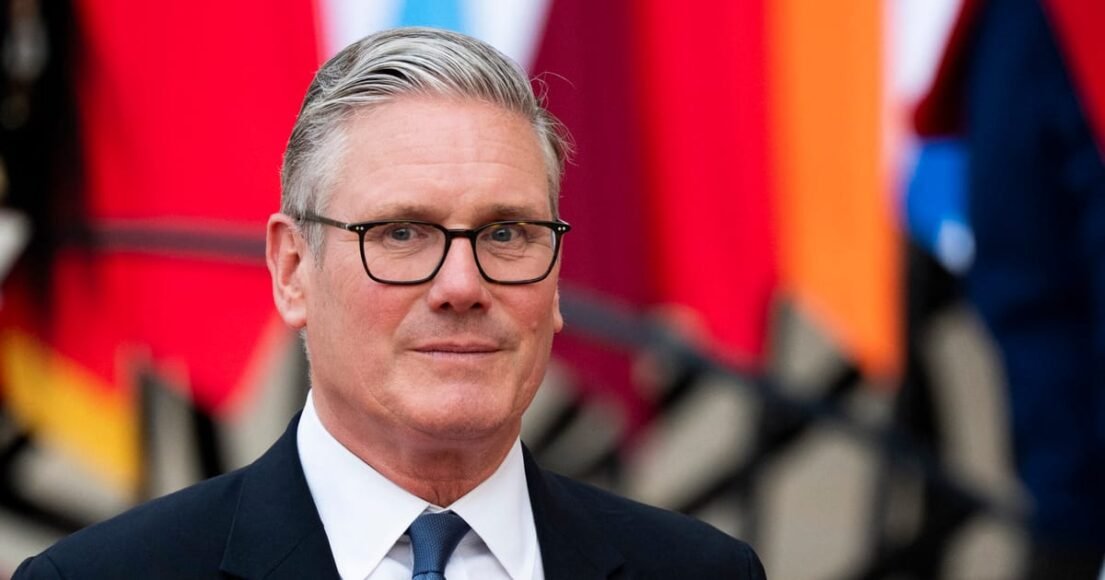
By-Election Set for Keir Starmer’s Former Seat on Oct. 8
In 2024, Starmer secured the seat with an 11,572 majority but encountered strong competition from a left-wing independent candidate and the Greens.
Green Leader Zack Polanski has put himself f
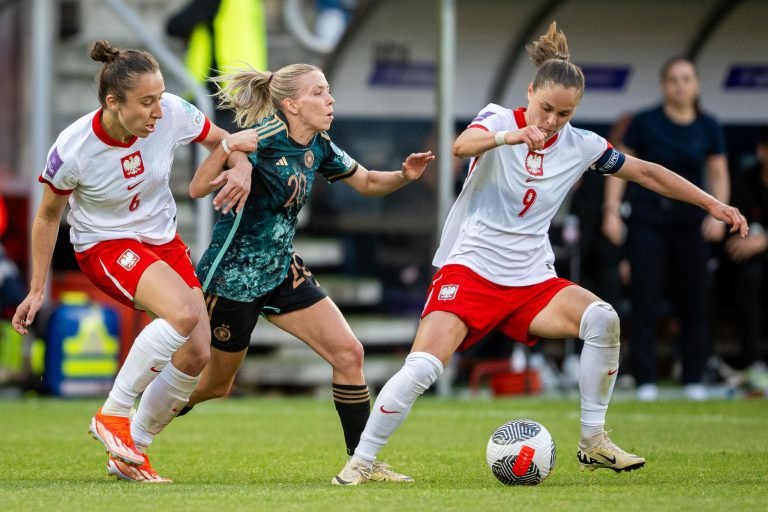
Infantino’s Attendance in Doubt as FIFA U-20 Women’s World Cup Begins in Poland
Katowice, Poland, 4 September (Eurotoday Newspaper) – The FIFA U-20 Women’s World Cup begins in Poland on Saturday, with around 15,000 spectators expected for the opening matches in Katowice, although FIFA President Gianni Infantino’s attendance remained uncertain on Friday.
Hosts Poland face Argentina on the opening day, while Mexico play tournament debutants Benin in the other Group A fixture
Sweden’s Inflation Remains at 0.7%
Sweden’s central inflation measure stayed well below the central bank’s target in August, according to preliminary figures released on Monday, intensifying the discussion over interest rates and household finances less than a week before the national election.
The annual inflation rate monitored by CPIF, wh
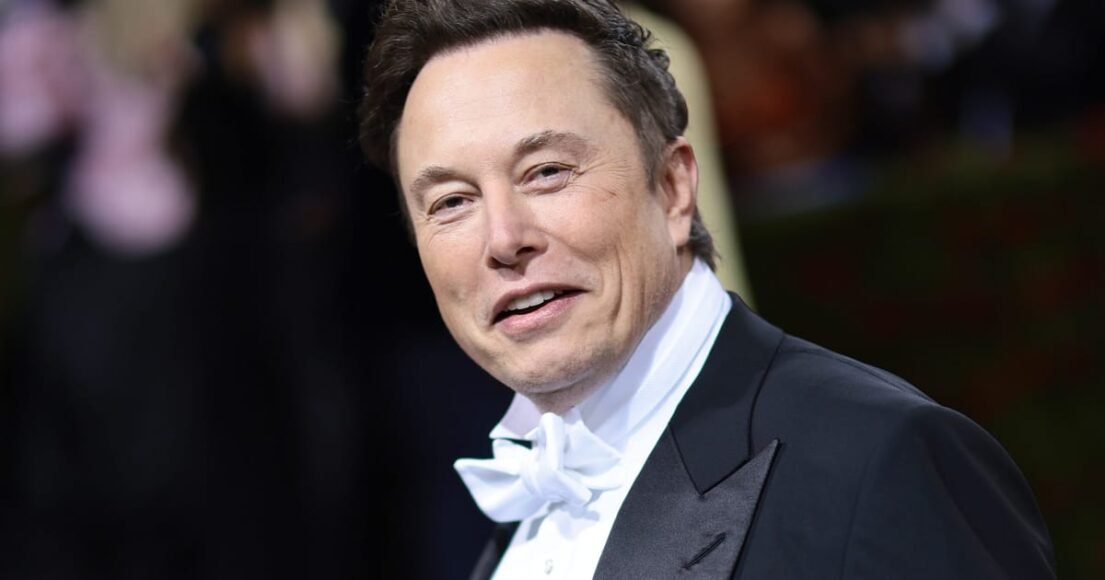
Musk Celebrates, Tusk Despairs: Global Reactions to AfD’s Election Victory
Allies across Europe celebrated. Italy’s Deputy Prime Minister Matteo Salvini congratulated his “friend” Weidel, saying: “Another Europe is possible.” Austri
Reform UK Officials Resign Amid Electoral Law Allegation in Birmingham
Birmingham, 4 September (Brussels Morning Newspaper) – Two senior Reform UK figures have temporarily stepped down after an undercover investigation raised Reform UK funding claims involving political polling allegedly financed by a foreign donor. The party denies wrongdoing and has launched an internal investigation.
The development came as Reform UK opened its annual party conference in Birming

Taiwan Travelogue Discovers Strength in Dining
Yáng Shuāng-zǐ turns food, translation and thwarted intimacy into a subtle study of colonial rule
Taiwan Travelogue, translated by Lin King, is an enchanting historical novel where abundant meals reveal a stern investigation into empire. Through the bond between a Japanese writer and her Taiwanese interpreter, Yáng Shuāng-zǐ illustrates how affection can be sincere yet distorted by privilege, cl

Germany’s Far-Right Shockwave
As Europe reacts to the AfD’s win, Zoya Sheftalovich and Nick Vinocur engage with Head of Playbook Germany, Hans von der Burchard, t

UK Construction Decline Worsens with Sharp Drop in Housebuilding, London
London, 4 September (Eurotoday Newspaper) – Britain’s construction sector contracted for a 20th consecutive month in August as a sharp deterioration in housebuilding outweighed modest improvements elsewhere in the industry. The latest UK construction PMI fell to 44.3, signalling that the sector remains under significant pressure.
The S&P Global UK Construction Purchasing Managers’ Index dec
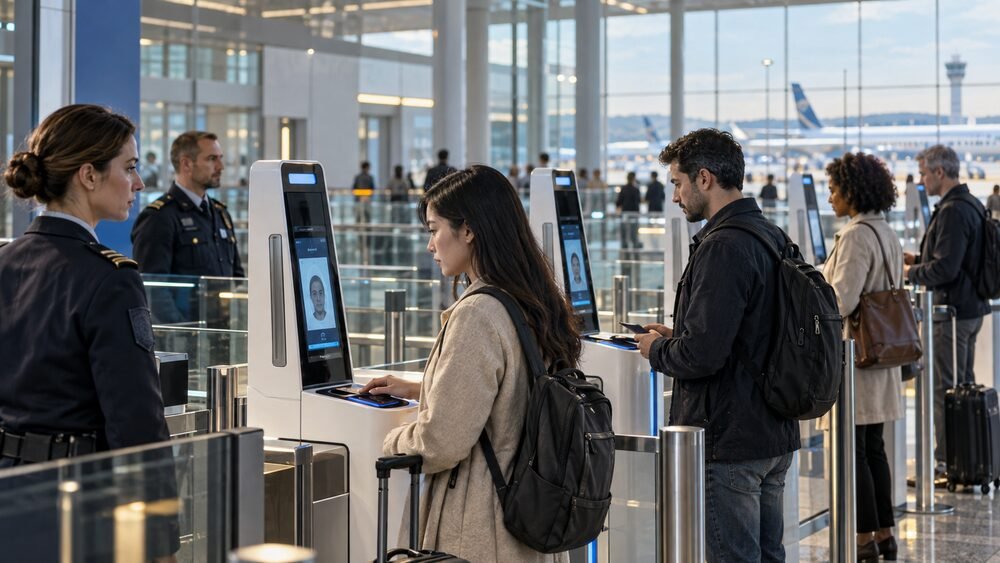
Expiration of EU Biometric Border Safeguard
AITETAI-generated illustrationTransparency information
AI-generated images: One or more images accompanying this report were generated or substantially modified using artificial intelligence. They are illustrative and should not be understood as documentary photographs unless explicitly stated otherwise.
Schengen authorities face pressure to enforce digital checks consistently without allowi
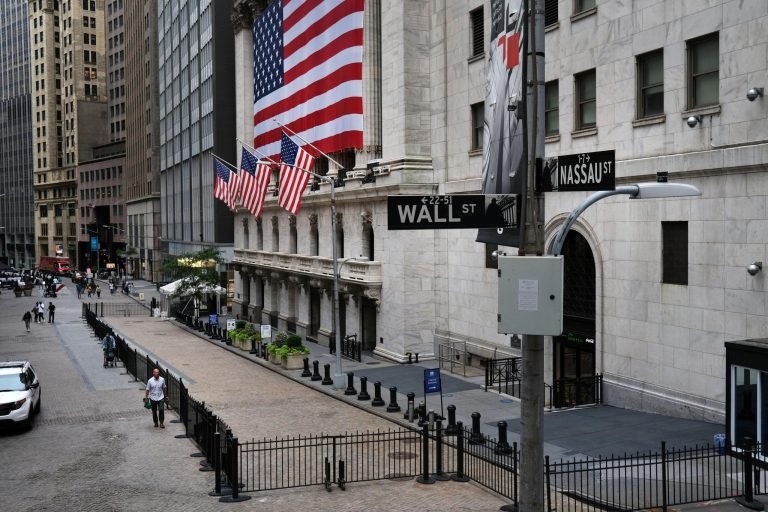
Nasdaq and S&P 500 Futures Climb Before Key US Jobs Report
New York, 4 September (Brussels Morning Newspaper) – US stock futures edged higher on Friday, led by technology shares, as investors awaited the August employment report for fresh evidence about the strength of the American labour market and the Federal Reserve’s next interest-rate decision.
Nasdaq 100 futures were up 0.42% at 4.24am ET, while S&P 500 futures gained 0.06%, according to Reut
Leave a Reply