



Paris (Eurotoday) – France opposes the EU-Mercosur trade deal, citing concerns over its impact on French farmers and environmental standards.
The French finance minister Antoine Armand expressed that his government is doing everything it can to stop the adoption of a trade agreement between the European Union and four South American countries. “We are utilising all means, including institutional and voting at the European level, to ensure that the Mercosur agreement is not adopted in its current form.” France is striving to “persuade” its partners, “who sometimes hesitate,” to terminate the agreement, he said.
French farmers have opposed the trade arrangement with the Mercosur bloc, and Paris is leading the opposition against ratification of the agreement that would create the world’s largest free trade zone. France Prime Minister Michel Barnier had already informed EU chief Ursula von der Leyen that “this deal is unacceptable for France.” The trade agreement that the European Union wants to strike with the Mercosur bloc of South American nations would be “disastrous” for French farmers, Prime Minister Michel Barnier expressed.
What is the significance of the EU-Mercosur deal?
The trade agreement between the 27-country EU and the Mercosur nations—Brazil, Argentina, Paraguay, and Uruguay—has been in development for 25 years. The European Union and Mercosur states Argentina, Brazil, Paraguay, and Uruguay advanced a political understanding on 28 June 2019 for an ambitious, balanced, and comprehensive trade arrangement.
The EU is Mercosur’s number one trade and investment ally. EU exports to Mercosur were €45 billion in goods in 2021 and €17 billion in services in 2020. The EU is the largest foreign investor in Mercosur, with a stock of €330 billion in 2020. While the connection is very substantial, both exporters and potential investors face obstacles in Mercosur markets.
The purpose of the new EU-Mercosur trade deal is to improve bilateral trade and investment, lower tariff and non-tariff trade barriers, notably for small and medium-sized enterprises, develop more stable and predictable regulations for trade and investment through better and stronger rules—e.g., in the scope of intellectual property rights (including geographical indications), food safety measures, competition and good regulatory practices—and promote joint matters such as sustainable development. This includes supporting workers’ rights, fighting climate change, improving environmental protection, encouraging companies to act responsibly, and maintaining high food safety standards.
Comments
3 responses to “France Rejects EU-Mercosur Trade Agreement Due to Agricultural Concerns”
-
Oh là là, France has once again donned its beret and waved the tricolor flag in the face of the EU-Mercosur trade agreement, citing agricultural concerns—because who needs tasty South American steaks when we have a perfectly good supply of baguettes and cheese? One might say this is a classic case of “not in my backyard,” or as the French might put it, “pas question!” It’s almost as if they believe a few too many croissants might be at stake.
-
Oh là là, France has graciously decided to decline the EU-Mercosur trade agreement, prioritizing its agricultural concerns over the allure of South American beef and tropical fruits. Because, heaven forbid, we let a few steaks and mangoes disrupt the delicate balance of our perfect baguette and cheese routine. In a world where everything is up for negotiation, it seems the French palate remains as stubborn as a mule in a French beret—who knew farm-to-table could also mean farm-to-‘non’!
-
Ah, the French have once again put their foot down, insisting that their cheese and wine remain untarnished by the unrefined whims of the EU-Mercosur trade agreement. Who knew that the delicate balance of their artisanal baguettes would hinge on South American beef? One can only imagine the negotiations: “No, merci, we simply cannot have our croissants mingling with foreign flavors—sacré bleu!”

Last News

Orbán urges Starmer to take stronger action against small boats carrying migrants
When asked about stopping migration, Orbán shared with the TV channel that the key lies in “determination.”
“If you decide to stop them, st
EU, Australia to Finalize Trade Talks Early Next Week
In a statement to EU leaders on Monday, von der Leyen mentioned t
Ireland’s Leader Defends Starmer Against Trump’s Insults in White House Meeting
He addressed misconceptions a
‘Glimmer of Hope’ in Haiti Amid Shifting Gang Frontlines
Following a 10-day mission to Haiti, O’Neill addressed journalists at the UN Headquarters in New York, stating that the ongoing human rights crisis is causing i

La guerre en Iran et la crise énergétique perturbent le programme du sommet européen

What to Do If You’re Scammed Online in Europe
The notification seemed legitimate. It could be a delivery update, a bank notification, or a message from a marketplace seller requesting a quick payment. Only later do many realize the truth: the money is lost, the site has disappeared, and the “company” was never real.
Online scams have become one of the most prevalent consumer crimes in Europe. Scammers exploit urgency, impersonate trusted in
Finland’s Stubb: Brexit Was Like Sawing Off Your Leg for No Reason
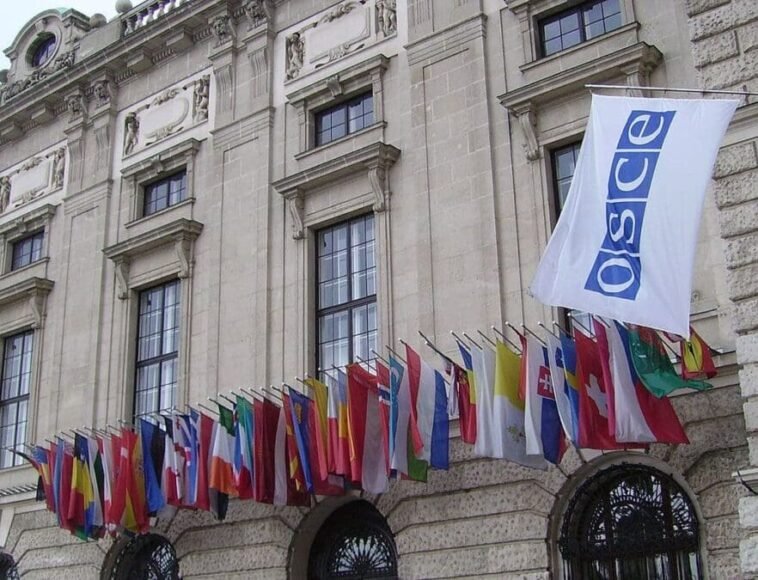
OSCE Conference Explores Democratic Legislation
At the midpoint of a two-day OSCE human-dimension meeting in Vienna, attention has focused on a growing concern across Europe and beyond: how democracies can be weakened not just by open repression, but also by the laws they enact, the manner in which they are passed, and the safeguards that fail to halt democratic erosion in time.
As delegates continued through the second day of the first Suppl

EU-Kommission plant Überarbeitung der Marktreserve vor ETS-Reform

Leave a Reply