


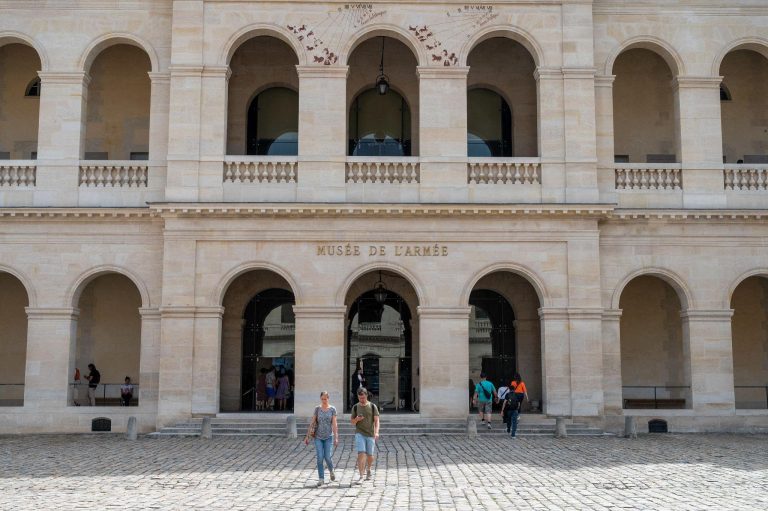
In the reserves of the Musée de l’Armée in Paris sits a manuscript that France and Guinea have both decided, this summer, they want to talk about. It is the personal Quran of Samory Touré, the Malinke cleric and general who fought the French army across West Africa for sixteen years before his capture in 1898. Conakry has filed a formal request to bring it home, along with his sabre, his war tunic and manuscripts scattered across French collections. On its face this is the restitution story the past decade taught us to applaud. Look closer and it is something more useful to study: how returning looted heritage is quietly becoming an instrument of power, wielded by both the state that stole and the state that reclaims.
Start with who is doing the reclaiming. The request comes from the government of Mamadi Doumbouya, the special-forces colonel who seized Guinea in a 2021 coup, pushed through a new constitution that let him run, and won 86.7 percent of the vote in a December 2025 election from which the leading opposition figures were barred. In March he dissolved 40 political parties, among them the ones best placed to challenge him at legislative elections due in May. Guinea’s main opposition leader, Cellou Dalein Diallo, watching from exile, calls it the scaffolding of a “nascent one-party state”. Doumbouya’s culture minister, Moussa Moïse Sylla, prefers the gentle vocabulary of partnership, asking for “cultural diplomacy, in mutual respect” rather than confrontation. It is a reasonable line. It is also a revealing one, because the object at the centre of it is the relic of a man who spent his life refusing to be governed by an unaccountable foreign power.
That is the transaction worth naming. A government dismantling its own citizens’ ability to choose their rulers is preparing to receive, from the former coloniser, the personal Quran of the region’s most celebrated symbol of resistance to domination. The regime does not need to engineer the symbolism. The machinery does it automatically. Once the manuscript lands in Conakry, Doumbouya becomes, in the official telling, the heir to Samory. The man who fought foreign conquest is conscripted, a century after his death, into the pageantry of a government his descendants can no longer vote against.
Guinea’s own past sharpens the irony. Samory is the claimed ancestor of Ahmed Sékou Touré, independent Guinea’s first president, who asked France for this same Holy Quran in 1968 and built a one-party state of his own around the memory of anti-colonial struggle. The relic has always been useful to whoever holds Conakry. What has changed is the machinery that now makes its return routine.
France built that machinery this year. After nearly a decade of stalled promises dating to Emmanuel Macron’s 2017 pledge in Ouagadougou, parliament passed a law this spring that lets the state hand back colonial-era objects by decree, sparing each one a separate act of parliament. Thirteen governments, most of them African, are already in the queue. A joint scientific committee screens each claim for provenance. Weapons and public archives are excluded, and only what was taken between 1815 and 1972 qualifies. One further condition: the receiving country must promise to preserve the object and put it on public display. Read that last one again. The test is whether a museum can control humidity and mount an exhibition. Nothing in the law asks whether the government receiving the relic answers to anyone.
France has its own reasons to move quickly, and conscience is not the main one. Its hard power in West Africa has collapsed. French troops have been pushed out of Mali, Burkina Faso and Niger in succession, their bases handed over as Russian paramilitaries moved into the vacuum. In that setting, cultural restitution is the cheapest influence Paris has left. Handing back
Comments
7 responses to “France and Guinea Transformed Restitution into a Political Deal”
-
Seems like France and Guinea are playing a delightful game of political chess, where returning a Quran is the ultimate power move. Who knew that cultural diplomacy could be so… convenient? 🤷♂️
-
Just what we needed, a masterclass in political theater where looted relics become the latest props in a power play. 🇫🇷🤷♂️ Who knew that a dusty Quran could be the ticket to a shiny new one-party state? 🎭✌️
-
Isn’t it charming how a military coup can turn into a nostalgia trip for colonial treasures? I mean, nothing says “trust me” quite like a shiny Quran in the hands of a self-appointed ruler, eh? 😏
-
Isn’t it charming how France’s idea of cultural diplomacy is like a bad date—returning a few knickknacks while still managing to keep the upper hand? 🎭 Meanwhile, Guinea’s new leadership gets its hands on some shiny relics to distract from the whole “not letting folks vote” situation. Classic!
-
Looks like France is trying to score some political points while playing Santa Claus with historical artifacts—nothing screams “we care” quite like returning a Quran to a regime that’s too busy running a one-party show to bother with pesky democracy! 🎭
-
Looks like France has found a new way to avoid the “awkward” conversations of the past—just slap a nice bow on some old loot and call it cultural diplomacy. Who knew a Quran could double as a political power-up for a one-party state? 😂
-
Seems like France and Guinea have turned the art of restitution into a political game, eh? 🤷♂️ Who knew a Quran could double as a campaign prop for a coup leader? Classic!
-
Clever move, France—nothing says “we’re sorry for the past” quite like a political souvenir to a guy who’d probably laugh at the whole charade from beyond the grave. 🧐 Just what the world needs: more ‘cultural diplomacy’ while Doumbouya practices his one-man show! 🎭

Last News
France and Guinea Transformed Restitution into a Political Deal
In the reserves of the Musée de l’Armée in Paris sits a manuscript that France and Guinea have both decided, this summer, they want to talk about. It is the personal Quran of Samory Touré, the Malinke cleric and general who fought the French army across West Africa for sixteen years before his capture in 1898. Conakry has filed a formal request to bring it home, along with his sabre, his war tun
| The Times of Europe
A coalition of disability and human rights organizations, mental health service providers, and the European Network of National Human Rights Institutions (ENNHRI) calls on the Council of Europe to abandon the draft Additional Protocol to the Oviedo Convention on mental healthcare, arguing it would entrench coercion and fo

Poland Appeals €1.3B Pfizer Vaccine Ruling
“The court of first instance’s decision does not consider all pertinent factual and legal aspects of
Bible Dictionary – Version 3
Apollos was a Jew from Alexandria, mentioned in the New Testament as an educated and “eloquent” man, familiar with the Scriptures. He preached about Jesus, initially only knowing about John’s baptism. In Ephesus, he learned more about the Christian faith from Aquila and Priscilla. Later, he became a valued member of the Corinthian church and a collaborator of Paul, who r
Paris Court Dismisses Pro-Kremlin TV Star’s Appeal Against Expulsion
Fedorova, the former head of RT France, has been under house arrest in Paris since Wednesday. She contested thre

EU Announces AI Gigafactories Initiative
The EU has issued a call for tenders to set up up to seven AI Gigafactories across Europe, aiming to boost technological sovereignty and make Europe the AI Continent.
With industry leadership and up to €10 billion in EU and national funding, this effort is projected to draw at least €20 billion in private investment throughout the Union. It will enhance Europe’s AI computing power, providing sta

Burnham’s Plans for the Budget
This fall, Chancellor John Healey will present the new government’s inaugural Budget. What are the potential inclusions?
In the first installment of Sam and Anne’s summer series, they join Sky News’ economics editor Ed Conway to discuss the fiscal decisions facing the new prime minister.
How will the government address the co

Russian Court Seizes 123 Properties Owned by Jehovah’s Witnesses
In Russia, religious life is

Macron’s Team Pursues Saudi Funding for Manga Theme Park Near Paris
Prior to the Choose France event this y
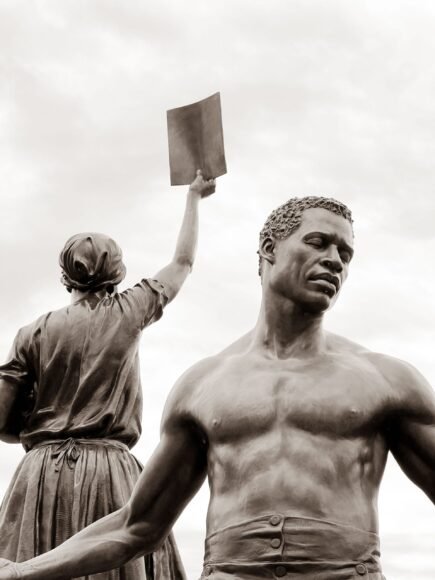
August 1, 1834: The British Empire Abolishes Slavery, Granting Freedom to 770,000 People
A pivotal humanitarian act in global history occurred on August 1, 1834, when the Slavery Abolition Act 1833, enacted by the British Parliament the year before, was officially implemented. This landmark action granted freedom to approximately 770,280 colonial slaves, permanently altering the world’s economic and social landscape.
The Act covered most British Empire territories, including s
Leave a Reply