


Grzegorz Kinelski, CEO of Enea and vice-president of PKEE, emphasized the importance of maintaining momentum in investments in renewables, storage, and combined cycle gas turbine units to enhance energy security, support economic growth, and keep energy prices affordable for Polish consumers.
The power sector should be seen as critical to Europe’s industrial future, alongside semiconductors, essential raw materials, and defense. As Dariusz Marzec stated, the energy transition is essential, not optional. Its success will determine not only the achievement of climate goals but also Europe’s competitiveness and economic independence in a rapidly changing world.
Progress is evident. The power sector, accountable for about 30% of EU emissions, has achieved 75% of Emissions Trading System reductions. By 2025, 72% of Europe’s electricity is projected to come from low-carbon sources, reducing fossil fuels to a historic low of 28%. Notably, in Poland, June marked the first time renewable energy generation surpassed coal.
However, ambition must be matched with action. Marcin Laskowski, vice-president of PKEE and executive VP for regulatory affairs at PGE Polska Grupa Energetyczna, highlighted the connection between the power sector and Europe’s economic transformation. He emphasized that the EU’s economic success hinges on a successful energy transition that is safe, sustainable, and attractive to investors. The power sector must offer solutions to decarbonize industries like steel, chemicals, and food production.
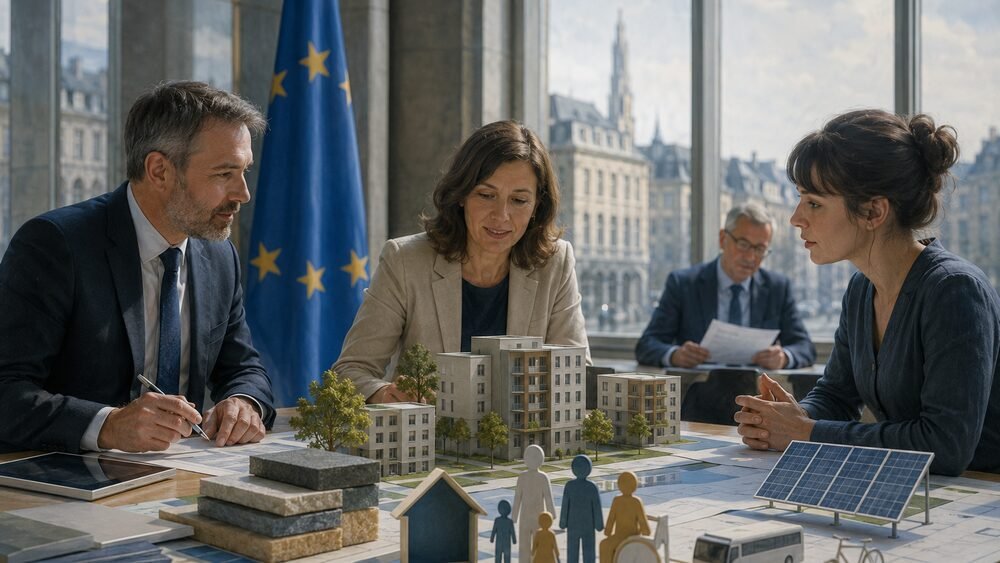
A Brussels event featuring high-profile speakers, such as Mechthild Wörsdörfer, deputy director general of DG ENER; Tsvetelina Penkova, European Parliament member; Thomas Pellerin-Carlin, European Parliament member; Catherine MacGregor, CEO of ENGIE; and Claude Turmes, former Luxembourg energy minister, underscored that the energy transition is a strategic industrial endeavor, not merely an environmental policy. Its success depends on coordinated EU institutional, governmental, and industry efforts, with predictable regulation and financing.
Europe’s competitiveness, resilience, and prosperity depend on treating the power sector as a foundational strength rather than a cost. The next decade offers a crucial opportunity, with decisions made today shaping Europe’s economic landscape for years to come.




Leave a Reply