


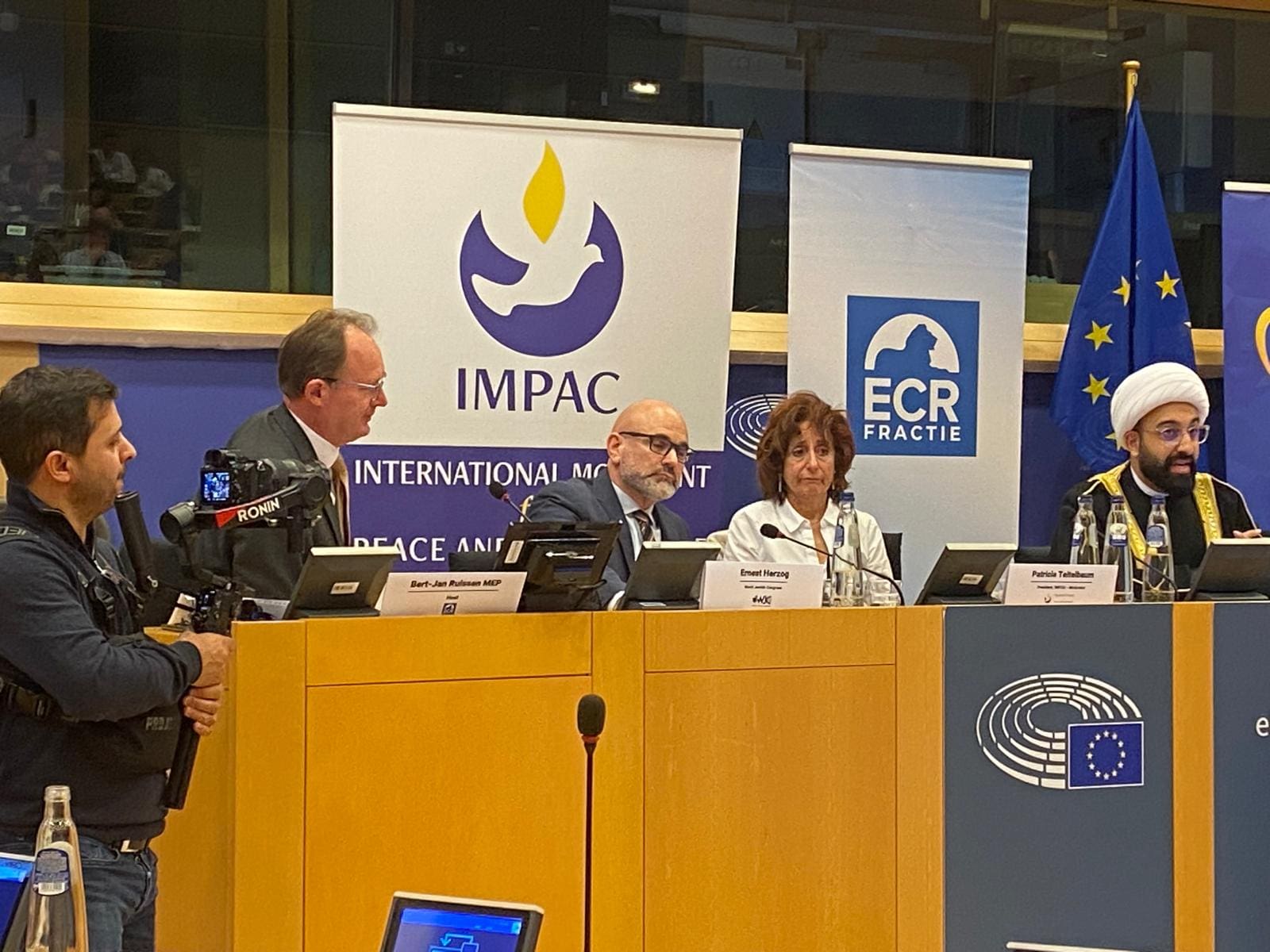
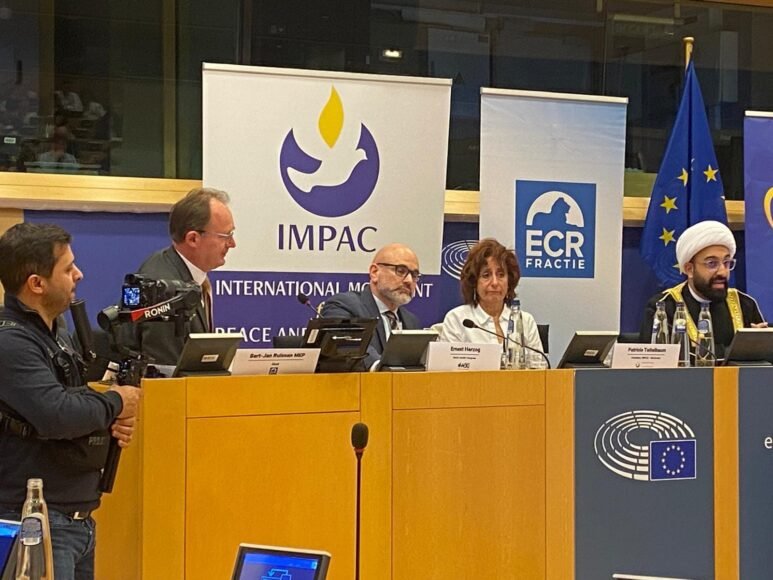
Today, an event titled ‘Safeguarding Europe’ took place inside the European Parliament, organized by IMPAC Belgium, the ECR Group in the European Parliament, and the European People’s Party. The gathering in Brussels brought together policymakers, experts, and stakeholders to discuss the objectives of the Muslim Brotherhood and its affiliates within European societies, democratic institutions, and the security implications.
The discussion highlighted the Brotherhood’s ideological infiltration, strategies of influence, and extremist links. The event aimed to foster informed dialogue and collaborative action to mitigate these risks, aligning with the European Union’s broader counter-terrorism framework, which focuses on preventing radicalization and protecting fundamental rights, as outlined in the EU Counter-Terrorism Strategy and the EU’s sanctions regime against terrorist entities.
The event commenced with remarks from hosting MEPs, including Bert-Jan Ruissen MEP, Dr. Tomas Zdechovsky MEP, and Charlie Weimers MEP. A commemoration followed, with representatives from Christian, Druze, Iranian, Kurdish, and Jewish communities speaking and lighting candles in honor of those affected by “anti-democratic, totalitarian ideology.” New artwork by blacksmith Yaron Bob, known for ‘Rockets Into Roses,’ was unveiled via video.
Dr. Florence Bergaud-Blackler of the Centre Européen de Recherche et d’Information sur le Brotherism (CERIF) and co-author of the report ‘Unmasking The Muslim Brotherhood’ spoke on the Brotherhood’s “entryism” method in Europe, infiltrating society through educational institutions, councils, and aspects of everyday life. She emphasized the misconception that non-violent actions are not dangerous.
The event follows a 2025 report by the French government, identifying four targeted areas by the Muslim Brotherhood in France: religious infrastructure, education, digital media, and local community structures. The report named organizations like Averroès high school in Lille and Al-Kindi school group near Lyon as linked to the Brotherhood. It described the Brotherhood’s strategy as promoting ideological hegemony under the guise of religious and educational activities, with a broader “ecosystem” in French cities. Similar concerns were noted in Belgium and Switzerland.
The discussion also addressed the Brotherhood’s presence in Africa, particularly Sudan, where networks are integrated into state institutions and allied with the Sudanese Armed Forces (SAF) in the civil war. Post-2019, these networks reportedly reorganized, infiltrating Sudanese civil service and security institutions. The Islamic Movement/Muslim Brotherhood is seen as a key component of Gen. Abdel Fattah alBurhan’s SAF camp, involving former intelligence officers and Islamist cadres in militias.
Participants also discussed the Brotherhood’s varying approaches across continents. A Brussels-based NGO activist noted that in Sudan, the Brotherhood acts as an openly Islamist ruling force within state structures, while in Europe, it relies on “soft” influence and entryism through front organizations and funding channels.




Leave a Reply