


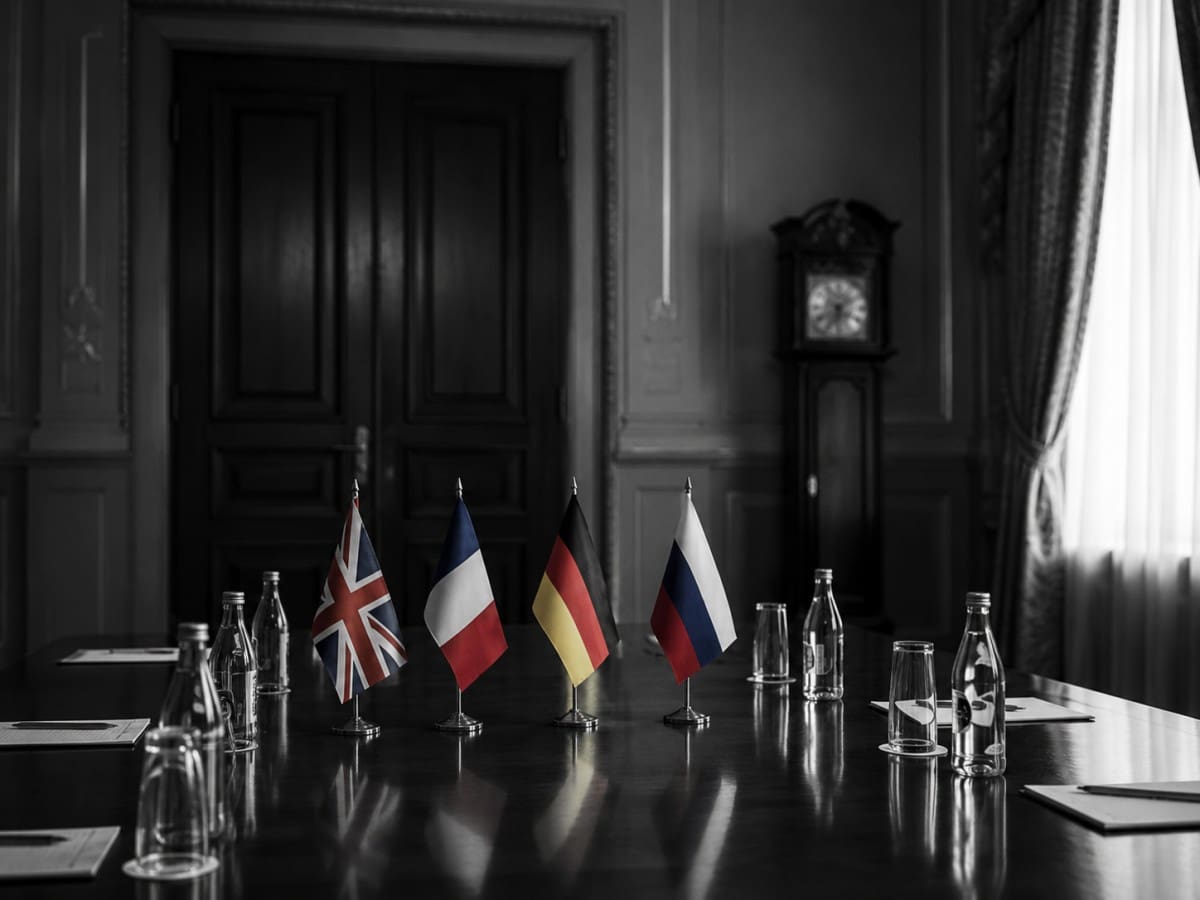
A rare E3 meeting in Russia brings Europe into diplomatic discussions, but Moscow’s reaction remains confrontational.
The UK, France, and Germany ambassadors met with Russian officials in Moscow, advocating for talks between Russia and Ukraine, following European leaders’ support for a ceasefire and negotiations. This indicates Europe’s renewed effort to influence peace efforts, as Russia accuses European governments of extending the conflict.
The meeting with Russian Deputy Foreign Minister Mikhail Galuzin occurred on June 11, following the E3 leaders’ meeting with Ukrainian President Volodymyr Zelenskyy in London. Reports say Russia criticized the envoys’ governments for their stance on Ukraine.
However, the embassies offered a different narrative, issuing a joint statement condemning Russia’s actions and supporting Zelenskyy’s call for direct negotiations between Moscow and Kyiv, with US and European involvement.
Europe aims not to be sidelined in any potential agreement between Moscow and Washington. London, Paris, and Berlin emphasized that European security concerns are intertwined with Ukraine’s sovereignty and future ceasefire terms.
During the June 7 London meeting, E3 leaders and Zelenskyy outlined key conditions for peace, such as a complete ceasefire, talks based on the current line of contact, security guarantees for Ukraine, war damage compensation, and safeguards for EU and NATO interests.
These conditions are ambitious, and Moscow has largely dismissed them. President Putin rejected Zelenskyy’s proposal for a direct meeting, and Russian officials oppose a formal European role in negotiations, preferring US-led channels, even as focus shifts toward the Middle East crisis.
For Ukraine, the primary concern is civilian protection amidst continued Russian attacks, which have significant long-term consequences. European leaders argue that security guarantees are necessary to prevent a ceasefire from becoming a precursor to new attacks.
The E3 initiative poses risks. If Moscow feigns openness without accepting real terms, European diplomacy might stall. Overstating their influence could lead to unfulfilled expectations. Yet, remaining outside the process is risky as the war impacts defense, energy, and human rights across Europe.
The Moscow meeting is more a test than a breakthrough, showing Europe’s key players pushing for direct diplomatic influence. Whether Russia will negotiate on terms respecting sovereignty, civilian protection, and European security is yet to be seen.




Leave a Reply