


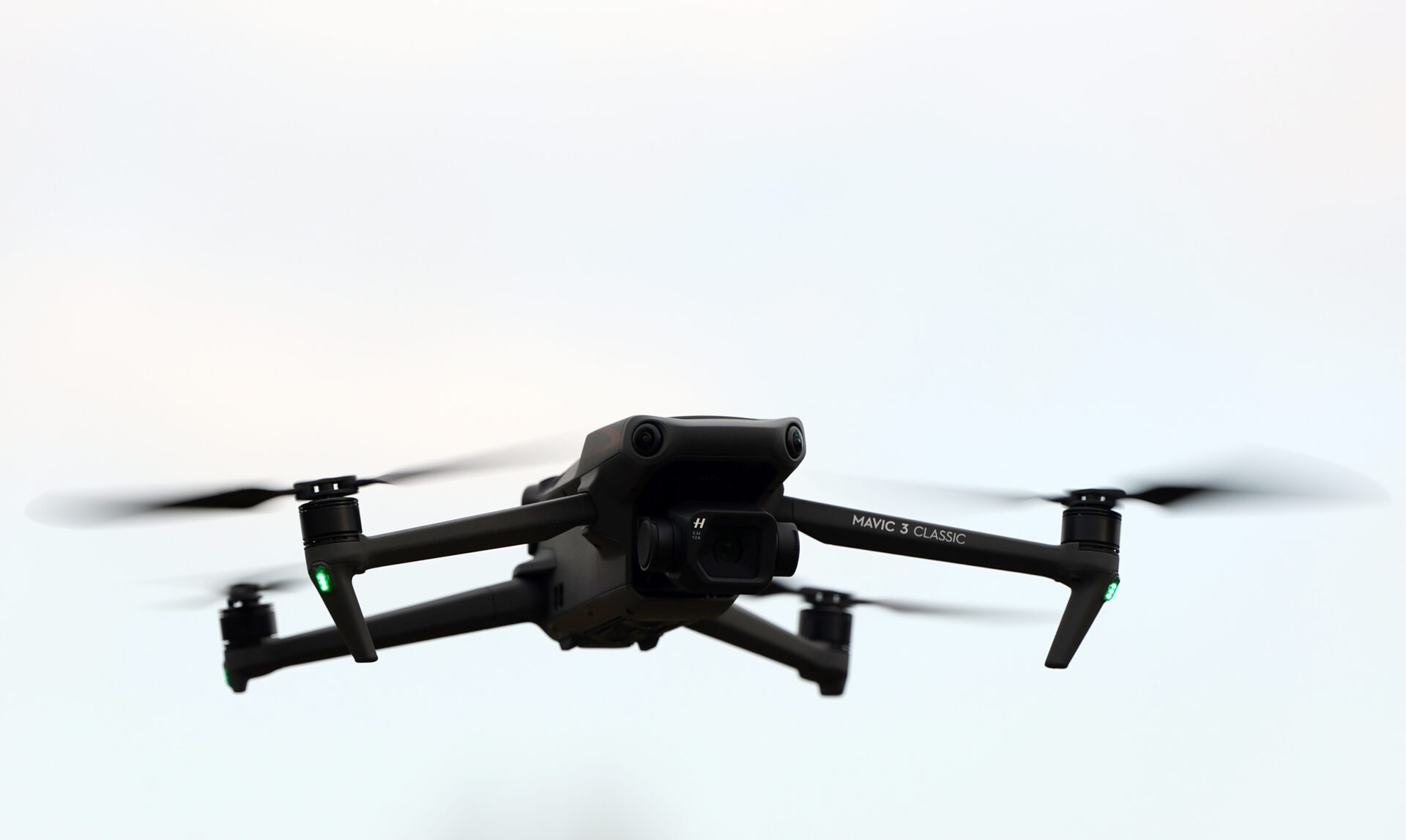
Prague – The Czech robotic system Eagle.one, designed to safely capture unauthorized drones in protected airspace using artificial intelligence, was featured by the European Commission in a report on the state of the union. The Czech Technical University in Prague (CTU), which collaborated with Fly4Future on the project, announced this in a press release today.
“Launched in November 2024 and backed by the European Regional Development Fund, the project aims to develop an autonomous flying robot that employs onboard artificial intelligence to safely capture unauthorized drones in protected airspace without causing damage, which is particularly important for civil applications,” the commission’s report indicates.
The Eagle.one system stands out from other solutions by capturing drones in a net rather than damaging them, allowing for a safe landing at a designated site. This feature is crucial in scenarios where drones might carry explosives or hazardous materials. According to the developers, there is significant demand for this technology from airports, prisons, border controls, and critical infrastructure operators and defense forces.
“It’s a tremendous validation for us that the project is included in the European Commission’s report on the state of the union. We see this not only as recognition of our entire team’s efforts but also as an affirmation of the real benefits our technology offers,” stated Věra Sasková from Fly4Future.
The Eagle.one weighs 15 kilograms, is equipped with eight rotors, and can reach speeds of up to 100 kilometers per hour. Its onboard artificial intelligence allows it to respond to unpredictable target movements and capture multiple drones in one mission. The system is stored in a mobile hangar ensuring it is always ready for deployment. Testing has been conducted, for instance, in collaboration with the Czech Prison Service. The development is supported by the Multirobotic Systems Group (MRS) from the Department of Cybernetics at CTU’s Faculty of Electrical Engineering.
The university reports growing interest in the technology from institutions worldwide. Current production capacity is inadequate to meet all orders, which means some requests will face delays, noted Ladislav Urbánek from Eagle.One. (September 15)











Leave a Reply