


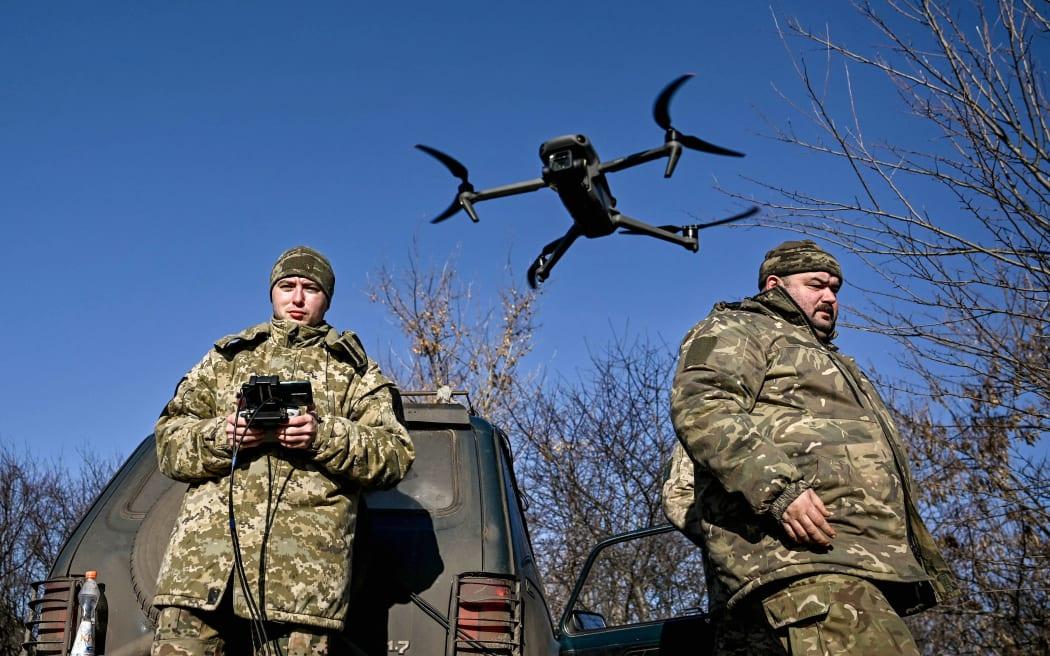
Volodymyr Zelensky’s decision to dismiss Ukraine’s commander-in-chief on 21 July quickly became more than a military reshuffle. Outside government buildings, demonstrators had already made clear who they wanted to take over. Within days, General Oleksandr Syrskyi was replaced by 43-year-old General Mykhailo Drapatyi, the officer many protesters viewed as the right choice to lead Ukraine’s armed forces. The shake-up continued with the dismissal of the chief of the general staff the following day. Just days earlier, Zelensky had also removed Defence Minister Mykhailo Fedorov, only to later offer him another senior position within the government, highlighting the rapid changes at the top of Ukraine’s leadership.
While many in Washington initially viewed the developments as a story about military command, the deeper issue extends far beyond personnel changes. The central challenge facing Ukraine is financial rather than organisational. Decisions that will shape the country’s ability to continue the war are increasingly being made outside Kyiv, as Ukraine’s military effort depends heavily on sustained international funding and military assistance.
Despite the political turmoil, Ukraine has recorded several notable successes on the battlefield. Research by the Center for Strategic and International Studies (CSIS) found that Russian advances near Kostiantynivka have slowed dramatically, averaging around 50 metres per day, making it one of the slowest major offensives in modern warfare. The same analysis estimates that Russia has suffered around 1.4 million casualties since launching its full-scale invasion in February 2022. Russia also experienced a net territorial setback during April and May for the first time since August 2024. Meanwhile, according to Ukraine’s General Staff, sustained drone strikes have temporarily disabled nearly 43% of Russia’s oil refining capacity, contributing to fuel shortages, gasoline rationing across dozens of Russian regions, and logistical difficulties for Russian troops.
Even with these achievements, the battlefield has remained largely unchanged. Modern wars of attrition are determined not only by military victories but also by each side’s ability to sustain economic resources, public support and international backing over time. Valerii Zaluzhnyi, Ukraine’s ambassador to the United Kingdom and the country’s former commander-in-chief, recently warned that assuming Russia is close to defeat would be a serious strategic mistake. In his assessment, the decisive factor is not whether Russia can overpower Ukraine militarily, but whether Ukraine and its allies can maintain the economic and political commitment required for a prolonged conflict. From Moscow’s perspective, President Vladimir Putin does not necessarily need to defeat Ukraine outright; he only needs Western support to weaken gradually.
Signs of that slowdown are becoming increasingly visible, particularly in the United States. Washington’s role has shifted from directly financing Ukraine’s defence to facilitating arms purchases through the PURL programme, under which allied countries purchase American-made weapons for Ukraine while the United States contributes little direct funding. The programme has proved operationally effective, reportedly supplying more than 90% of the Patriot missile interceptors used by Ukraine and raising approximately $6.7 billion from 29 participating countries during its first year. However, contributions have fallen short of intended targets. Independent assessments estimate that partner nations provided between $700 million and $1 billion during the first four months of the year, below the goal of maintaining monthly contributions of $1 billion, with a relatively small group of countries carrying much of the financial burden.
Political divisions in the United States also complicate prospects for additional funding. Public opinion surveys continue to show a significant partisan divide over support for Ukraine, making new large-scale aid packages increasingly difficult to secure through Congress. As a result, Washington’s role has increasingly evolved from that of a principal donor to a supplier whose defence industry continues to benefit regardless of developments on the battlefield.
European governments were expected to offset any reduction in American financial support, and several major commitments have been announced.
Comments
20 responses to “European Budget Votes Now Influence Ukraine’s War, Not Battlefields”
-
Looks like the real battlefield is now in the budget meetings—who knew accountants could be the real heroes of this war? 🎩💸
-
Looks like the real battlefield is in the budget meetings, eh? Who knew a couple of spreadsheets could outwit a tank brigade? 🤑💼
-
Looks like the real battlefield is now a boardroom in Brussels – who knew budget votes could decide the fate of a nation? Just what Ukraine needs, more spreadsheets and less artillery! 😏💼
-
Seems like voting on budgets from cozy offices in Brussels is the new way to win wars now—who needs soldiers when you have spreadsheets? 🗳️💼
-
So, it turns out that the real battle isn’t on the front lines but in the budget meetings! Who knew that crunching numbers in Brussels could be more decisive than dodging bullets? 😂💶
-
Oh, fantastic news! Turns out the best way to support Ukraine is through a good ol’ European budget vote—who knew spreadsheets could save lives? 💼✨
-
Looks like it’s not just the soldiers on the front lines who need a financial planner these days—who knew budget votes in Brussels could be the real generals of this war? 😂💼
-
So, now it’s all about the budget votes, eh? Who knew spreadsheets could be the real heroes while soldiers are out there dodging bullets? 😂💼
-
Isn’t it charming how the fate of a nation now hinges more on spreadsheets in Brussels than on the actual battlefields? Makes you wonder if someone should send a postcard to Kyiv instead of weapons. 😂✌️
-
Seems like the real battlefield is now in the European Parliament—who knew budget votes could be more decisive than tanks? 💶🇪🇺 Good luck to Ukraine, but I hope they don’t expect our MEPs to make military decisions like they’re choosing their favorite wine at a tasting! 🍷
-
Isn’t it delightful how the fate of a nation hangs on budget votes while the actual battlefields just carry on with their slow waltz? 🤷♂️ Nothing like a good old financial debate to win a war, eh?
-
The way budget votes are now doing the heavy lifting in Ukraine’s war feels a bit like swapping out the steering wheel for a seatbelt—nice gesture, but can we get back to actual driving? 😂💸
-
Seems like the real battle isn’t on the front lines but in the backrooms of Brussels, where a bunch of bureaucrats is pulling the strings – who knew the fate of a nation could hinge on a budget vote? 💸 #Priorities
-
Seems like the real action in this war is happening in budget meetings rather than on the front lines—who knew spreadsheets could be the new battlefield? 💼🧐 Guess we should all invest in a good set of calculators instead of tanks, eh?
-
In a world where military strategy is dictated by budget votes in Brussels, who needs generals? 🙄 Just a bunch of suits deciding the fate of a nation over a cup of coffee – what could possibly go wrong? 💼☕
-
Isn’t it just charming how budget votes in Brussels now hold the key to Ukraine’s fate? Who knew that financial gymnastics could replace actual military strategy? 💸🤦♂️
-
Fancy that! Who knew that the fate of a nation could hinge on a few budget votes in Brussels? 🙄 Seems like Ukraine’s military strategy is now more about political finesse than actual fighting!
-
Looks like we’ve traded tanks for spreadsheets, eh? Who knew that budget votes in Brussels would become the new frontline in this charming little war? 💼💰
-
So, it’s no longer about who’s got the best generals; it’s all about the one with the deepest pockets, eh? Just what we needed – a budget battle instead of a battlefield! 💸🍻
-
Seems like the real generals of modern warfare are sitting in Brussels, armed with spreadsheets instead of rifles. Who knew budget votes could have more impact than actual bullets? 💸😂

Last News
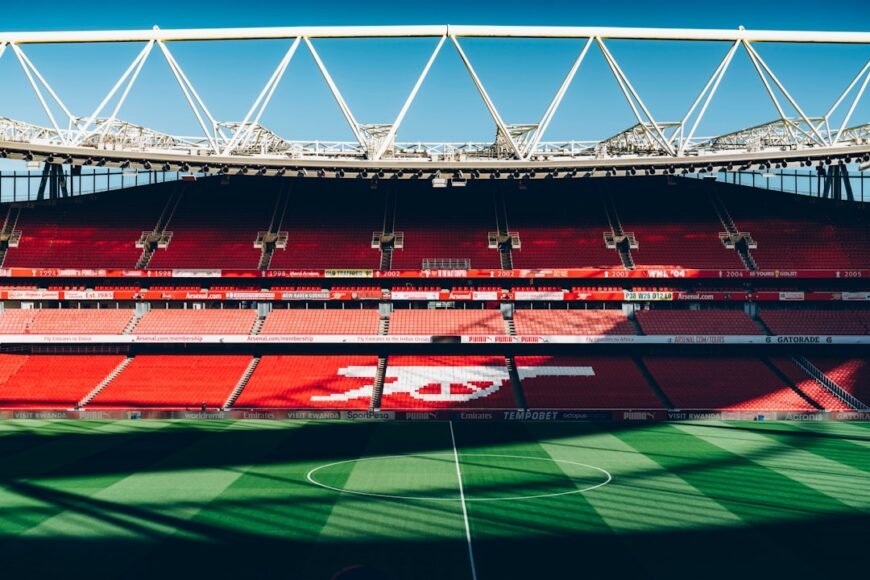
Arsenal Injury Update: Tzolis Shines and Odegaard Regains Form in London
London, 22 August (Brussels Morning Newspaper) – Arsenal have received an encouraging Arsenal injury update on Bruno Guimaraes after the midfielder missed their 3-0 Premier League victory over Coventry City, while Christos Tzolis and Martin Odegaard provided Mikel Arteta with plenty of encouragement at the other end of the pitch.
The champions made a confident start to their title defence at the

How Ukraine Can Endure Another Winter
In the podcast, Zoya Sheftalovich and Chief Foreign Affairs Correspondent Nick Vinocur explore the support Ukrainian President Volodymyr Zelenskyy aims to obtain from the Coalitio
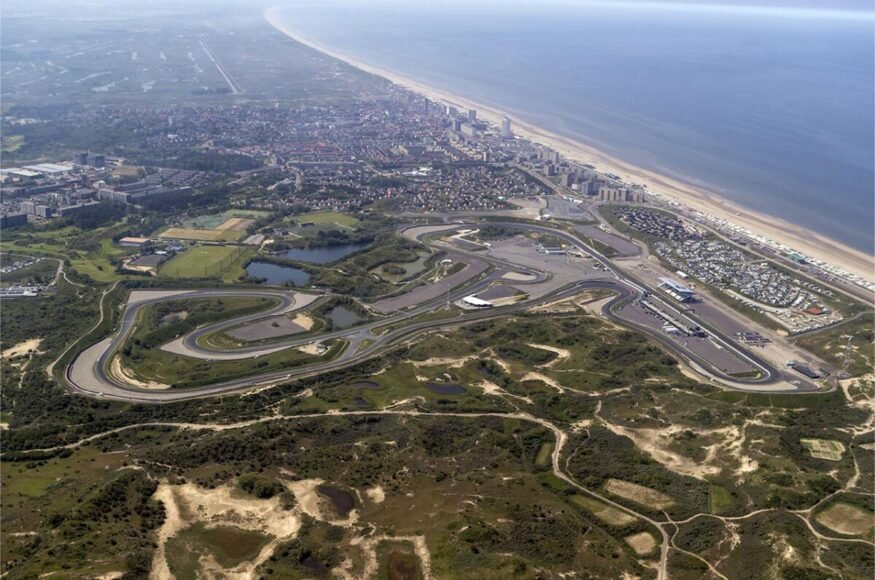
Max Verstappen Reflects on Disappointing Dutch Grand Prix Weekend in Zandvoort
Zandvoort, Netherlands, 23 August (Eurotoday) – Max Verstappen said his home Formula One weekend had been disappointing after an opening-lap accident ended his Dutch Grand Prix at Zandvoort. The Red Bull driver was unhurt, but the early retirement brought the Verstappen Dutch GP weekend to a premature close after he had struggled for pace across the event.
Verstappen started seventh and made it
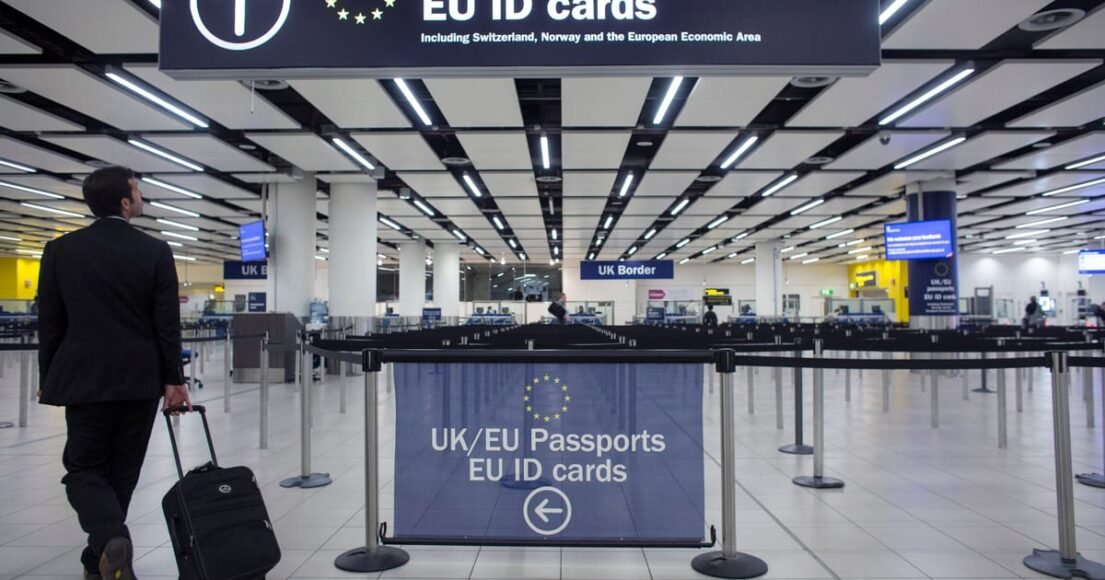
Britain assured EU citizens about its settled status system, then muddled identical twins.
Many such cases
Monique Hawkins, acting CEO of the3million, which advocates for the rights of EU citizens in the U.K., noted that issues wit

Lando Norris Claims Dutch Grand Prix Victory from Pole in Zandvoort
Zandvoort, Netherlands, 23 August (Eurotoday) – Lando Norris won the Dutch Grand Prix from pole position on Sunday, taking his second Formula One victory in succession as McLaren finished ahead of Mercedes drivers Kimi Antonelli and George Russell at Zandvoort.
Norris completed the 72-lap race 11.536 seconds ahead of championship leader Antonelli. Russell finished third, with Lewis Hamilton four
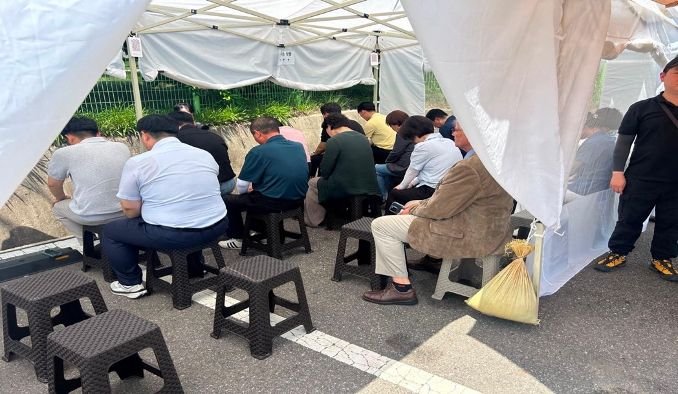
I Visited Chairman Lee Man-hee in Prison in Seoul
HRWF Report on Visiting 95-Year-Old Chairman Lee Man-hee of the Shincheonji Church of Jesus. He is in pre-trial detention during an extreme heatwave and questions whether Korean law’s supervised alternatives should be used.
Thursday, 6 August 2026 at 2:00 pm. The detention-centre visiting room is a little more than four metres square. In front of us, a wall of double glass perhaps ten centimetre
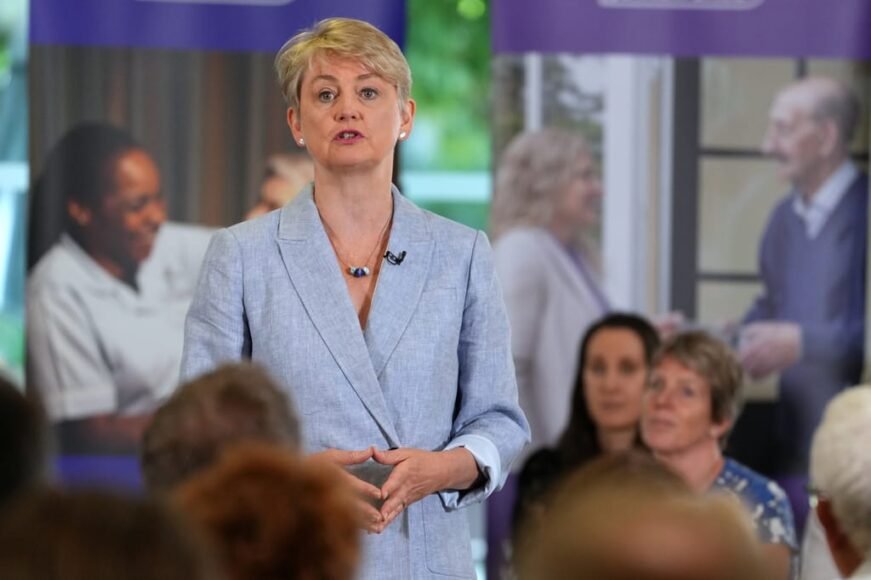
UK Assisted Dying Bill Returns: Labour Advocate Seeks Inspiration from Australia
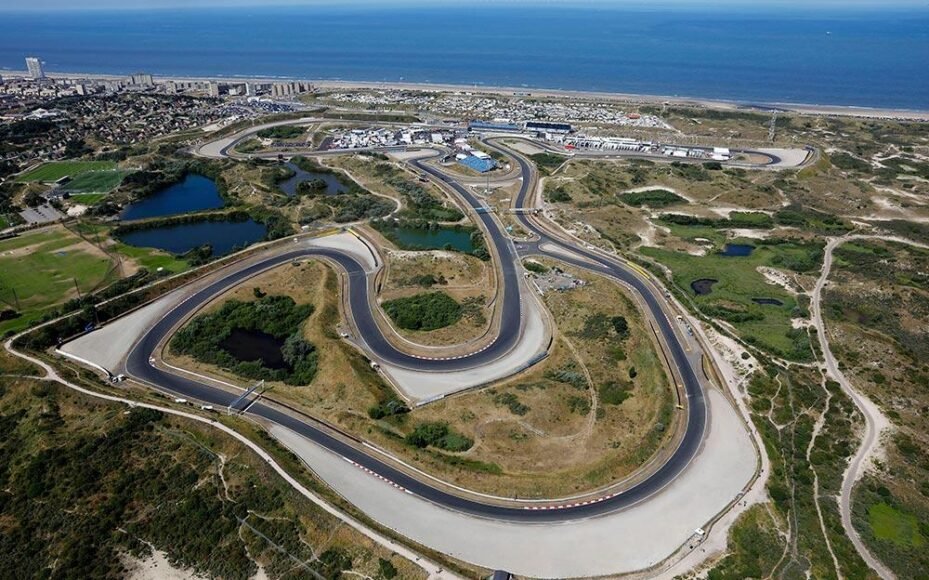
Lando Norris Defeats Kimi Antonelli to Win 2026 Dutch GP – Zandvoort
Zandvoort, Netherlands, 23 August (Eurotoday Newspaper) – Lando Norris won the Dutch GP 2026 for McLaren on Sunday, finishing ahead of Mercedes pair Kimi Antonelli and George Russell after Max Verstappen’s home race ended on the opening lap. Norris started from pole, regained the lead after losing it following the restart and went on to take his second consecutive Formula One victory.
Norris cro

EU Scholars Petition for Alternative to Pre-Trial Detention for 95-Year-Old Chairman Lee
This initiative followed a press conference by Human Rights Without Frontiers (HRWF) on August 7 at the Seoul Foreign Correspondents’ Club. HRWF Associate Director Hans Noot read a petition addressed

Police Investigate Wedding Convoy on A66 Near Schlüchtern
Schlüchtern, Germany, 23 August (Eurotoday Newspaper) – Police in Hesse are investigating an A66 wedding convoy after motorists reported that several vehicles travelled slowly across both lanes of the motorway near Schlüchtern, temporarily affecting traffic heading towards Fulda.
The incident happened at around 2.45pm on Thursday, 20 August. Several motorists contacted police about the processio
Leave a Reply