


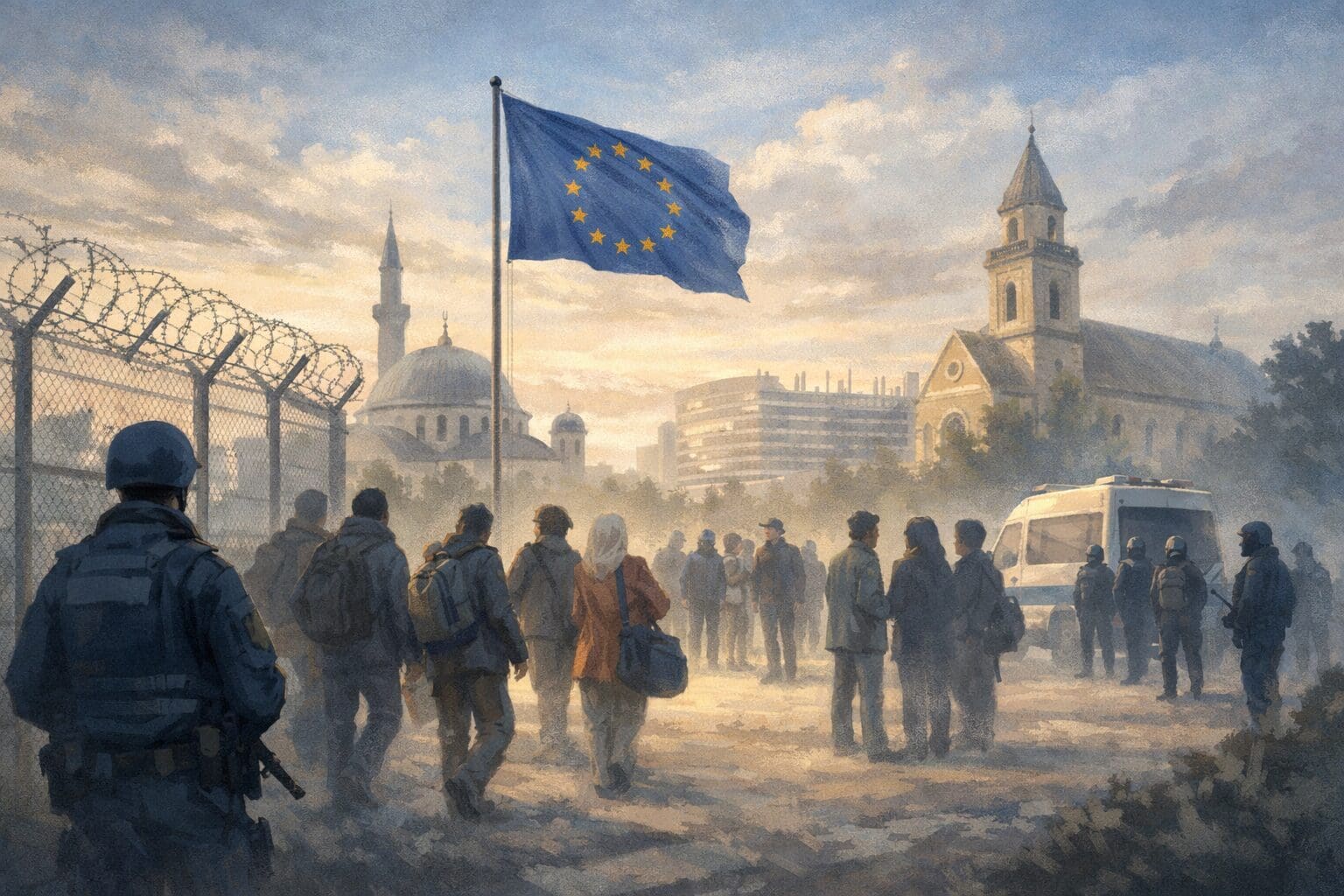
A new vocabulary is emerging across Europe. Political leaders discuss “Fortress Europe,” focusing on closing borders, enhancing external defenses, and revising asylum systems. Public debates in several countries have shifted from integration to “remigration”—indicating a reversal of decades of settlement for many.
Recently, laws like Denmark’s mandate to deport certain non-Western migrants with prison sentences of over a year have heightened concerns among immigrant communities. Amid polarized media discourse and frequent references to Islam in security and identity debates, many Muslims in the EU feel uncertain about their long-term inclusion.
Europe faces a challenging question: how to balance security and governance with maintaining social cohesion, democratic values, human rights, equality, and inclusivity?
Migration, Identity, and Political Change in Historical Context
This moment can be understood only by revisiting Europe’s post-war history. After 1945, Western European countries recruited labor from Turkey, Pakistan, North Africa, and Southern Europe to aid economic reconstruction. Guest worker programs aimed at providing an inexpensive, hardworking labor force. Initially seen as temporary, many workers stayed, formed families, and integrated into the social fabric.
Subsequent migration flows were influenced by decolonization, the Balkan crisis, Western incursions into Iraq and Afghanistan, and the refugee influx in 2015–2016 due to the Syrian war. This period marked a political turning point, exposing weaknesses in EU asylum coordination and sparking right-wing populist movements using anti-minority rhetoric to gain power.
Terrorist attacks in cities like Paris, Brussels, Berlin, and Vienna further complicated perceptions. Although perpetrators were a tiny fraction of European Muslims, these events influenced political narratives, merging security debates with discussions about Islam, integration, and European identity.
These developments created an environment where migration, religion, and national identity are closely linked.
Why the “Fortress” Narrative Resonates?
The appeal of the “Fortress Europe” narrative stems from multiple anxieties, not just prejudice.
Economic uncertainties, housing shortages, and welfare pressures have sharpened competition perceptions. Integration outcomes vary, with some urban areas facing socio-economic segregation and educational disparities often viewed as cultural.
Security concerns remain significant. Crimes involving migrants receive intense media coverage, heightening fears despite statistical nuances.
There is also a deeper identity anxiety. In societies historically shaped by Christian heritage, rapid demographic changes have spurred debates on what it means to be “European.” Some political actors frame migration as a civilizational issue, not just policy.
The Rise of Islamophobia
Islamophobia has risen in rhetoric and lived experiences. Surveys report increasing anti-Muslim hate speech, mosque vandalism, employment discrimination, and online harassment across Europe.
Islamophobia manifests at multiple levels. Overt hostility targets visibly Muslim individuals, especially women wearing religious attire. Structurally, discourses suggest Islam is incompatible with democracy, gender equality, or European values, blurring distinctions between extremists and millions of law-abiding Muslims.
This dynamic impacts young Muslims, who may feel conditionally accepted and scrutinized, eroding trust in institutions and weakening identification with the political community.
Right-Wing Christian Identity Narratives
Some right-wing political movements use Christian identity rhetoric, differing from mainstream Christian communities that support pluralism. These movements frame migration and Islam as threats to “Christian Europe,” invoking historical memories to depict Muslims as invaders.
This rhetoric is more political than theological, mobilizing Christianity as a civilizational identity marker. The result frames Europe as culturally Christian and migrants as culturally Muslim, restricting hybrid identities.
Such discourse profoundly impacts Muslim communities, symbolically excluding them even as citizens, and heightening polarization.
The Risks of Collective Suspicion
Policies blurring individual accountability and collective identity carry significant risks.
Scrutinized communities deepen alienation. Second- and third-generation Europeans of Muslim descent may feel a gap between formal citizenship and perceived belonging.
Social fragmentation follows. Trust in institutions declines when communities feel targeted. Polarization grows, with exclusionary rhetoric reinforcing defensive identities, cited as integration failures.



Leave a Reply