EU Ratification and Rights Discussion on UN Cybercrime Treaty

On 25 October 2025, sixty-five countries signed the United Nations Convention against Cybercrime in Hanoi, marking the first universal treaty to combat offences such as ransomware, online child abuse, and the non-consensual sharing of intimate images. The treaty, adopted by the UN General Assembly in December 2024 and now open for signature until December 2026, will enter into force after 40 ratifications. While UN Secretary-General António Guterres hailed the agreement as a historic step toward a safer digital world, civil society organizations warn that its broad definitions could enable state surveillance and threaten journalists and activists. The European Union has authorized its institutions and member states to sign but must still navigate internal ratification procedures and ensure the treaty aligns with existing EU laws and human-rights standards.

Milestone treaty signed in Hanoi

The Convention against Cybercrime – also known as the UN Cybercrime Convention – was adopted by the UN General Assembly in December 2024 after five years of negotiation. It opened for signature on 25 October 2025 in Hanoi, where sixty-five countries signed the treaty. The agreement establishes the first global framework for investigating and prosecuting cyber-dependent and cyber-enabled crimes, including phishing, ransomware, online financial fraud, and the non-consensual dissemination of intimate images. It also requires signatories to share electronic evidence across borders and creates a 24/7 cooperation network, with entry into force triggered 90 days after the fortieth ratification.

At the signing ceremony, UN Secretary-General António Guterres hailed the treaty as a “powerful, legally binding instrument” to strengthen collective defenses, warning that “every day, sophisticated scams defraud families, steal livelihoods and drain billions of dollars from our economies.” He called the Convention a victory for victims of online abuse and urged countries to ratify swiftly, stressing that technology’s benefits come with new vulnerabilities.

EU ratification process and harmonization

The treaty allows regional organizations like the European Union to sign and ratify once at least one member state has ratified. On 13 October 2025, the Council of the EU authorized the European Commission and member states to sign the Convention. However, EU participation is not automatic: the Council still must adopt decisions to sign and conclude the treaty, and the European Parliament must give its consent. Each member state will launch its own procedures for signature and ratification in accordance with national law. Only after these steps can the EU formally become a party.

While the Convention aims to harmonize criminalization of cybercrime, the EU already has robust legislation. For example, offences such as online child sexual abuse, grooming, and non-consensual dissemination of intimate images are criminalized under EU directives, though not all jurisdictions worldwide have equivalent laws. The Convention therefore complements existing EU law but does not erase national differences; implementation may still vary among states.

Debate over safeguards and definitions

The treaty contains human rights and data-protection safeguards: signatories can refuse cooperation if requests are used to commit human-rights abuses or contradict domestic laws. It also stipulates that human rights must be respected during investigations. UNODC, which led the negotiations, says the agreement promotes legitimate security research and protects privacy.

Civil society groups and tech companies argue that these safeguards are insufficient. A coalition led by ARTICLE 19 warns that the draft convention remains over-broad, requiring states to criminalize cyber-enabled offences and referencing other international conventions without clarity. They caution that vague definitions could criminalize legitimate online expression, deepen gender inequality, and fail to protect security researchers, whistleblowers, and journalists. Global Voices notes that authoritarian regimes have promoted ambiguous definitions of cybercrime, which could encompass criticism and human-rights advocacy, and that the treaty lacks clear safeguards to protect exiled defenders and journalists. Critics also highlight that the treaty makes dual criminality optional, potentially allowing states to prosecute conduct abroad that is not illegal at home.

In an interview with Reuters, the Cybersecurity Tech Accord – which includes Meta and Microsoft – labelled the agreement a “surveillance treaty,” warning that it could facilitate state data sharing and criminalize ethical hackers. They urge governments to ensure definitions are narrow and safeguards enforceable.

Balancing cooperation and rights

Supporters argue that the Convention is a necessary response to a surge in cybercrime costs and a lack of global coordination. It criminalizes emerging offences like non-consensual intimate-image sharing and provides tools for cross-border collaboration, areas where gaps currently exist. Proponents also emphasize that the treaty builds on the Council of Europe’s Budapest Convention and integrates privacy safeguards.

Yet critics maintain that the broad scope could normalize surveillance and suppress dissent unless robust amendments are introduced. They call for stronger references to international human-rights law, explicit protections for journalists and researchers, and clear limits on information sharing. As debates continue, EU lawmakers will scrutinize the treaty to ensure alignment with the EU’s General Data Protection Regulation and Charter of Fundamental Rights.

Looking ahead

The Convention is open for


Comments

18 responses to “EU Ratification and Rights Discussion on UN Cybercrime Treaty”

  1. Sneaky Lady Avatar
    Sneaky Lady

    Looks like we’ve traded one set of bureaucratic hurdles for another; a classic move, eh? 🤔 Just what we needed: a global treaty that might just turn into a game of legal limbo!

  2. Seems like we’ve found the perfect recipe for a digital-age soap opera: a splash of cybercrime, a dollop of state surveillance, and just a sprinkle of human rights concerns. Who knew signing treaties could be as thrilling as a night out in Berlin? 🍻

  3. Jack Cassidy Avatar
    Jack Cassidy

    Signing a treaty on cybercrime? Brilliant! Because nothing screams “we’ve got it all figured out” like a bunch of bureaucrats trying to agree on definitions while the hackers are already five steps ahead. 😂

  4. Lil Rebel Ma Avatar
    Lil Rebel Ma

    Just what we needed, another treaty that promises to solve cybercrime while potentially turning us all into digital spies for our governments. 🤔 Maybe next time they’ll ask for our firstborns too? 😂

  5. Signing a treaty to combat cybercrime? Just what we needed—another lengthy bureaucratic process to keep the coffee flowing in Brussels! ☕️💼 Who needs swift action when we can have endless discussions, right?

  6. Lady Fantastic Avatar
    Lady Fantastic

    Guess the EU’s ratification process is like waiting for a train in the middle of a British rainstorm—long, tedious, and you just know it’ll end up late! 🚂☔

  7. Riff Raff Avatar

    Isn’t it just delightful how the UN manages to pen a treaty that sounds like it was crafted during a tea break, yet it’ll take the EU years to “navigate” through its labyrinth of bureaucracy? 🤔 Maybe we should just send them all a how-to guide on quick ratification while we’re at it! 😏

  8. iron jesus Avatar
    iron jesus

    Seems like we’re finally getting our act together to “safeguard” the digital playground – just what we needed, another layer of bureaucracy to tell us how to use the internet. 🤔 As if we weren’t already swimming in laws, now we get to debate the fine print on whether it’s illegal to send a meme in certain countries. 😂

  9. General Broomdog Avatar
    General Broomdog

    Isn’t it just adorable how we’re signing treaties to protect us from cybercrime while half the countries are still figuring out how to turn on their Wi-Fi? 🤦‍♂️ Hope this “powerful instrument” comes with a user manual!

  10. VenusLion Avatar

    Just what we needed, another treaty to tackle cybercrime while we’re still figuring out which way is up with the last one! 🤦‍♂️ Let’s hope this isn’t just a fancy way for governments to snoop on our online shenanigans, eh?

  11. TrinitySoul Avatar
    TrinitySoul

    Just what we needed, another lengthy treaty to add to our pile of paper! 🤔 Let’s hope this one doesn’t become just another excuse for bureaucrats to play hide and seek with our data!

  12. Manly Reno Avatar
    Manly Reno

    Seems like the UN finally figured out how to tackle cybercrime—by handing the keys to the kingdom to every bureaucrat with a penchant for surveillance. Just what we need, more reasons for our friendly neighborhood government to peek over our shoulders! 😏📜

  13. flint cast-
iron Avatar
    flint cast- iron

    Isn’t it just charming when politicians gather to sign treaties in exotic locations while back home, the bureaucratic tango means it’ll take years before anything actually happens? 😏 Let’s hope the “safeguards” are as solid as a wet noodle, or we might just end up with a fancy piece of paper for our walls.

  14. Ship Whip Avatar

    Signing a treaty in Hanoi? Brilliant! That’s just what we need—more paperwork to keep track of while dodging the actual cybercriminals. 🥴✍️

  15. Pepper Legs Avatar
    Pepper Legs

    Seems like we’ve finally found a way to make cybercrime as bureaucratic as possible—who needs efficiency when you can have committees? 🤷‍♂️ Just what the world needed, another treaty to ratify—let’s hope it doesn’t take longer than a fine wine to mature! 🍷

  16. Looks like the UN’s idea of a “historic step” is just another dance of bureaucracy—let’s hope it doesn’t turn into a tango of state surveillance instead! 😅 #PaperChase

  17. marshmallow treat Avatar
    marshmallow treat

    Just what we needed—a treaty that’s like a Swiss army knife, but instead of tools, it’s packed with vague definitions and potential for overreach. Can’t wait to see how our esteemed bureaucrats navigate this minefield while keeping their coffee cups full! ☕🔍

  18. GoldTouch Avatar

    Stellar! Nothing like a global treaty on cybercrime to remind us that while we’re all in the same digital boat, some countries are still fine-tuning their oars. 🚣‍♂️ Just what we need—more paperwork to keep our politicians busy! 😏

Leave a Reply

Your email address will not be published. Required fields are marked *

Last News

Why Does My Cat Walk Between My Legs?

Why Does My Cat Walk Between My Legs?

We’ve all experienced the challenge of stepping over or avoiding our feline companions who love to weave between our legs as we walk. Navigating the house can feel like a balancing act, trying not to disturb our affectionate pets eager for closeness. What might explain this peculiar behavior?
Marking by Rubbing Your Legs
Cats have glands around their mouth and chin that release pheromones.
Your

Read More

Europe’s Awkward Embrace of Turkey

Europe’s Awkward Embrace of Turkey

Three senior EU figures are in Turkey today, just days before the NATO summit in Ankara.
EU foreign policy chief Kaja Kallas, Enlargement Commissioner Marta Kos, and Migration Commissioner Magnus Brunner will meet Turkish Foreign Minister Hakan Fidan to discuss security, migration, and connectivity between Europe and Central Asia.
The EU institutions’ AD5 entry-level administrator admissions test

Read More

US Supreme Court to Consider Republican Appeal on Arizona Voting Limits

US Supreme Court to Consider Republican Appeal on Arizona Voting Limits

Washington, D.C., June 29, 2026 – Eurotoday Newspaper — Election integrity laws are back before the U.S. Supreme Court after the justices agreed to hear a Republican-backed appeal seeking to revive Arizona voter restrictions that were blocked by lower federal courts. The case is expected to examine whether Arizona can enforce stricter proof-of-citizenship requirements for certain voter registrat

Read More

Ontex Convenes Special General Shareholders’ Meeting

Ontex Convenes Special General Shareholders’ Meeting

Press ReleaseThis article stems from a press release or official communication from Wire News Service. The European Times republishes it as a public service.

Regulated information
Aalst, Belgium, June 29, 2026 – On July 29, 2026, at 9 a.m. CEST, Ontex Group NV [EURONEXT: ONTEX] will host a special general shareholders’ meeting at its headquarters, Korte Keppestraat 21, 9320 Aalst, Belgium.
The

Read More

Barcelona’s Risky Move: A Suspended Ban Based on Bluff

Barcelona’s Risky Move: A Suspended Ban Based on Bluff

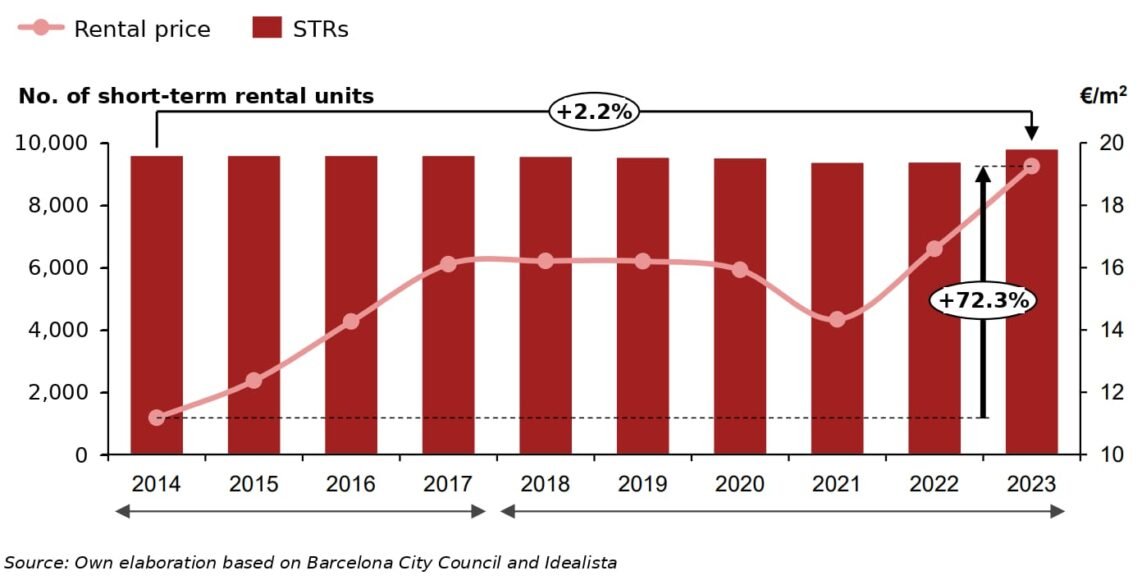
Mayor Collboni has made the removal of STRs a key part of his housing strategy. The plan seems straightforward: eliminate STRs and the homes will return to local residents. However, the data suggests otherwise. The city council has not shown how removing legally licensed STRs would place these houses on the market.
The city’s own research contradicts their aim. A study by the Barcelona Insti

Read More

US Supreme Court Considers Pepsi’s Mtn Dew Rise Energy Trademark Dispute

US Supreme Court Considers Pepsi’s Mtn Dew Rise Energy Trademark Dispute

Washington, D.C., June 29, 2026 – Eurotoday Newspaper — Mtn Dew Rise Energy is back in the legal spotlight after the U.S. Supreme Court agreed to hear PepsiCo’s appeal in a trademark dispute involving the branding of its former energy drink. The case focuses on whether the product’s name could create consumer confusion with another beverage company’s registered trademark, a question that could i

Read More

How Cross-Border Healthcare Operates in Europe

How Cross-Border Healthcare Operates in Europe

An operation canceled at home, a specialist just across the border, a holiday ankle break, a prescription issued in one country and filled in another—healthcare for millions in Europe transcends national frontiers. Yet, the workings of cross-border healthcare remain misunderstood, often when patients need clarity the most.
This confusion is significant because the rules aren’t just medical;

Read More

Gasoline Shortage in Russia Worsens Amid Ukrainian Attacks on Fuel Supply

Gasoline Shortage in Russia Worsens Amid Ukrainian Attacks on Fuel Supply

Moscow, Russia, June 29, 2026 – Eurotoday Newspaper — Russia gasoline shortage concerns intensified after Ukrainian drone attacks disrupted operations at several oil facilities, affecting fuel supplies in additional regions. The strikes have increased pressure on Russia’s domestic fuel distribution system, prompting authorities to redirect supplies and accelerate repairs at damaged refineries.

Read More

Britain Introduces New Armed Forces Modeled After Ukraine

Britain Introduces New Armed Forces Modeled After Ukraine

Doubling Down on Drones
The release of the delayed DIP addresses a critical demand from allies and the U.K.’s military-industrial sector, but implementing it will largely depend on Andy Burnham, who is anticipated to become prime minister later this summer.
The plan aims to bring the U.K. closer to NATO’s new defense spending target of 3.5 percent of GDP by 2035. However, the U.K.&#821

Read More

EU Advances in Combatting Invasive Alien Species, Yet Spread Persists | Press Releases

EU Advances in Combatting Invasive Alien Species, Yet Spread Persists | Press Releases

More than 300 rapid eradication actions have been conducted across the EU, with almost two-thirds proving effective, yet invasive alien species continue to spread, and new introductions are probable, according to a report released by the European Environment Agency (EEA) today.
Invasive alien species—non-native plants, animals, and other organisms introduced outside their natural range causing ha

Read More