


Ministers support expedited CAP flexibility due to rising input costs affecting EU food security
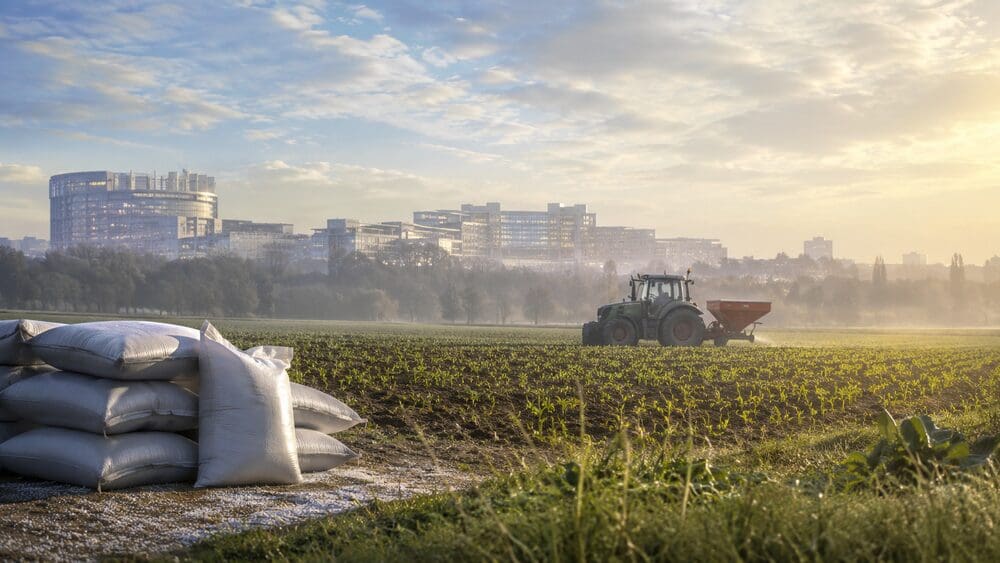
EU governments have decided to hasten emergency aid for farmers impacted by increasing fertilizer costs, granting the Council presidency the authority to negotiate a quick agreement with the European Parliament. This measure offers short-term relief but highlights a larger policy issue for Brussels: Europe’s food system’s susceptibility to fossil fuel prices, import disruptions, and geopolitical shocks beyond the farm.
On June 17, the Council of the EU adopted its position, agreeing to the Commission’s proposal to allow member states to provide more flexible support under the Common Agricultural Policy. This decision is in response to the sharp rise in fertilizer prices fueled by energy volatility and Middle East crisis disruptions.
According to the Council mandate, member states can offer temporary, targeted financial assistance to farmers most affected by the increased fertilizer costs. The proposal would also enable earlier and higher CAP advance payments in 2026, providing farms quicker access to funds ahead of the next production cycle.
A swift process for a gradually developing issue
The institutional process is unusually accelerated. The European Parliament has agreed to handle the matter urgently, skipping the ordinary committee stage for a faster plenary decision. The Council presidency is now aiming for an agreement with Parliament to enable the regulation to take effect shortly after its publication in the EU’s Official Journal.
The urgency reflects political pressure from rural Europe. Fertilizers are crucial inputs, influencing planting decisions, yields, farm liquidity, and consumer food prices. The European Commission notes that fertilizer costs comprise 7 to 8 percent of input costs across EU agriculture, though the burden is heavier in some crop sectors.
The Commission’s broader Fertiliser Action Plan highlights that nitrogen fertilizer prices in April 2026 were 71 percent above the 2024 average. It also highlights Europe’s structural reliance on imported mineral fertilizers and raw materials such as urea, ammonia, phosphates, and potash.
The planned support will be financed within the existing CAP budget, allowing for quick deployment but is politically delicate. Member states aim to ease immediate pressure without reopening broader discussions on EU farm spending, environmental conditions, and the next long-term budget.
Relief with an eye on reform
For farmers, the need for liquidity support is clear. Many cannot transfer higher fertilizer costs to buyers, especially when cereal prices are low or supply contracts are fixed. Reducing fertilizer use might save cash short-term, but can lower yields and weaken food supply later.
For EU institutions, the pressing issue is whether emergency aid becomes a temporary fix for a system vulnerable to repeated shocks. Natural gas remains key to nitrogen fertilizer production. Global commodity disruptions can raise prices even when Europe’s direct regional dependence is limited. The Commission notes that the Middle East accounts for about 35 percent of global nitrogen fertilizer exports, meaning disruptions can affect supply and prices globally.
This package is positioned between crisis management and industrial strategy. Brussels is keen to help farmers purchase fertilizer now, while promoting more efficient nutrient use, domestic production, nutrient recycling, bio-based fertilizers, and lower-carbon alternatives. These long-term goals are less immediate than a CAP advance payment but are crucial for preventing a repeat of the emergency cycle.
European environmental groups warn that the crisis should not be viewed solely as a price shock. They argue that reliance on fossil-fuel-based fertilizers poses risks to farmers, climate policy, water quality, and public health. Their solution is a more rapid move toward agroecology, legumes, crop rotation, nutrient recovery, and regional biofertilizer production.
That agenda is part of Europe’s innovation debate. Previous reporting by The European Times on low-carbon fertilizer production highlights how new technologies are being considered as both climate solutions and food-security infrastructure.
Food security gains prominence on the EU agenda
The fertilizer issue arises at a delicate political time for the Union. EU leaders are meeting in Brussels this week with issues like competitiveness, the next multiannual budget, Ukraine, migration, defense, and the Middle East vying for attention. Agriculture increasingly intersects with these topics: energy dependence, trade exposure, climate adaptation, rural income, and social trust.
Fast-tracked support might ease immediate pressure before autumn planting decisions but won’t resolve the broader question of how far the EU should go in restructuring fertilizer markets, building reserves, supporting domestic production, or altering farming practices.
Currently, the Council’s message is that the Union can act swiftly when farm viability and food supply are threatened. The next test will be whether emergency relief is supplemented by a sustainable plan to make Europe’s agricultural system less vulnerable to future disruptions in global energy or shipping routes.





Leave a Reply