


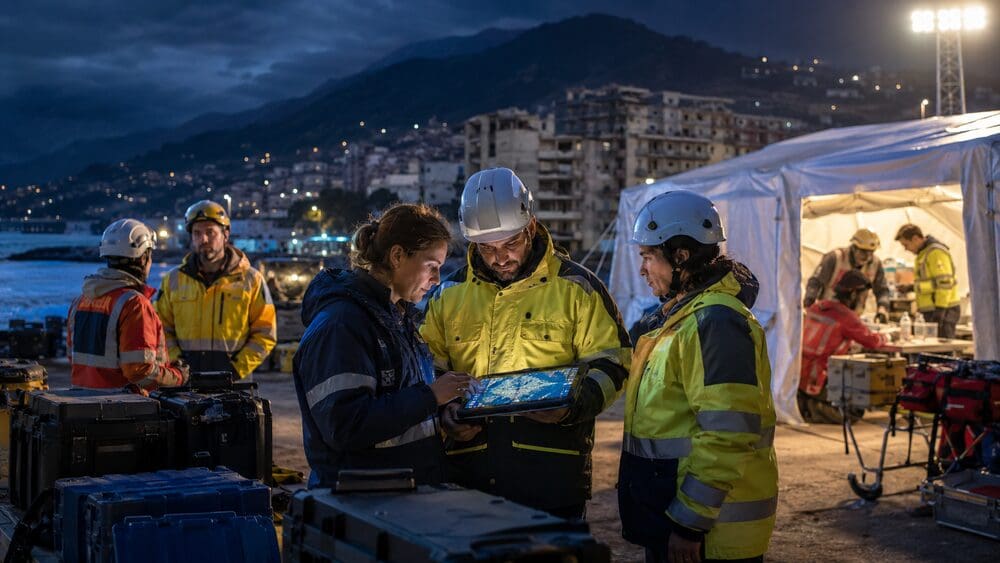
Eight member states have mobilized emergency assistance for Venezuela following the 24 June earthquakes, with UN teams coordinating search-and-rescue efforts.
The European Union has dispatched rescue teams, medical personnel, and emergency equipment to Venezuela after two significant earthquakes on 24 June, resulting in numerous casualties. Over 520 responders have been mobilized through the EU Civil Protection Mechanism, contributing to a broader international operation focused on urgent search-and-rescue needs, satellite mapping, and humanitarian coordination.
On Friday, the European Commission reported that Czechia, Spain, Italy, France, Luxembourg, Germany, Portugal, and the Netherlands are providing aid via the EU Civil Protection Mechanism. This includes firefighters, rescue dogs, medical staff, and other emergency support.
Italy is sending a medical team, while Luxembourg is supplying telecommunications, shelter, and energy equipment. The Commission has also activated the Copernicus Emergency Management Service in mapping mode to support teams working in affected areas with satellite imagery and geospatial analysis.
Search and rescue remains the top priority, with the UN reporting rapid international mobilization. According to a UN Geneva briefing, 25 search-and-rescue and medical teams with over 1,000 personnel are being deployed to Venezuela from various countries.
UN officials have mobilized disaster assessment teams and operational support staff. UNHCR has expressed concern that the earthquakes could exacerbate the situation for refugees, asylum-seekers, and other vulnerable groups in the country, while the International Federation of Red Cross and Red Crescent Societies has noted that families remain afraid to return to damaged homes.
The initial hours and days following a major earthquake are critical, as rescue teams work amid aftershocks, broken communications, damaged roads, and overwhelmed hospitals. The EU’s deployment serves as both a diplomatic gesture and a practical test of Europe’s ability to respond quickly to disaster zones.
The EU Civil Protection Mechanism was created to coordinate assistance when a country’s own capabilities are insufficient. While often used for emergencies within Europe, it can also be activated for international disasters, as previous coverage by the European Times has shown.
This broader mandate is significant in Venezuela, where humanitarian needs intersect with years of economic challenges, migration, and pressure on public services. Emergency assistance must be rapid but principled, based on need, coordinated with humanitarian agencies, and insulated from political disputes.
The European Commission has stated that the EU is prepared to provide additional assistance as the situation evolves. Currently, the primary focus is on locating survivors, stabilizing the injured, restoring communications, and supporting local responders under extreme pressure.
For Europe, this deployment highlights that solidarity is not merely a matter of declarations, but of having trained teams, functioning equipment, and the capacity to act across borders when disasters allow little time for procedure.





Leave a Reply