


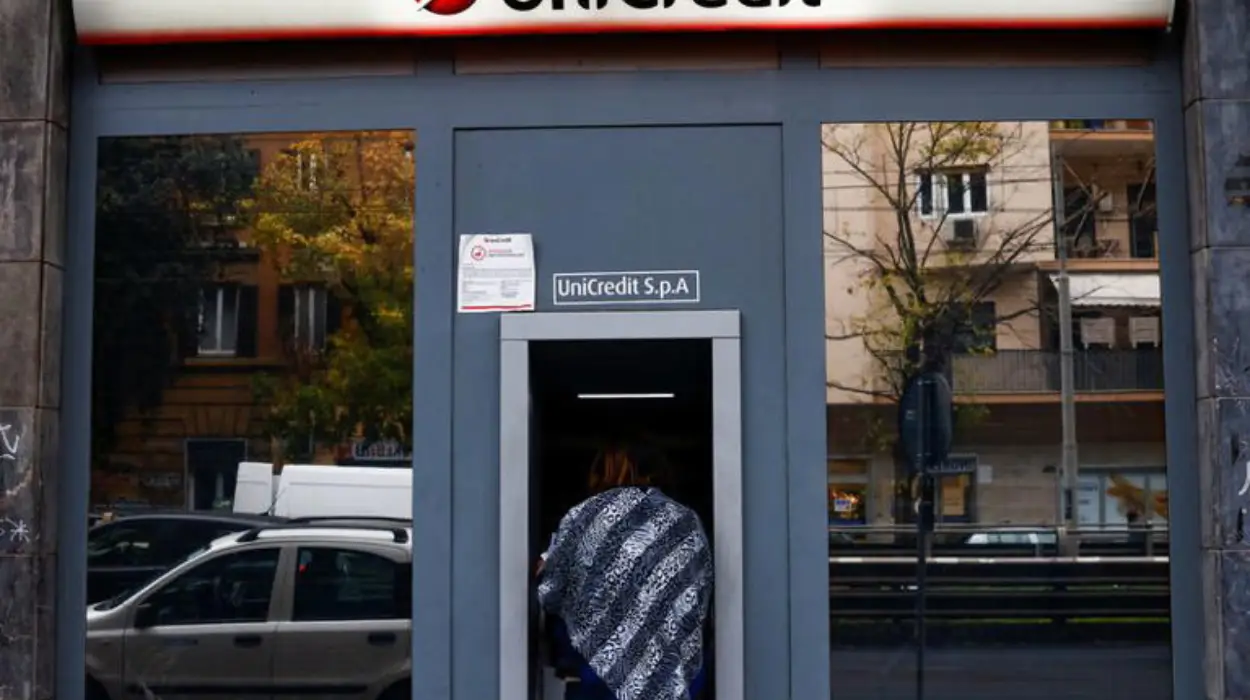
Brussels (Eurotoday) – The EU General Court has rejected UniCredit’s request to suspend the ECB’s order to reduce its Russian operations.
Reuters has reported that the European Union’s General Court has declined UniCredit’s request to temporarily discontinue a European Central Bank order to scale back its presence in Russia. The EU’s General Court is a constituent part of the European Court of Justice.
Why did the EU General Court reject UniCredit’s request?
The document indicates that the ECB had considerations related to terrorism financing and financial sanctions in Russia and that it found in January last year that UniCredit’s actions were not enough to counterbalance the threats. One of the ECB’s situations was a lack of access to client information kept by UniCredit subsidiaries in Russia and the impossibility of seeing the offices there for reviews, according to a summary contained in the court document.
How is the ECB addressing UniCredit’s Russian operations concerns?
European Central Bank, the lender’s chief supervisor, urged UniCredit earlier this year to additionally scale down its functions in Russia, including imposing a prohibition on new deposits and regulations on handling payments. In 2023, it also requested the bank to regard the sale of the UniCredit subsidiaries in Russia, the document reveals.
UniCredit, a pan-European Commercial Bank, requested the EU General Court to reject the demands, which CEO Andrea Orcel expressed could breach Russian laws. UniCredit had aimed to have the actions suspended while the court proceeding is pending, and in July stated that a decision on a suspension was expected “in the coming months”. The final proceedings for the issue are still pending.
UniCredit’s links to Russia date back to its obtaining a stake in International Moscow Bank, the first Russian lender to submit funds from foreign banking institutions. Following further modifications in ownership, it was renamed AO UniCredit Bank and in 2015 was included in the list of systemically significant banks by the Bank of Russia. When Russia overran Ukraine in 2022, UniCredit remained in Russia, one of two European banks along with Austria’s Raiffeisen to keep large operations in the country.
Comments
2 responses to “EU Court Rejects Unicredit’s Request to Suspend Russian Operations”
-
Looks like UniCredit’s Russian operations are getting about as much love from the EU Court as a soggy baguette at a Michelin-starred restaurant. 🍞😏 Maybe they should have brought some proper bribes—oops, I mean “incentives,” to the table!
-
Looks like UniCredit’s plans for a Russian vacation just got cancelled by the EU Court—who knew a bank could be so bad at following rules? 🤷♂️ Guess they’ll have to stick to nice, cozy coffee breaks in Brussels instead! ☕️✨

Last News

Nasdaq and S&P 500 Futures Climb Before Key US Jobs Report
New York, 4 September (Brussels Morning Newspaper) – US stock futures edged higher on Friday, led by technology shares, as investors awaited the August employment report for fresh evidence about the strength of the American labour market and the Federal Reserve’s next interest-rate decision.
Nasdaq 100 futures were up 0.42% at 4.24am ET, while S&P 500 futures gained 0.06%, according to Reut

Guerre au Soudan : al-Burhane, armes chimiques, islam politique et accusations contre les Émirats arabes unis
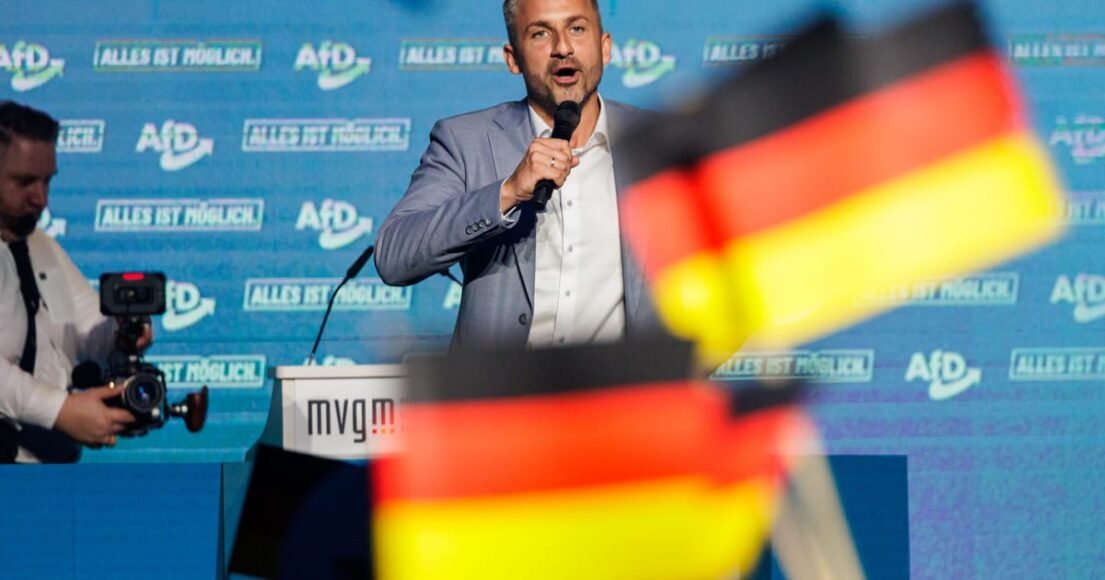
Germany’s Far-Right AfD Poised for Biggest Victory
The fact that 40% of voters backed the AfD, despite its regional branch being identified as a right-wing extremist group by the state intelligence agency and reports linking lead candidate Siegmund’s associates to an organization inspire
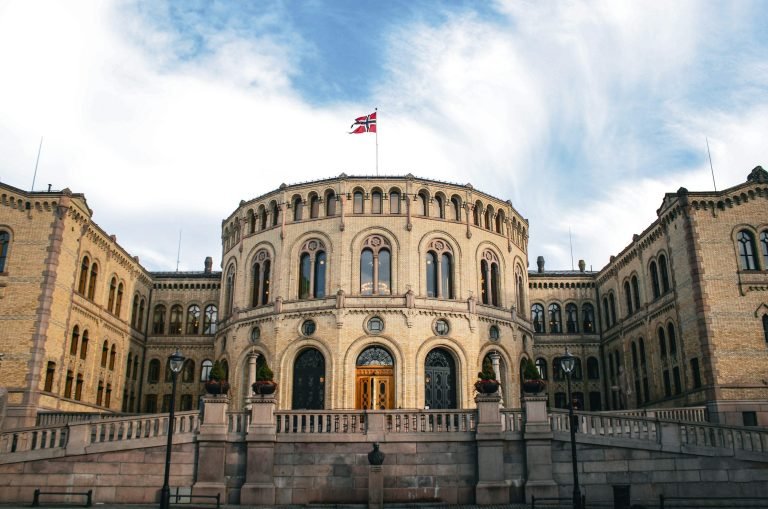
Norway Wealth Fund to Reduce US Treasury Holdings by $80bn, Oslo
Oslo, Norway, 4 September (Brussels Morning Newspaper) – Norway’s vast sovereign wealth fund has proposed sharply reducing its exposure to US government debt, a portfolio shift that could result in nearly $80 billion (£60 billion) being removed from US Treasury holdings. The Norway wealth fund, managed by Norges Bank Investment Management (NBIM), is seeking broader changes to its bond benchmark
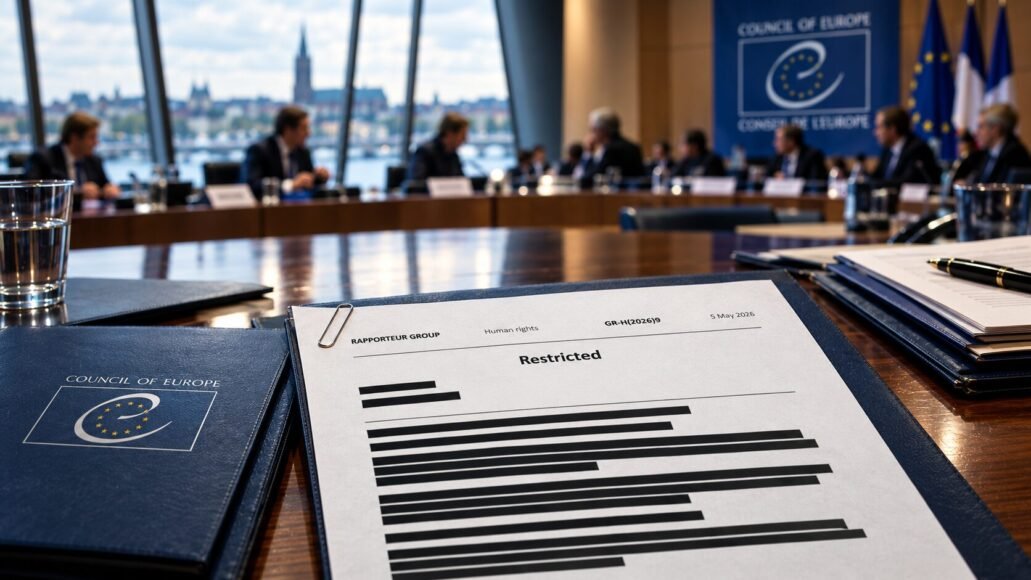
Confidential "study" used to dictate actions of the Council of Europe’s decision-making body

German Startup Achieves Milestone with First Successful Orbital Launch in Europe
We made history. On just our second flight, we became the first commercial space company from Europe to deliver satellites into orbit. Mission ‘Onward and Upward’ successfully lifted off and deployed payloads into orbit. A new chapter for European spaceflight. More:… pic.twitter.com/AWvqG2l8Mn
— Isar Aerospace (@isaraerospace) September 5, 2026
Germany’s Ministry for Research, Techno

Russian Attack Damages WHO Medical Supplies Warehouse in Kyiv Region, Ukraine
Kyiv Region, Ukraine, 4 September (Brussels Morning Newspaper) – A WHO warehouse attack in the Kyiv region has damaged one of the World Health Organization’s main facilities storing humanitarian medical supplies in Ukraine, with officials assessing possible losses after an overnight Russian air attack. No WHO personnel were reported injured.
WHO warehouse attack damages humanitarian supplies fac

Spectrum Achieves Orbit
The Spectrum rocket launched from Isar Aerospace

Strong Winds Halt Saturday Morning Balloons at Sint-Niklaas Peace Festival
Sint‑Niklaas (Eurotoday Newspaper) – No hot‑air balloons rose above the Grote Markt in Sint‑Niklaas on Saturday morning as excessive wind forced organisers to cancel the traditional launch window of the city’s Vredefeesten (Peace Festival), one of Europe’s oldest and largest balloon meetings. Although the morning period had been ruled out because of safety issues, festival organizers noted that

Leave a Reply