


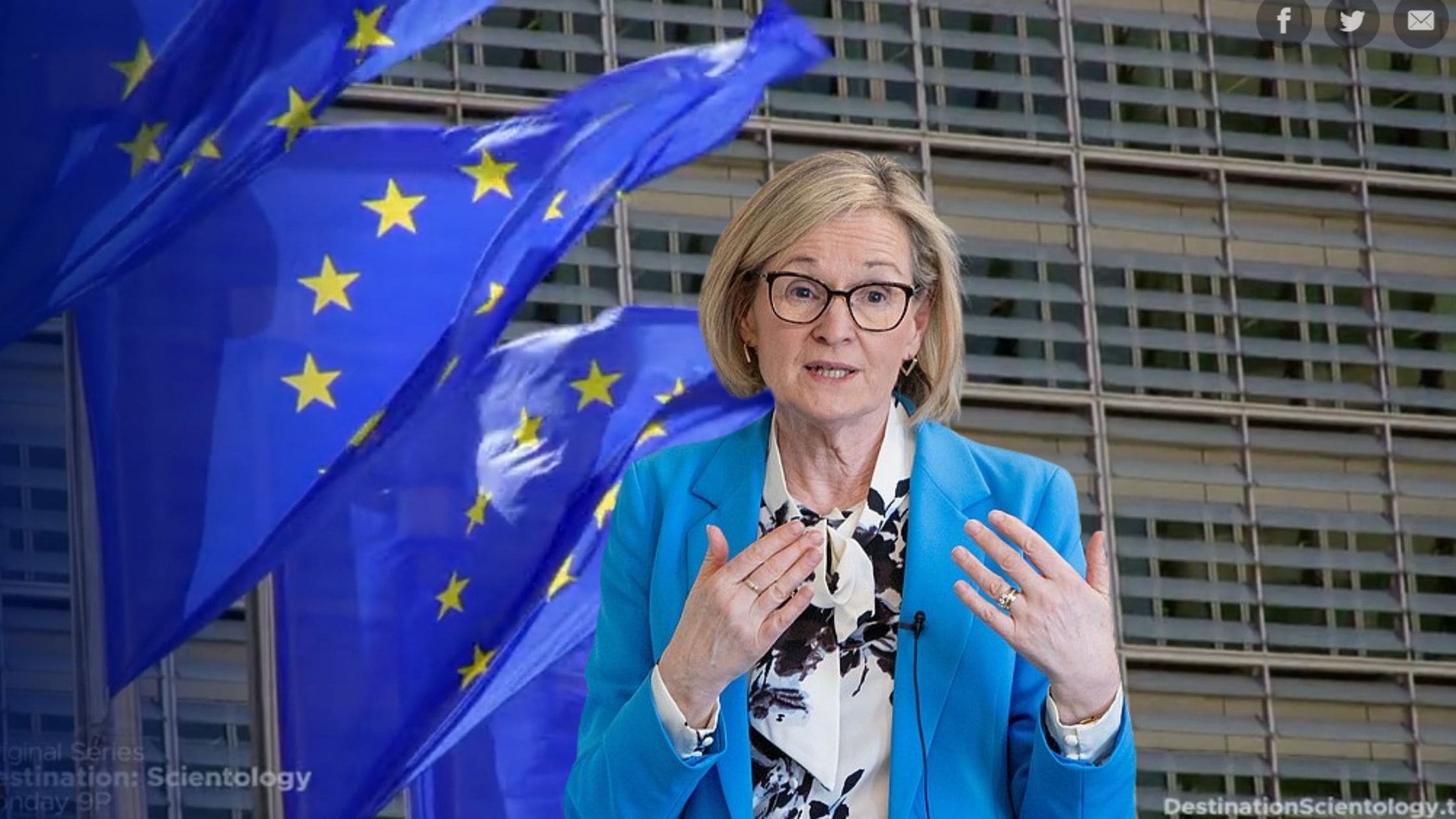
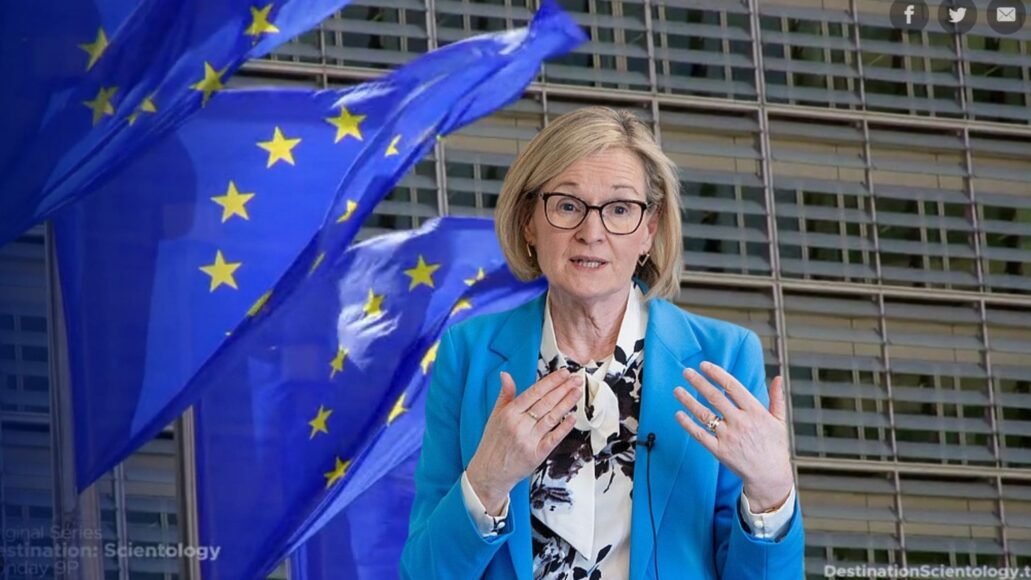
Mairead McGuinness is reportedly poised to become the European Union’s next Special Envoy on freedom of religion or belief, addressing a politically awkward vacancy that over the past year attracted mounting pressure from MEPs, bishops, advocacy groups, and commentators who argued that Brussels was weakening its human-rights credibility by leaving the position unfilled.
After more than a year of silence concerning one of the EU’s most symbolic human-rights posts, Brussels seems ready to act. EURACTIV reported on 25 March that former European commissioner Mairead McGuinness is set to take on the role of the EU’s Special Envoy for the promotion of freedom of religion or belief outside the Union. If confirmed, this appointment would fill a vacancy that has become increasingly difficult for the Commission to justify as public demands for action grew louder over the past 12 months.
This position is not merely ceremonial. According to the Commission’s published mandate for the special envoy, the role is intended to engage with national authorities and civil society in countries facing violations, support interreligious dialogue, contribute to deradicalisation efforts, promote tolerance in education, and coordinate with the EU Special Representative for Human Rights. In essence, it is one of the Union’s clearest external tools for transforming its FoRB principles into diplomatic practice.
Yet, when the second von der Leyen Commission assumed office on 1 December 2024, the envoy post was left vacant. This absence quickly became a recurring point of criticism. In April 2025, the European Parliament’s Intergroup on Freedom of Religion, Belief and Conscience renewed its appeal to Commission President Ursula von der Leyen and Commissioner Magnus Brunner, urgently calling for the appointment of a qualified envoy with adequate resources and independence. The letter of 4 April 2025, signed by the intergroup’s co-chairs and supported by a broader cross-party group of MEPs, argued that the worsening situation for believers and non-believers abroad required a timely, credible, and fully backed appointment.
A month later, the intergroup published von der Leyen’s response, indicating her continued commitment to the role and intention to renew it. However, this reassurance did not resolve the issue. By summer, frustration had deepened. On 22 August 2025, ECR MEPs Bert-Jan Ruissen and Carlo Fidanza publicly urged the Commission to fill the post immediately, citing its vacancy since December 2024 and linking the delay to the EU’s wider response to religiously motivated violence and persecution.
Pressure further intensified in autumn. In October 2025, the bishops of the European Union, gathered under COMECE, wrote to von der Leyen, stating that one year into the mandate of the von der Leyen II Commission, the envoy was still absent. Their argument was both moral and geopolitical: in a world marked by instability, the bishops asserted, the EU needed a visible and effective instrument to defend freedom of religion or belief as part of its external actions.
By the end of 2025, the debate had broadened beyond whether the envoy should be appointed to the type of person the EU should select. In December, Humanists International published a letter from 18 cross-party MEPs warning that the next envoy should not use the mandate in ways that undermine the rights of women, LGBTIQ+ individuals, or non-believers. This intervention added another layer to the discussion: not just speed, but also the universality and consistency of the human-rights framework the envoy is expected to uphold.
Human Rights Without Frontiers pushed the criticism further. In a series of reports during 2025 and early 2026, including a January 2026 assessment, the Brussels-based NGO argued that the Commission had allowed the office to lapse again without transparency, and criticized the absence of a public call for candidates. HRWF also framed the problem as structural, stating that the envoy role has repeatedly suffered from long interruptions rather than stable continuity.
Willy Fautre from HRWF, through The European Times, has closely tracked the issue. In September 2025, it reported on the ECR’s call for an urgent appointment. More recently, it published a strongly worded article titled “Shame on the EU! 15th month without EU Special Envoy on Freedom of Religion or Belief is over,” reflecting the sentiment among some observers that the vacancy had shifted from bureaucratic delay to a test of political will.
The timing has been particularly awkward for Brussels, as the EU continues to portray itself internationally as a defender of FoRB. Earlier this month, the EU Delegation in Geneva celebrated the 40th anniversary of the UN Special Rapporteur on freedom of religion or belief, emphasizing that the EU has long supported the mandate and views FoRB as fundamental for human dignity and social cohesion. This message contrasts with the lengthy vacancy in the Union’s own envoy position.
If McGuinness is


Leave a Reply