



Simon Stiell, the UN climate chief, emphasized the urgency of climate cooperation, stating, “There is a deep awareness of the issues and the need to show that climate cooperation holds up in a fractured world.” He was clear in his message: “There is no time to waste on delays and obstructions.”
For the next two days, ministers will present their positions during the most intense part of the summit. Mr. Stiell encouraged delegations to address the most challenging issues promptly, rather than waiting until the last moment.
He reiterated, “There is no time to waste on tactical delays or obstructions,” and added, “The time for performative diplomacy is now over.”
The President of the United Nations General Assembly echoed this sense of urgency, reminding negotiators that despite the “headwinds” and various “ebbs and flows” of climate negotiations, they “do not have the luxury of complacency when people are counting on them.”
Annalena Baerbock expressed optimism, highlighting the dynamic growth of renewable energy and innovation: “The money exists but must be redirected.” She pointed out a concerning statistic: Developing countries spent $1.4 trillion on external debt service last year—funds that could transform climate action if invested in clean energy and resilience.
Speaking to the press, Baerbock mentioned her visit on Sunday to Combu Island, near the Amazon rainforest, where she met with indigenous communities “who are showing how sustainable development, economic growth, and forest protection can coexist.” She emphasized, “Climate action is not a ‘nice thing to have.’ It is not a charity. Climate action is in the interest of all our economic and security interests.”
The 30th edition of the annual United Nations climate summit began last Monday, November 10, and is set to conclude next Friday.
From words to actions: Brazil calls for a new era
Brazilian Vice President Geraldo Alckmin stated that COP30 should be a pivotal moment. “The world needs to stop debating the goals and start achieving them,” he said, emphasizing the need to shift from negotiation to implementation. Mr. Alckmin highlighted the Belém Commitment, a plan to quadruple the use of sustainable fuels by 2035, supported by 25 countries. He called for creativity in areas such as the bioeconomy and decarbonization, reaffirming Brazil’s commitment to “clean energy, innovation, and inclusion.”
Brazilian officials confirmed that two major sets of decisions are on the table: one related to the frameworks and topics mandated by previous COPs, and the other covering additional issues under negotiation, such as a gender equality action plan. A draft of the first package is expected midweek, but COP30 president André Corrêa do Lago noted that the schedule will be tight, with likely evening sessions.
Beyond the official rooms: the People’s Summit delivers its verdict
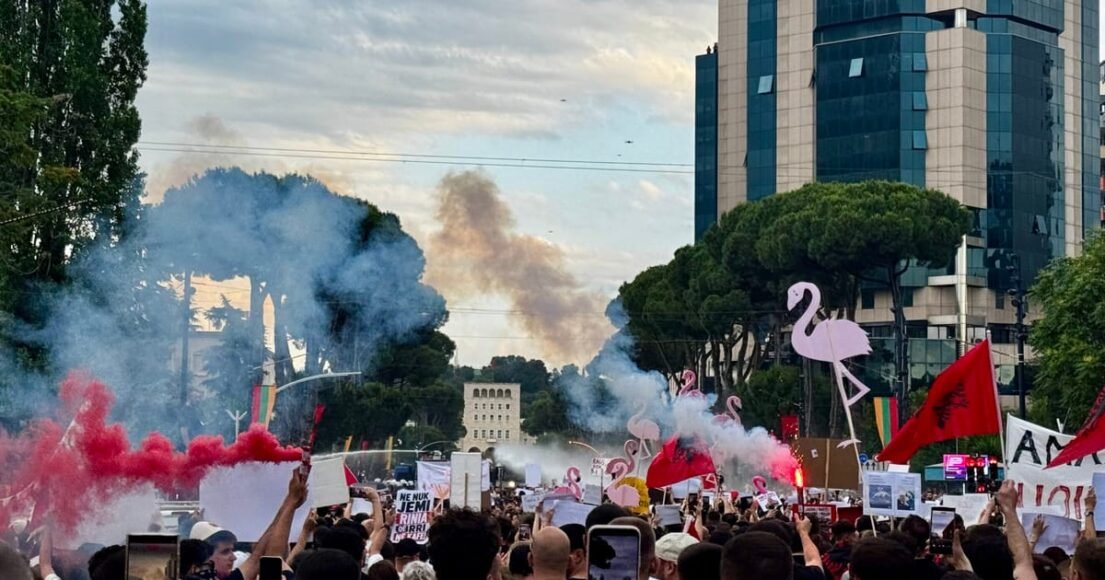
As ministers discussed inside, the streets of Belém were alive with activity. The People’s Summit, held November 12-16, attracted over 25,000 participants—the largest ever—and concluded with a climate justice march of 70,000 people, the largest protest of its kind.
On Sunday, civil society presented a set of proposals to Mr. do Lago, Ana Toni, CEO of COP30, and key ministers, including Marina Silva and Sônia Guajajara.
Maureen Santos of the Summit policy committee stated, “I think this COP serves as an example of democracy not only for the United Nations but also for the world. That is what multilateralism is: when parties truly engage beyond states and we see greater visibility for those who suffer the impacts of the crisis and who also propose solutions.”
Social movements are advocating for climate finance, cautioning about possible “ecological debts,” and demanding a broader vision of a just transition that includes employment, food sovereignty, and territorial rights, not just renewable energy.
Solidarity in action: 300,000 meals served
The People’s Summit was not just about speeches but about solidarity. Groups like the Landless Workers Movement (MTST) organized a massive “solidarity kitchen,” drawing on their experience responding to last year’s floods in Rio Grande do Sul. Over 300,000 free meals were served, featuring Amazonian staples like jambu, açaí, and pirarucu.
Rudi Rafael, who helped lead the effort, described the scale: “We had 21 pots of 500 liters each, with a production line preparing meal boxes in just 26 seconds.”
For many, cooking symbolized hope, especially for those defending indigenous lands, traditions, and cultures. It reminded that climate justice is as much about dignity and community as it is about politics.
UN News East reports from Belém, providing in-depth coverage of everything happening at COP30.







Leave a Reply