



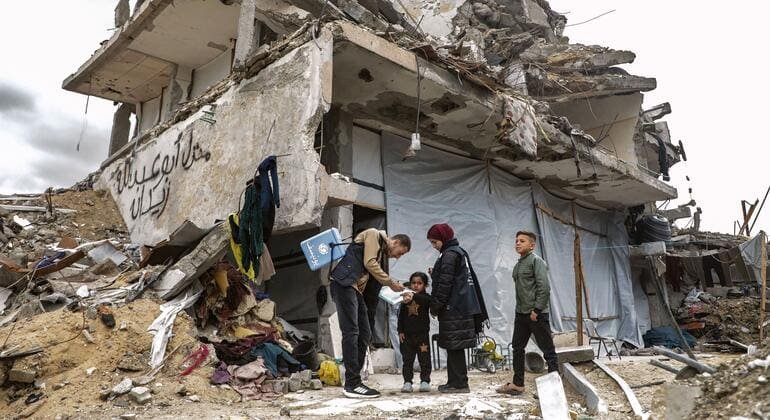
Military activities persist in Gaza City and the south, severely impacting civilians with casualties and further displacement, reported UN Spokesperson Stéphane Dujarric. People continue fleeing, primarily toward the coast. Since mid-August, over 76,000 people have been displaced, mainly in the north, with more than 23,000 from northern Gaza. Coastal areas are crowded with tents, causing many to flee north from Gaza City to central areas, according to OCHA.
Reports of malnutrition-related deaths continue, with over 300 people, including many children, having died since the nearly two-year-long war began. The World Food Programme states that the situation is worsening, especially for families unable to access food. The UN agency resumed its digital voucher distribution, reaching 22,000 people after a five-month pause. Despite efforts to transport aid and medical supplies to and from Gaza, community-based distribution has not resumed due to current conditions. Only a ceasefire will allow a substantial response to prevent further famine.
WFP reported challenges such as supply shortages and unrest impeding distributions. Aid movement inside Gaza is heavily restricted, with about a third of missions blocked or denied by Israeli authorities, resulting in incomplete missions. Strict inspections at Ashdod Port are delaying aid clearance.
The US announced it would not issue visas to senior Palestinian leaders before the high-level General Assembly meetings in New York. This includes a 22 September conference with Heads of State expected to endorse a political declaration supporting a two-State solution. Mr. Dujarric emphasized the necessity of a senior Palestinian delegation’s participation.
Philippe Lazzarini, Commissioner-General of UNRWA, highlighted the educational crisis in Gaza, which should have marked the start of the school year for over 600,000 children. Instead of returning to school, approximately 660,000 children are left sifting through rubble, affected by trauma and deprivation. Prolonged absence from school increases the risk of creating a lost generation prone to hatred and violence. A ceasefire is essential to address the famine and prevent educational devastation in Gaza.







Leave a Reply