


Middle East – January 2026, According to Eurotoday Newspaper that the debate over military strike consequences has intensified as regional tensions and global power rivalries intersect in increasingly volatile ways.policymakers, military planners, and humanitarian agencies are reassessing how even limited uses of force can generate outcomes far beyond initial objectives. From political destabilization to economic shock waves, the impact of modern warfare now extends well beyond the battlefield.
What distinguishes the current environment is not only the frequency of military action but the speed at which its effects spread. In an interconnected world, a single strike can influence alliances, markets, and public opinion within hours, reshaping strategic calculations across continents.
The Strategic Landscape of 2026
The Middle East in 2026 remains a region marked by unresolved conflicts, fragile ceasefires, and overlapping security interests. Within this environment, military strike consequences are no longer viewed as secondary considerations but as central factors in strategic decision making. Defense officials acknowledge that actions taken for immediate tactical advantage may produce strategic costs that outweigh short-term gains.
Analysts point out that the density of actors operating in close proximity increases the risk that one incident will trigger a cascade of responses. This reality has prompted renewed emphasis on restraint and scenario planning at the highest levels of government.
Evolution of Modern Warfare
Advances in technology have fundamentally altered how conflicts unfold. Precision-guided munitions, drones, and cyber capabilities allow strikes to be executed rapidly and with apparent accuracy. However, these same tools amplify military strike consequences by reducing reaction times and increasing the likelihood of misinterpretation.
Military historians note that while technology has improved targeting, it has not eliminated uncertainty. Instead, it has compressed decision windows, forcing leaders to act under intense pressure with incomplete information.
Civilian Exposure and Urban Conflict
One of the most visible aspects of military strike consequences is the heightened risk to civilian populations. Modern conflicts increasingly occur in or near urban centers, where infrastructure and residential areas are tightly interwoven. Damage to power grids, water systems, and transportation networks can disrupt daily life long after hostilities subside.
Humanitarian organizations operating in the Middle East report that civilian harm often extends beyond immediate casualties. Displacement, loss of livelihoods, and limited access to essential services create enduring social challenges that persist for years.
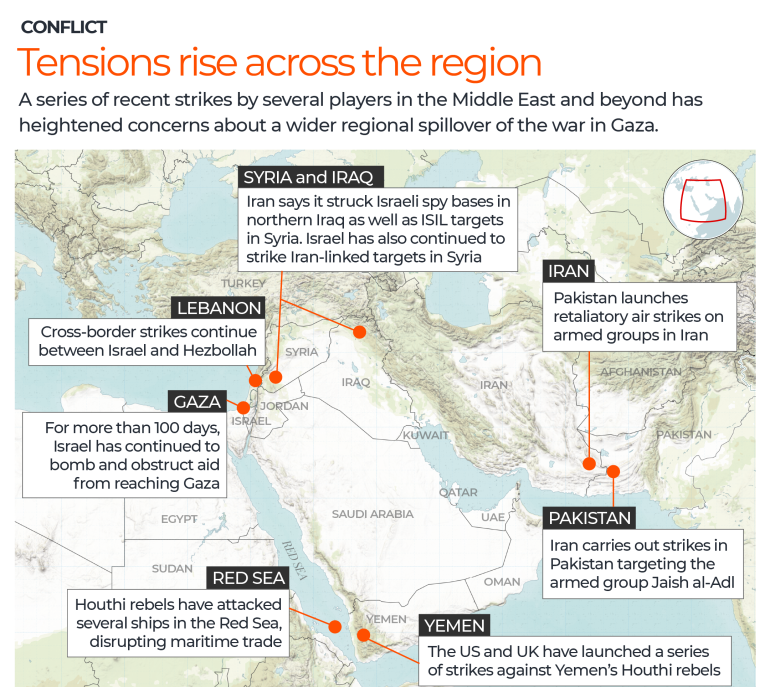
Regional Escalation Risks
Regional escalation remains a core concern when assessing military strike consequences. A strike intended as a warning can be perceived as an opening move, prompting retaliation by state or non-state actors. In regions with complex alliance structures









Leave a Reply