



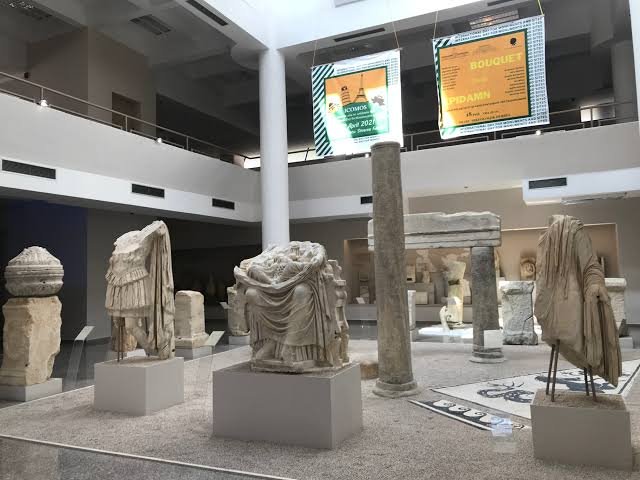
The National Archaeological Museum in Durrës, Albania’s coastal city, is nearing completion of its restoration efforts, funded by the EU4Culture program from the European Union.
Over 2,400 artifacts will soon be displayed in newly designed pavilions, featuring modern lighting and optimal conditions.
This investment also includes a redesigned museum courtyard, transforming it into an appealing venue for visitors, cultural events, and educational activities.
With these enhancements, the museum aims to serve as a key resource for researchers and history lovers, as well as a prominent cultural attraction in Durrës.
The Archaeological Museum of Durrës, one of the structures affected by the 2019 earthquake, has been undergoing restoration since 2022 as part of the EU4Culture initiative.
As the largest archaeological museum in Albania, it houses a vast collection of over 3,000 artifacts from the ancient site of Dyrrah, illustrating the evolution of Durrës during late antiquity and the medieval period.
Post-renovation, the museum will feature a contemporary design and become a modern educational hub, allowing visitors to engage with ancient history through compelling storytelling and advanced technologies, including virtual reality and multimedia tools.
Guests will have the opportunity to explore ancient Durrës through recreated streets, discover new treasures from recent underwater archaeological expeditions, and participate in cultural events and performances.
The EU4Culture project, supported by the European Union and implemented by the United Nations Office for Project Services (UNOPS) in collaboration with Albania’s Ministry of Culture, focuses on the restoration and revitalization of significant cultural heritage sites affected by the earthquake and represents one of the EU’s largest cultural heritage initiatives, with a total budget of €40 million.
Additionally, the project aims to enhance Albania’s tourism potential, thereby contributing to local and regional socio-economic recovery. It emphasizes innovative technologies, such as digital storytelling and multimedia product creation, ensuring accessibility for all. Moreover, the initiative supports local entrepreneurship, craftsmanship, and cultural projects in the targeted areas through grants, directly stimulating the local economy. (30 December)





Leave a Reply