


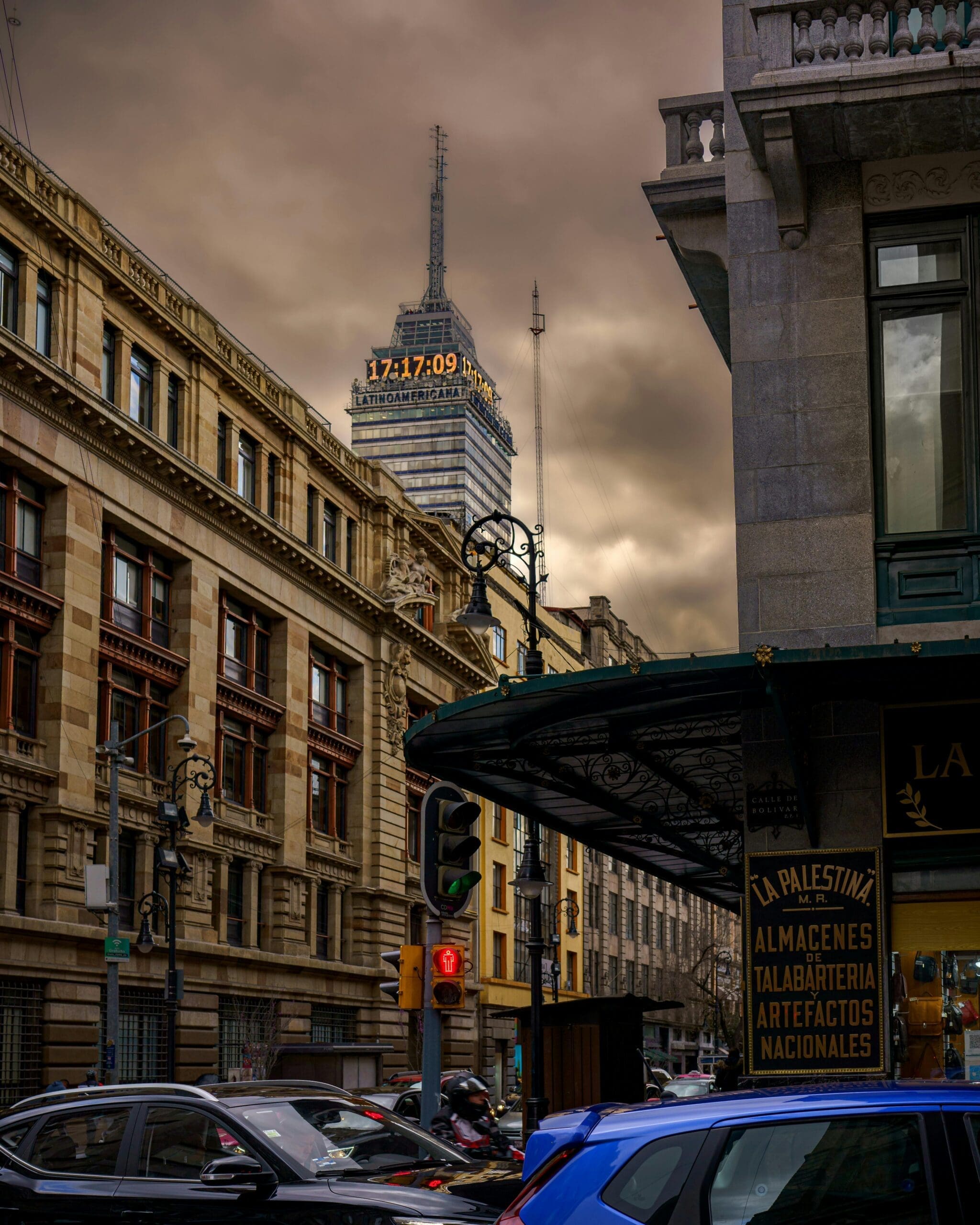
Mexico City continues to sink as new satellite data reveals with high precision where the city is subsiding the fastest. This data, from the joint NISAR mission by NASA and the Indian Space Research Organization, captures terrain movements between October 25, 2025, and January 17, 2026, as reported by “Meteo Balkans”.
The analysis indicates that parts of the city are sinking by over 2 centimeters per month. While this may seem small, for a city as large as Mexico City, such deformation leads to cracked roads, damaged water pipes, deformed tunnels, and unstable buildings.
Renowned example of urban subsidence
Mexico City is a well-known example of urban subsidence. Constructed on an ancient lake bed and aquifer, decades of extensive groundwater extraction have compacted the soft sediments beneath the city. Combined with the weight of urban development—housing, roads, skyscrapers, industries, and infrastructure—the area faces significant sinking challenges.
Home to roughly 20 million residents, the area exerts constant pressure on groundwater supplies. Extracting water causes sediment voids to shrink; the terrain doesn’t rebound but compacts, causing the city to sink.
The first major engineering observations of this process date back to 1925. By the 1990s and early 2000s, parts of the city were sinking around 14 inches (35 centimeters) annually, enough to affect the subway, one of the largest rapid transit systems in the Americas.
Satellite captures Earth’s shifts through obstacles
NISAR employs synthetic aperture radar to track subtle Earth surface movements, irrespective of clouds, darkness, or vegetation. This is crucial for monitoring otherwise invisible processes that can’t be reliably tracked with ground measurements alone.
The satellite consistently monitors the same regions, detecting terrain changes with precision. Launched in July 2025, the data for Mexico City showcases the technology’s potential to monitor cities, glaciers, farmlands, and areas with active ground deformation.
NASA’s map highlights the fastest-sinking areas in dark blue. The region around Benito Juarez International Airport is central in the image, with Lake Nabor Carrillo to the northeast. Yellow and red areas may represent residual noise in the preliminary data, expected to decrease with further observations.
Infrastructure problem of centimeters
The non-uniform sinking of Mexico City poses significant challenges. If the city sank uniformly, the damage could be more manageable. However, varying sinking rates across neighborhoods lead to splitting roads, buckling pipes, tilting buildings, and stressed tunnels and rail tracks.
Water supply systems are particularly vulnerable. Uneven terrain movement leads to cracked pipes and misaligned connections, increasing water loss. Thus, a city already extracting significant groundwater loses more through damaged infrastructure.
Transportation infrastructure also suffers, with metro lines, road surfaces, bridge connections, and underground facilities requiring continuous repairs due to unstable foundations. This is not a single failure but a slow, costly process of ongoing maintenance.
A symbolic representation
The Independence Monument on Paseo de la Reforma, built in 1910 and standing 36 meters tall, exemplifies this issue. Over time, 14 steps have been added around its base, not due to the monument rising, but because the surrounding land has sunken.
This vividly illustrates the problem: the structure remains, while the city around it sinks.
A global phenomenon
Mexico City is not alone in facing land subsidence. It’s observed globally, especially in areas with soft soils, river deltas, intensive agriculture, coastal regions, and cities dependent on groundwater. New satellite technology makes these processes harder to ignore.
NISAR carries two radars at different wavelengths and monitors Earth’s land and ice surfaces twice every 12 days. Its 12-meter diameter reflector is the largest radar antenna NASA has sent into space.
For cities, this means earlier detection of risk areas. Engineers gain more accurate maps for repair and construction. Institutions receive data identifying infrastructure under pressure before issues build into emergencies.
Illustrative photo: pexels-david-gracia-242488507-12332831







Leave a Reply