


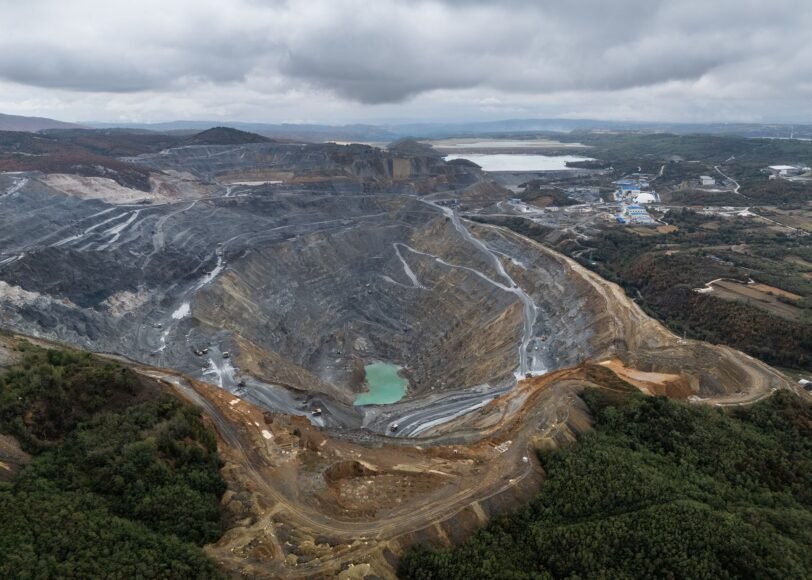
In northeastern Serbia, the town of Bor developed around some of Europe’s largest copper and gold deposits. Starting in the 1940s, the region attracted workers from across Yugoslavia. Majdanpek, just 70 kilometers away, grew around another vast reserve, estimated at over 600 million tons of ore. For decades, these mining centers supported Yugoslav heavy industry, but today their legacy is increasingly vulnerable.
Since 2018, the mining complex has been acquired by the Chinese state-owned Zijin Mining group, investing €2.3 billion to boost production. The expansion impacts more than just industry — it transforms the land and lives of its residents. Entire families witness their homes, properties, and memories vanish as the mine overtakes settlements. The Serbian government has not provided effective resettlement alternatives.
The environmental impact is severe: forests and rivers are being destroyed, wildlife is endangered, and residents suffer some of Europe’s most polluted air. Meanwhile, a growing Chinese workforce — now in the thousands — largely remains in isolated camps, rarely interacting with locals, leaving behind a vast yet intangible presence.
Bor and Majdanpek represent a wider trend. In 2022, Chinese investment in Serbia matched the combined input of all 27 EU countries for the first time, prompting concerns over sovereignty and neocolonial influence. The debate intensified following the collapse of a Chinese-renovated railway station in Novi Sad, which killed 16 people in 2024 and triggered protests.
As Zijin Mining continues to expand its operations, the region and its people are caught in a struggle between economic gain and the gradual erosion of collective memory — the loss of homes, traditions, and history in jeopardized communities.








Leave a Reply