



According to an alert from the IPC, a global food security monitoring system, thresholds for acute malnutrition have been exceeded in two new areas of North Darfur—Um Baru and Kernoi—after the fall of the regional capital, El Fasher, in October 2025 and a massive exodus.
December assessments revealed acute malnutrition levels among children at 52.9% in Um Baru—nearly twice the famine threshold—and about 34% in Kernoi.
The IPC stressed that this alert does not represent a formal famine classification but highlights rapidly deteriorating conditions, necessitating urgent action.
“These alarming rates suggest an increased risk of excess mortality,” experts noted, adding that other conflict-affected or inaccessible areas might be experiencing similarly catastrophic conditions.
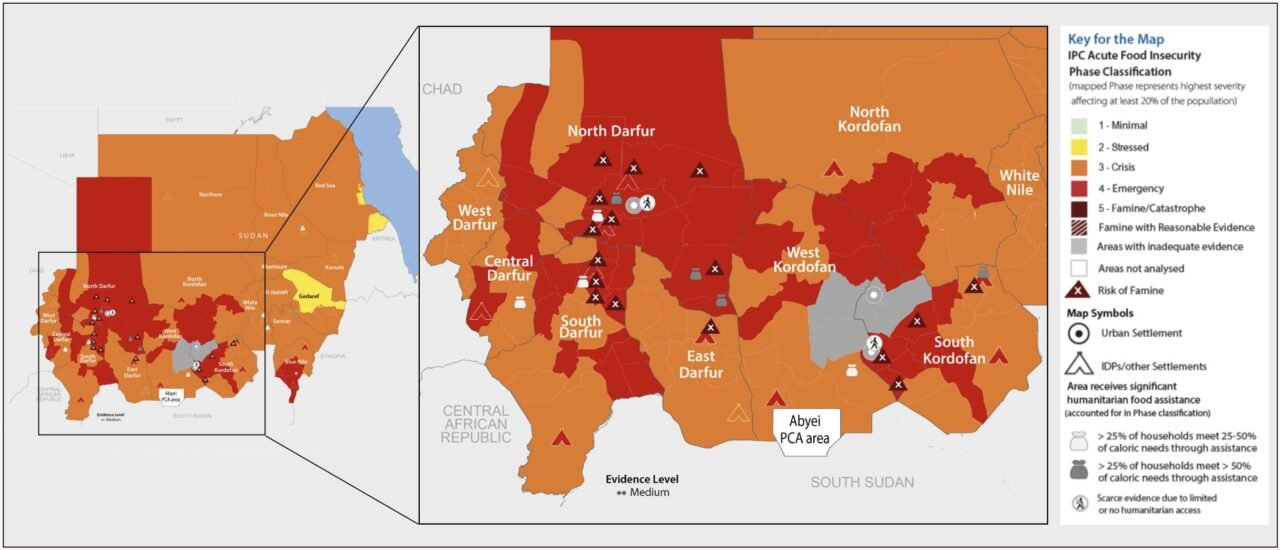
Projection acute food insecurity in Sudan from February to May 2026.
▶ See our UN News explainer on the evidence-based IPC index here.
Um Baru and Kernoi
Um Baru and Kernoi are located in remote areas of northwestern North Darfur, near key displacement corridors heading toward the Chadian border.
Both regions have taken in large numbers of civilians fleeing conflict in and around El Fasher, where fighting has disrupted markets and livelihoods and severely restricted humanitarian access.
Sudan’s war, which began in April 2023 between the once-allied Sudanese Armed Forces (SAF) and the Rapid Support Forces (RSF), has devastated food systems nationwide, causing mass displacement, market collapse, and repeated disruptions to health, water, and nutrition services.
Across the country, nearly 4.2 million cases of acute malnutrition are projected for 2026, including over 800,000 cases of severe acute malnutrition, marking a significant rise from 2025 levels, according to IPC projections.
What the alert means
The IPC alert aims to urgently draw attention to the worsening conditions and does not introduce any new formal classification.
It builds on earlier IPC analyses confirming famine (IPC Phase 5) in El Fasher, North Darfur in 2024, and Kadugli, South Kordofan, in September 2025—and projected famine risk in at least 20 other areas across greater Darfur and greater Kordofan.
The new findings suggest famine-like conditions are likely spreading beyond previously assessed locations, fueled by ongoing fighting, displacement, and the collapse of food, health, and water systems, IPC analysts said.
Greater Kordofan at risk
The IPC also warned of rapidly worsening conditions across Greater Kordofan, where famine was already confirmed in Kadugli and severe conditions were projected in Dilling and the Western Nuba Mountains.
Renewed fighting since late October has displaced more than 88,000 people in the region, pushing total displacement above one million. The region’s markets are among the least functional in Sudan, with food prices far exceeding national averages.
Without an immediate end to the fighting and large-scale humanitarian access, IPC experts said preventable deaths are likely to increase.







Leave a Reply