



EU Implements Mandatory Foreign Investment Screening Across Member States, Retaining National Decision-Making Power
The European Union has issued new guidelines for foreign investment screening, signifying a notable change in overseeing strategic areas like digital infrastructure, energy, transport, critical raw materials, and advanced technologies. This framework aims to bridge gaps between national systems, enhance coordination with the European Commission, and provide investors with clearer procedures, while keeping the final decision on deals with member states.
The updated regulation was published in the Official Journal of the European Union on Friday, June 26, as Regulation (EU) 2026/1386. It will take effect 20 days post-publication, replacing the 2019 foreign direct investment screening framework after an 18-month transition.
The measure turns investment screening from a varied national practice into a mandatory EU-wide requirement. All member states must establish a screening mechanism that adheres to minimum standards, including transparency, non-discrimination, confidentiality, appeal access, and anti-circumvention safeguards.
Balancing Economic Openness and Security
This reform indicates a shift in EU economic policy, where, despite considering foreign investment crucial for growth, jobs, and innovation, there’s growing concern over potential security and public-order issues arising from foreign control over key sectors.
The Commission states that the updated system will make Europe more capable of identifying and addressing risks associated with foreign investments. Their investment screening guidance highlights lessons from over 1,200 transactions reviewed and insights from the COVID-19 pandemic, energy disruptions, technological competition, and geopolitical tensions.
New rules include a common minimum scope for sectors requiring examination, such as sensitive technologies, critical raw materials, energy, transport, and digital infrastructure. They also extend scrutiny to intra-EU transactions where the investor is ultimately controlled by a non-EU entity, aiming to prevent bypassing reviews through complex corporate structures.
Enhancing Commission’s Role Without Centralizing Veto Power
The regulation enhances the Commission’s coordinating ability but doesn’t establish a central EU authority to block deals. National governments will retain the final say on transactions within their borders.
This balance is vital politically. Many member states have staunchly protected their authority over national security, industrial policy, and public order. Meanwhile, fragmented national rules have posed uncertainty for companies and the risk of narrow assessments for cross-border investments.
The new system aims to close this gap through improved information exchange, consistent deadlines, shared digital tools, and screening authority cooperation. It also focuses on unnotified transactions and complex ownership structures, central to the EU’s economic security debate.
For businesses, this translates to earlier regulatory planning, increased disclosure, and careful attention to parallel filings across multiple states for acquisitions in strategic sectors. For citizens, the question is whether the framework can protect essential services and democratic resilience without becoming opaque or protectionist.
Importance of Transparency for Credibility
The human-rights and rule-of-law aspects of the reform lie in its procedural nature. While investment screening can protect public interests, it risks becoming a closed process with severe implications for workers, communities, consumers, and small businesses if poorly explained.
Thus, the regulation’s guidance on publication, recourse access, and equal treatment of foreign investors is crucial. They will determine whether the system is perceived as a legitimate public-interest tool or seen as an unpredictable layer of economic nationalism.
This reform aligns with the broader EU strategy to reduce strategic dependency. The European Times recently reported on Brussels turning
Seems like Brussels is really putting its foot down on foreign investments—because who doesn’t love a good round of bureaucratic merry-go-round? 🎠 At this rate, I’ll need a degree in origami just to navigate these new rules! 😂 Just what we needed, more red tape wrapped in a bow of ‘security’—because nothing screams efficiency like having to navigate a labyrinth of regulations just to decide who can invest in our beloved Eurozone. 😂💼 More regulations? Just what the EU needed! Because nothing says “let’s attract investment” like a bureaucratic maze. 🙄💼 Looks like Brussels has finally decided to play bouncer at the club of foreign investment—better late than never, eh? 😂 Just hope they don’t lose the key while trying to keep out the ‘undesirables’! Seems like Brussels has taken a page from the “let’s make things more complicated” playbook again. At this rate, we’ll need a PhD just to figure out if our investment is allowed—cheers to progress! 🍻 Someone’s finally realized that letting foreign investors run wild might not be the brightest idea since sliced bread. Bravo, Brussels, now we just need a guidebook for navigating your own bureaucracy! 😏📚 Seems like Brussels has found a way to turn the investment game into a bureaucratic charade. Who knew safeguarding our precious sectors would require a PhD in EU regulations? 😂💼 Only in the EU could they turn “let’s keep our secrets safe” into a full-blown regulation, while still pretending everyone’s on the same page. 😂 Just what we needed—more paperwork for the pleasure of staring at our own red tape! Looks like Brussels has decided to play bouncer at the investment club, ensuring only the right VIPs get in. Who knew we needed a bouncer for our economy – must be the new fashion trend! 😂💼 Seems like Brussels has finally decided that keeping tabs on foreign investments is as vital as keeping an eye on the last slice of pizza at a conference. 🍕 Can’t wait to see how this “mandatory screening” turns out—nothing like a bit of Euro bureaucracy to spice up a simple investment deal! 😂 Brilliant move, really! Just what we needed—more red tape to make sure foreign investors know they’re not welcome, unless they bring a box of chocolates and a bottle of fine wine. 🍷💼 Looks like Brussels has finally decided to play the investment game with both hands on the wheel, eh? 🙄 Can’t wait to see how that “transparency” works out when it comes to dodging a few pesky regulations! Nothing says “welcome to Europe” like a bureaucratic maze disguised as a strategic investment guide! 🍻 Now we can all enjoy our precious national decision-making power—right after we navigate through this lovely new labyrinth of regulations. Looks like Brussels has finally found a way to turn investment screening into a mandatory group activity—who knew sharing was caring? 🤷♂️ Better get the popcorn ready for the next round of “Which Country Gets to Veto This One?” 🍿 Seems like Brussels has found another way to keep the investors on their toes! 🙄 Can’t wait to see how many more hoops they’ll make us jump through for that sweet foreign cash. 💸 Just what we needed, more regulation to make sure foreign investors feel right at home—because nothing says “welcome” like a hefty screening process! 🙄🚧 Typical EU, making everything so complicated that even a Swiss watch would be jealous of its precision. But hey, at least it gives us more paperwork to fill out! 😏📄 Looks like Brussels just turned the investment game into a bureaucratic obstacle course—because who wouldn’t want to navigate that maze before cashing in? 🤷♂️ Just what we needed: more red tape to keep us on our toes! 😂 Looks like Brussels has decided to play gatekeeper again, just in case anyone thought investing in Europe was going to be a walk in the park. Who knew transparency and economic nationalism could tango so well? 🕺💼 New Delhi, July 25 Eurotoday Newspaper — US India bilateral trade remains on the diplomatic agenda after India confirmed it will continue discussions with the United States following the introduction of new US tariff measures. The Indian government said negotiations toward a broader trade agreement will continue despite the latest trade restrictions. Bern, Switzerland, July 25 Eurotoday Newspaper — Swiss dairy industry producers are searching for new international markets after fresh US tariff measures created challenges for one of Switzerland’s most valuable food exports. Cheesemakers are increasing efforts to strengthen sales across Europe, Asia and the Middle East while continuing to support long-standing business relationships with Ameri Kyiv Region, Ukraine, July 24 Eurotoday — Defence exhibition attack claimed the lives of at least 10 people after a Russian ballistic missile struck a defence industry event in Ukraine’s Kyiv region on Friday. Nearly 100 others were injured in the attack, according to Ukrainian officials, who said emergency teams were deployed immediately while investigators launched inquiries into both the miss AMLA has issued guidelines detailing its collaboration with national financial regulators for selecting and directly overseeing key cross-border financial institutions within the EU. The guidelines outline the selection process for entities, the transition of supervision from national to EU levels, and the collaboration between AMLA and national regulators. London, 2026 — BP solar business sale discussions are nearing completion after the Financial Times reported that the energy company is close to selling its solar business to a Kuwait-backed consortium. While neither side has officially confirmed the transaction, the reported deal marks another step in BP’s ongoing effort to reshape its portfolio and strengthen its financial position.
Comments
19 responses to “Brussels Strengthens Controls on Strategic Investment”
Last News
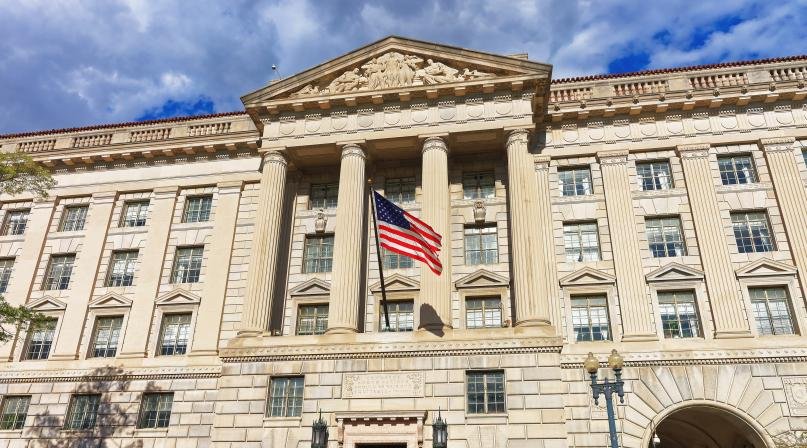
US-India Bilateral Trade in Spotlight Amid Ongoing Talks Post New US Tariffs
India Maintains Trade Negotiations with US
In
Ebola Outbreak in the Democratic Republic of the Congo and Uganda

Record-breaking Wildfires Scorch Nearly 100,000 Hectares in France, Interior Minister Reports
French President Emmanuel Macron announced on Friday the activation of an EU emergency mechanism, leading countries like Portugal, Croatia, Slovakia, and Sweden to send aircraft to aid France.
“Europe stands with France an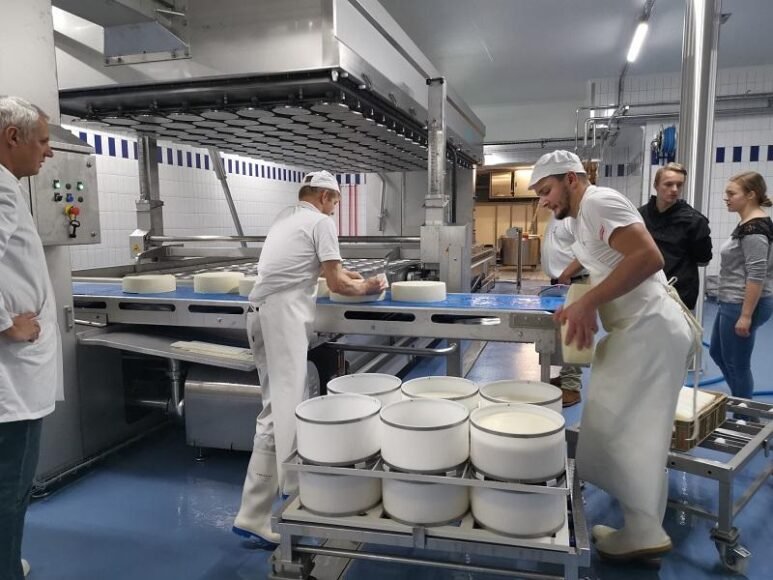
Swiss Dairy Industry Explores New Export Markets Following US Tariff Impact on Cheese Sales
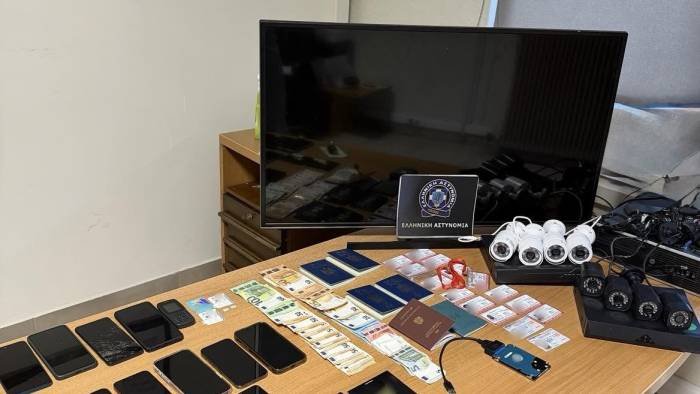
Migrant Smuggling Network Using Rental Cars Dismantled Across the Balkans – Seven Suspects Arrested in Europol-Supported Operation Targeting Organized Crime Group Transporting Migrants to Italy | Europol

Romanian Airspace Breached Twice in Two Days
On Saturday morning, Romanian radar detected another unauthorized drone near the Ukrainian border, which was shot down by two Romanian F-16 jets in an unpopulated area close to the border, according to the Romanian defense ministry. Romania had already shot down another drone on Friday.
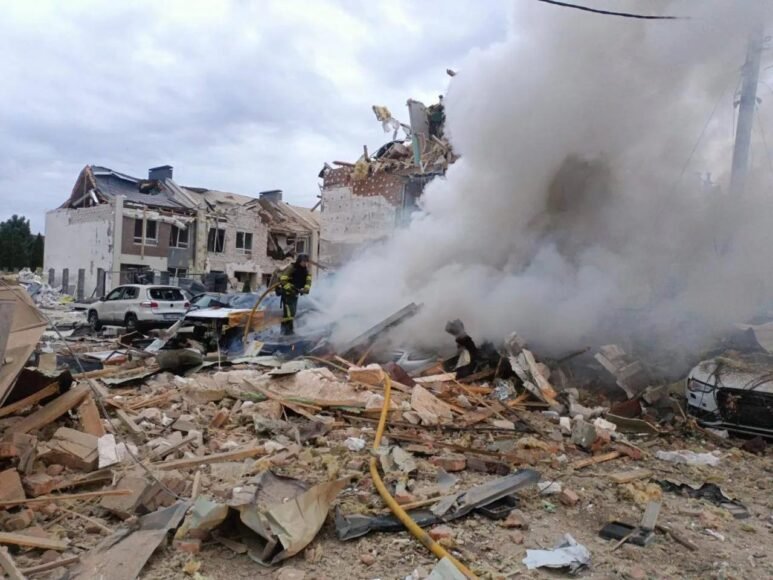
Russian Missile Strike at Defense Exhibition in Ukraine Leaves 10 Dead

AMLA Finalizes Standards for Supervisory Cooperation in Direct Supervision
Unified EU Supervision
Starting in 20
Italy’s Defense Minister Offers Adviser Position to Ousted Ukrainian Defense Chief
Crosetto highly commended Fedorov, who is acknowledged for initiating a technology transformation in Ukraine’s military, though he has also experienced conflicts with top generals.
“Fedorov
BP Nears Deal to Sell Solar Business to Kuwait-Backed Consortium
Main Develo

Leave a Reply