



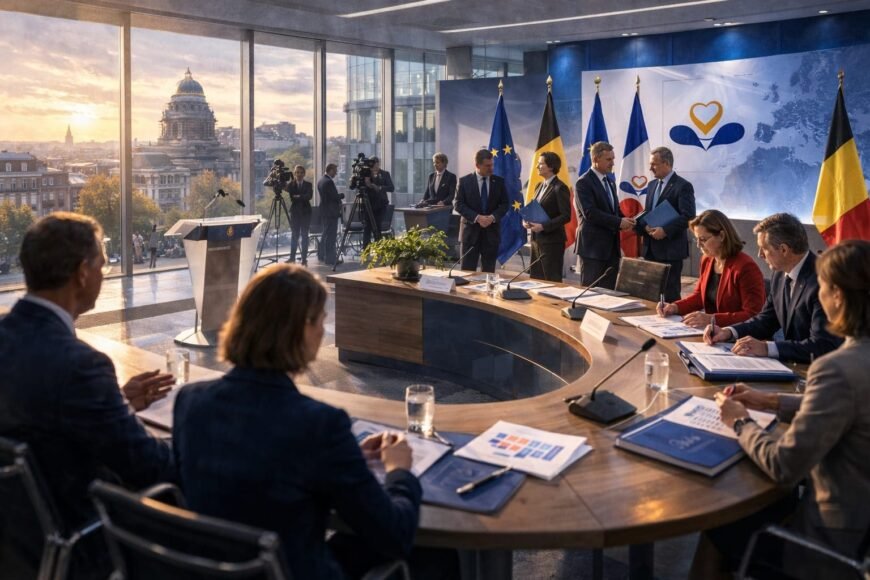
A new coalition has assumed office in the Brussels-Capital Region, with Boris Dilliès inaugurated as Minister-President. This coalition focuses on balanced budgets, mobility improvements, and infrastructure investment. Although Brussels’ city mayor remains unchanged, the regional leadership has seen a significant shift. Following a prolonged political impasse after the June 2024 regional elections, seven parties reached a coalition agreement for the Brussels-Capital Region. On 14 February 2026, MR politician and Uccle mayor Boris Dilliès took the oath as Minister-President, succeeding the long-serving PS leader Rudi Vervoort. The coalition aims to balance the regional budget by 2029, reconsider mobility policies, and prioritize major infrastructure projects.
Many residents and EU workers often perceive the “Brussels government” as a singular entity. However, the governance structure comprises 19 municipalities with individual mayors and councils, atop which lies the Brussels-Capital Region with its parliament and executive, managing region-wide policies on transportation, certain economic aspects, and major public investments. This month’s political breakthrough occurred at the regional level.
The new coalition includes seven parties across both linguistic communities: MR, PS, and Les Engagés on the Francophone side, and Groen, Vooruit, Open Vld (sometimes referred to as “Anders”), and CD&V in the Dutch-speaking community. Cross-community support is crucial in Brussels’ governance, making the coalition formation uniquely complex. The agreement ended a governance deadlock that had increasingly conflicted with the region’s financial limitations.
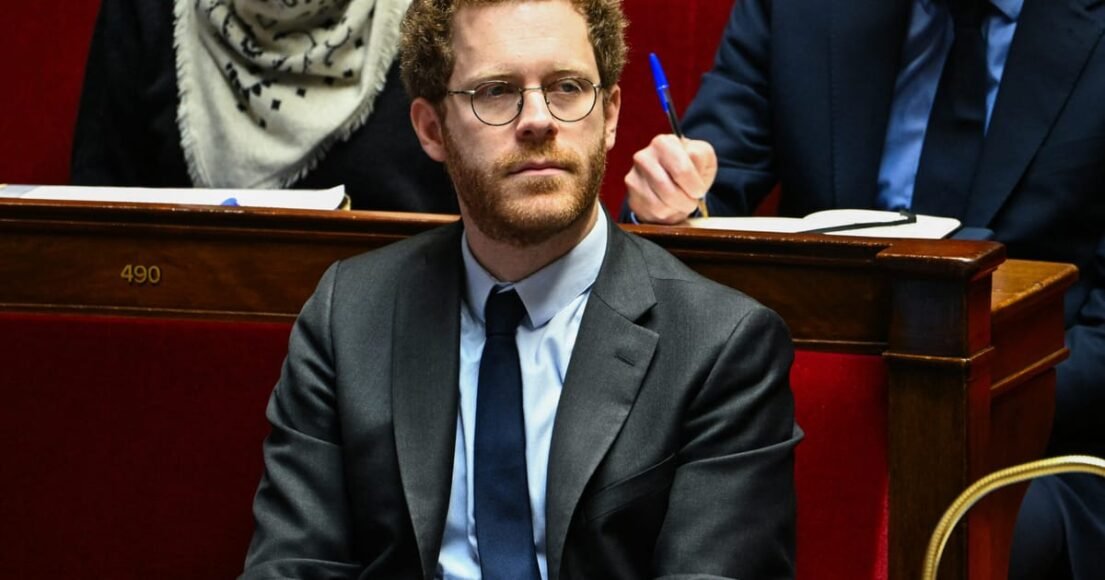
On 14 February 2026, the Brussels Parliament elected the new head of government and ministers. Boris Dilliès was sworn in as Minister-President of the Brussels-Capital Region. As a prominent figure in the liberal MR and Uccle’s mayor since 2017, Dilliès replaced Rudi Vervoort, who led the regional executive since 2013. The new leadership has highlighted Brussels’ bilingual political dynamics, with scrutiny over Dilliès’ Dutch-language proficiency, emphasizing the political significance of language skills in a region governed by both French- and Dutch-speaking institutions.
The coalition’s primary focus is public finances, with a commitment to balance the regional budget by 2029, a challenging target considering Brussels’ structural pressures and the consequences of the political deadlock. The agreement involves a mix of spending restraint and revenue optimisation, described as an “80/20” approach, alongside mobility and public-investment initiatives.
Regarding mobility, the coalition plans to reassess the controversial Good Move strategy for traffic and neighbourhood planning, praised by some for enhancing liveability but criticized by others for being disruptive and lacking consultation. Infrastructure priorities, including major transport projects, are part of the package, with negotiations linking mobility, budget policy, and investment as interconnected trade-offs.
For Brussels residents, the resolution of the deadlock signals more than a symbolic change. An effective regional executive is crucial for decision-making on public services, transport policy, investment strategies, and coordination with municipalities on security and urban development. As the city hosts EU institutions, maintaining stability while managing a diverse and multilingual environment is critical.
Brussels’ political climate has also been influenced by broader social tensions around public spending and reforms, often manifesting through street demonstrations. The new regional government faces pressure to restore administrative functionality and rebuild public trust in institutional efficacy. Previous protests in the capital have tested governance beyond single-issue disputes.
The new coalition represents a political shift, with a liberal-led Minister-President at the helm of a diverse alliance tasked with stabilizing finances and addressing contentious policies. The coalition’s success in delivering lasting governance will hinge on managing budgetary decisions, mobility compromises, and the region’s complex institutional landscape. This regional development is set to shape Brussels’ future significantly beyond the confines of the Brussels Parliament.






Leave a Reply