



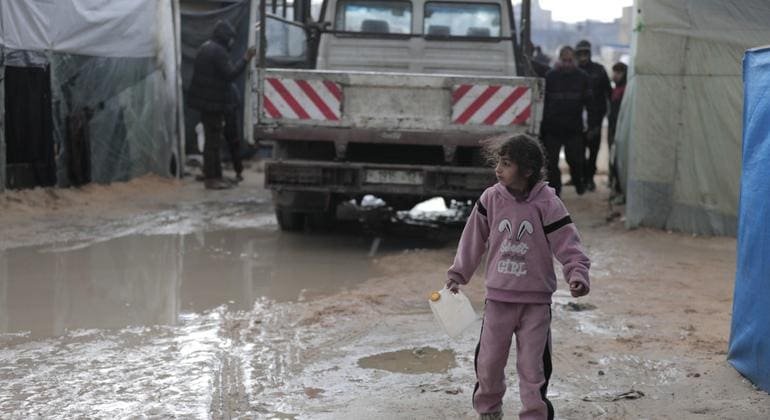
The agency reported that seven-year-old Ata Mai drowned on December 27 during severe flooding at an improvised camp for internally displaced people in Sudaniyeh, northwest Gaza City. He was the latest child to die amid “extreme winter conditions and lack of safe shelters,” according to UNICEF’s Edouard Beigbeder, Regional Director for the Middle East and North Africa.
“Teams visiting displacement camps reported appalling conditions that no child should endure, with many tents blown away or collapsing entirely,” he stated.
Ata had been living in a camp with about 40 tents when he went missing one afternoon. Despite search efforts supported by heavy machinery, his body was recovered hours later. The UN agency noted that Ata’s siblings, all under 10 years old, had already lost their mother during the war. UNICEF is providing the family with essential aid, including blankets, tarpaulins, and psychosocial support, while assessing their broader needs.
At least five other children have died this month from exposure to harsh conditions, according to Mr. Beigbeder. Internally displaced families in worn-out tents or makeshift shelters faced prolonged rains, strong winds, and freezing temperatures. Aid teams have repeatedly highlighted dangers for underfed youngsters and other vulnerable Gazans whose tents have been repeatedly flooded.
“This tragedy underscores the extreme vulnerability of children in Gaza’s hardest-hit areas, where the near-total destruction of homes and water and sewage infrastructure has left families exposed to the elements,” UNICEF said.
The situation has affected around 100,000 families after a week of heavy rainfall, strong winds, and freezing temperatures. With further rain and colder conditions forecast, the situation is expected to worsen.
UNICEF, alongside aid partners, provides critical support to thousands of affected families. This includes installing temporary water pipelines, distributing hygiene items, tarpaulins, blankets, dignity kits, ensuring access to latrines, and working to clean and reopen sewage pipelines, clear stormwater inlets, and protect tents from flooding.
UNICEF warned that heavy rains worsen the situation by increasing fuel needs for sewage pumping and stormwater drainage. Water levels at the Sheikh Radwan lagoon have risen from 1.8 to 2.2 meters, requiring 7,000 liters of fuel per day to prevent overflow.







Leave a Reply