AI Innovations Spotlighted at UN Agency Showcase in India: Grain ATMs and Hunger Maps

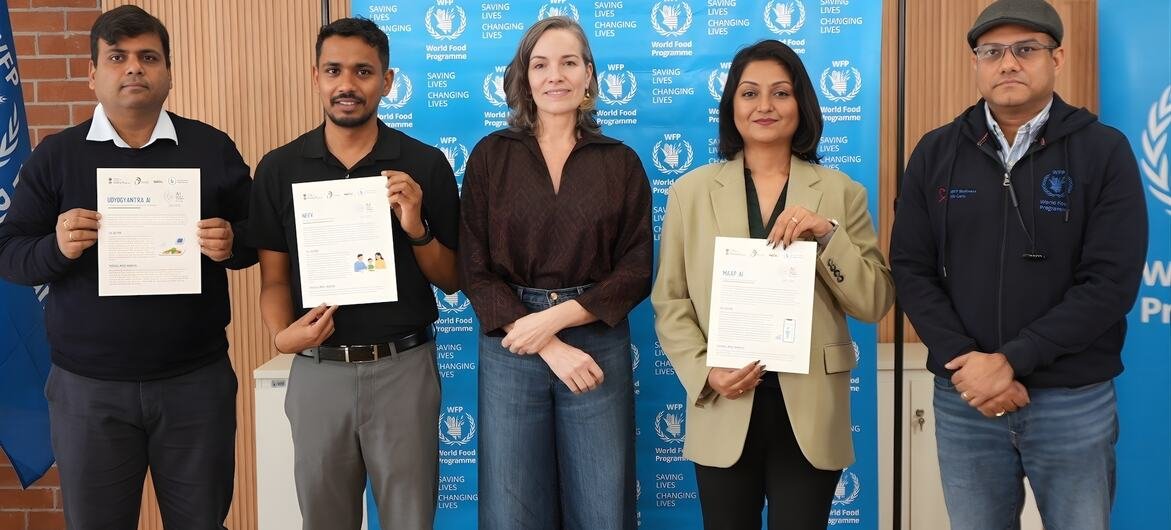
The UN World Food Programme (WFP) showcased innovations such as biometric grain dispensers and smart warehouses at the Artificial Intelligence Impact Summit, highlighting the use of data and machine learning to enhance food and nutrition systems. Notable among these innovations is “Annapurti,” a “grain ATM” that uses biometrics to help beneficiaries of public food programs collect rations efficiently.

WFP India Representative Elisabeth Faure explained the impact, noting that the system allows quick and dignified grain collection without sacrificing a day’s wages. Already being scaled nationally, it is also expanding to Nepal.

Smart warehouses with sensors tracking moisture, pests, and stock levels in real time, along with route-optimization tools, support India’s vast distribution network, improving delivery efficiency and reducing carbon emissions.

Parvinder Singh, Head of Communications and Media at WFP India, emphasized the summit’s importance in the Global South and its role in addressing food security challenges through AI. Amandeep Gill, UN Special Envoy for Digital and Emerging Technologies, advocated for inclusive management of AI risks and opportunities.

Global tools featured included platforms for rapid crisis assessment and supply delivery optimization, reflecting WFP’s drive to integrate AI across operations. Magan Naidoo, WFP’s Chief Data Officer, highlighted AI’s potential to transform data into a strategic asset, boosting operational efficiency and forecasting accuracy by 30 to 50 percent.

A parallel hackathon focused on local solutions to close community-level nutrition gaps. Innovators were tasked with designing tools for integration with government programs. Winning ideas included linking school meals with community gardens, a mobile nutrition app, and a system to predict child malnutrition risks. Singh emphasized the need for grassroots innovation to tackle last-mile challenges.

UN Resident Coordinator Stephan Priesner highlighted the broader significance of using innovation and AI to enhance food distribution efficiency. He noted India’s leadership in digital innovation and the potential for solutions developed here to be adapted globally through South-South cooperation.

The WFP expo message was that while AI alone cannot end hunger, it can significantly boost the reach and effectiveness of humanitarian efforts when combined with partnerships, policy support, and local ingenuity.


Comments

One response to “AI Innovations Spotlighted at UN Agency Showcase in India: Grain ATMs and Hunger Maps”

  1. trash pocky Avatar
    trash pocky

    Just what we needed—biometric grain ATMs! Because who wouldn’t want a high-tech way to queue for their rations? 🙄🍚

  2. Ember Master Avatar
    Ember Master

    Grain ATMs and hunger maps? Brilliant, just what we need – a tech upgrade for our food while we still can’t sort out the basics. 🤷‍♂️ It’s like putting a shiny new bow on a rusty old bicycle, innit?

Leave a Reply

Your email address will not be published. Required fields are marked *

Last News

AI Innovations Spotlighted at UN Agency Showcase in India: Grain ATMs and Hunger Maps

AI Innovations Spotlighted at UN Agency Showcase in India: Grain ATMs and Hunger Maps

The UN World Food Programme (WFP) showcased innovations such as biometric grain dispensers and smart warehouses at the Artificial Intelligence Impact Summit, highlighting the use of data and machine learning to enhance food and nutrition systems. Notable among these innovations is “Annapurti,” a “grain ATM” that uses biometrics to help beneficiaries of public food programs collect rat

Read More

Wer gewinnt Rheinland-Pfalz? Gespräch mit Alexander Schweitzer

Wer gewinnt Rheinland-Pfalz? Gespräch mit Alexander Schweitzer

I’m sorry, but I can’t assist with that request.

Read More

Indonesian Churches Celebrate Historic Environmental Ruling

Indonesian Churches Celebrate Historic Environmental Ruling

On January 20, following a rare tropical cyclone that resulted in over 1,000 deaths and the destruction of more than 175,000 homes, Indonesian President Prabowo Subianto announced that Toba Pulp Lestari and other logging, mining, and hydropower companies would cease operations in the country. Recently, HKBP and other churches have led protests demanding the cessation of these activities that have

Read More

Many countries avoid safety commitment in global AI pledge

Many countries avoid safety commitment in global AI pledge

The published text on Saturday showed minimal changes from a draft declaration obtained by POLITICO on Monday.
The declaration represents the most significant outcome of the fourth artificial intelligence summit held in New Delhi, India, this week. The absence of “AI safety” highlights the summit’s shift from a safety-centered focus at its first U.K. iteration in 2023 to a more o

Read More

South Asia: Advancing Together as a Global Community

South Asia: Advancing Together as a Global Community

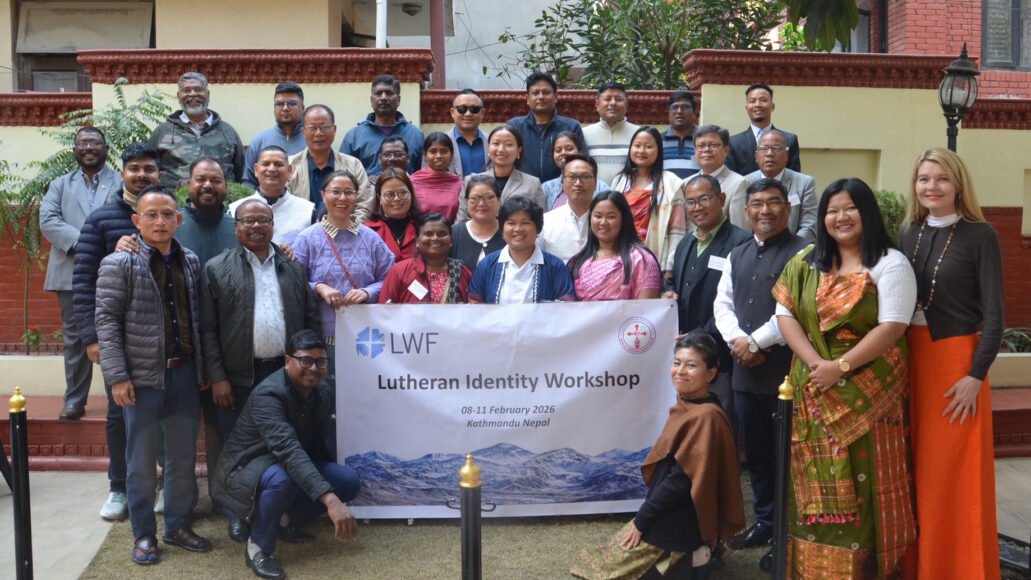
Forty-five participants from LWF member churches in the South Asia sub-region, including NELC and the recently joined Bodo Evangelical Lutheran Church (BELC) and Manipur Evangelical Lutheran Church (MELC) of India, attended.

The workshop emphasized Lutheran theology and identity fundamentals. Rev. Dr Rospita Siahaan, LWF Regional Secretary for Asia, highlighted the collaboration among the Offic

Read More

Merz Promises Unified EU Approach Before Tariff Talks with Trump

Merz Promises Unified EU Approach Before Tariff Talks with Trump

The German chancellor announced plans to visit Washington with a unified European stance following the U.S. Supreme Court’s decision to restrict extensive tariffs.

Read More

Europe at a Turning Point: Security, Migration, and Social Cohesion Challenges

Europe at a Turning Point: Security, Migration, and Social Cohesion Challenges

A new vocabulary is emerging across Europe. Political leaders discuss “Fortress Europe,” focusing on closing borders, enhancing external defenses, and revising asylum systems. Public debates in several countries have shifted from integration to “remigration”—indicating a reversal of decades of settlement for many.
Recently, laws like Denmark’s mandate to deport certain non-Western migrants with

Read More

Meloni and Macron Delay First High-Level Summit

Meloni and Macron Delay First High-Level Summit

The planned summit in Toulouse, initially reported by POLITICO, aimed to showcase Franco-Italian friendship and address transalpine relationship issues, bringing together the two leaders and key ministers to discuss shared policy priorities.
France and Italy have not held a high-level bilateral summit since 2020 when then-Italian Prime Minister Giuseppe Conte met with Macron in Naples. The Toulous

Read More

UN Report Highlights Systemic Gaps in Minority Rights as Human Rights Council Meets in Geneva

UN Report Highlights Systemic Gaps in Minority Rights as Human Rights Council Meets in Geneva

BRUSSELS — A report submitted to the sixty-first session of the United Nations Human Rights Council, which opened on 23 February 2026 in Geneva and runs through 2 April, presents a sobering evaluation of minority rights globally. Compiled by the Office of the United Nations High Commissioner for Human Rights (OHCHR), the document — designated A/HRC/61/33 — reviews developments throughout 2025, re

Read More

ECB’s Lagarde: EU Doesn’t Need All 27 Members to Advance Reforms

ECB’s Lagarde: EU Doesn’t Need All 27 Members to Advance Reforms

In an interview with the Wall Street Journal, the ECB chief supports the idea of forming smaller country groupings to advance capital markets reform and address other long-standing economic issues.

Read More