


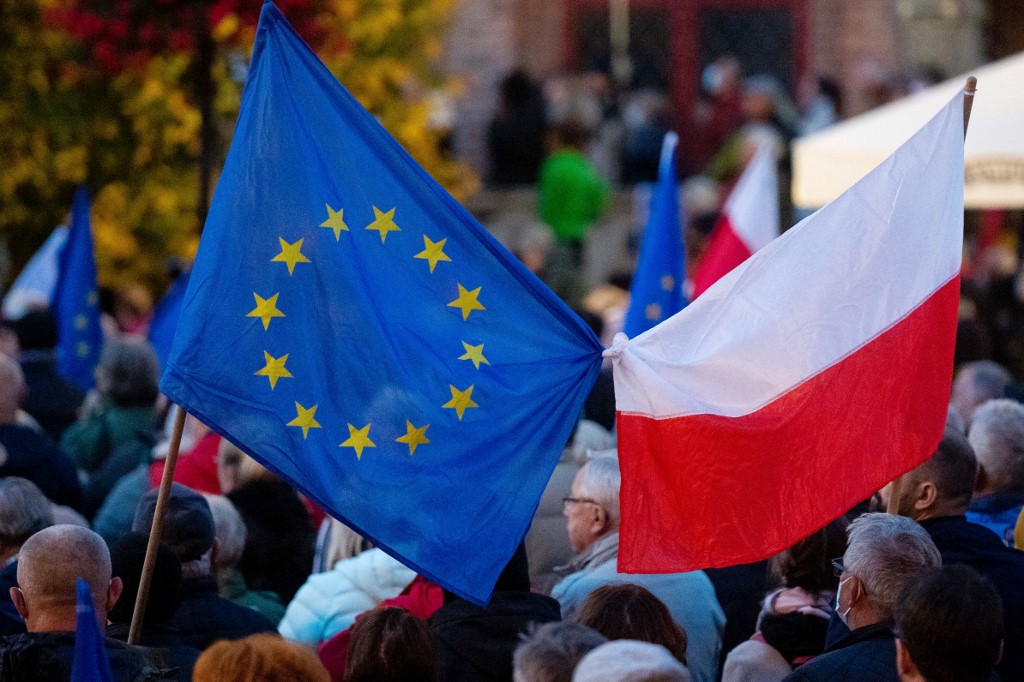
The Polish presidency in the EU Council will prioritize the fight against illegal migration as one of its three main focuses in internal security, according to Tomasz Siemoniak, the Head of the Ministry of Interior and Administration, who spoke on Monday. He highlighted that this issue is currently at the forefront of discussions among EU interior ministers.
At the conference, Siemoniak outlined the primary objectives for internal security during Poland’s upcoming EU Council presidency, which will run from January 1, 2025, for six months. These priorities include: tackling illegal migration, monitoring and addressing security threats, and enhancing the EU’s and member states’ capabilities in civil protection, rescue efforts, and humanitarian aid.
Siemoniak emphasized that illegal migration remains a critical issue that significantly affects public opinion and is a top concern for interior ministers across the EU. He stated that there is a pressing need for a fresh approach and new solutions to address this challenge.
The minister also noted that the Polish government recently adopted a migration strategy, along with a legislative package concerning migration, international protection for foreigners, and employment for foreign nationals in Poland. He added that the EU has supported Poland with more than 50 million euros for the protection of its external borders.
Another key area of focus will be the monitoring and neutralization of security threats, particularly in combating organized crime, including human and drug trafficking, as well as the production of new psychoactive substances. “During our presidency, we have the opportunity to make significant strides in strengthening cooperation and improving information sharing,” Siemoniak stated.
The third priority relates to civil protection, rescue operations, and humanitarian assistance, referring to a recently signed law on civil protection and civil defense.
Looking ahead, Siemoniak announced an informal gathering of interior and justice ministers in Warsaw at the end of January. He remarked that addressing security issues will be a foundational aspect of the presidency, a sentiment echoed by many involved.
“We are preparing for a busy few weeks starting January 1, which will involve not only ministerial meetings but also dialogues with commissioners as well as sessions within parliamentary, police, and rescue service frameworks. This represents a significant effort for us, but also a unique opportunity to advance our priorities over the course of six months,” Siemoniak noted.
Maciej Duszczyk, Deputy Head of the Ministry of Interior and Administration, highlighted Poland’s success in persuading EU member states to focus on critical issues, particularly migration and border control.
“We have emphasized the need to update the European migration policy to meet current challenges, which extend beyond the Polish-Belarusian border to broader migration effectiveness,” Duszczyk explained.
He acknowledged that one of the EU’s challenges is dealing with individuals residing in the EU without appropriate residency status, making returns to their countries of origin complicated. “This topic will be discussed at the January Council,” he added.
Duszczyk also mentioned that six months prior, the European Commission indicated it would not have a specific document ready during Poland’s presidency, but recent updates suggest such a document may be available by early March. “This will enable us to address return policies and their effectiveness at the March Council, aiming for clear conclusions by June. This is a key priority for us,” he stated.
He underscored the importance of eliminating controls on internal EU borders, noting that such measures should be temporary and would require secure external borders to be effective.
Additionally, Duszczyk highlighted other priorities, including defining safe third countries and discussing war refugees from Ukraine. “We plan to initiate discussions regarding Ukrainian war refugees starting in March, especially since the current directive is set to expire in March 2026. Solutions need to be forthcoming,” he said. The European Council has extended temporary protection for Ukrainian war refugees until March 4, 2026. (12.23.2024)







Leave a Reply